



January 12, 2026 10:34
UAH 239.7 Million in Savings: How DOZORRO Prevented Inefficient Spending in December
In December, the DOZORRO team prevented the inefficient use of UAH 239.7 million in public funds. As usual, these results are not about an immediate effect. They are the outcome of systematic work over the previous months (and sometimes years): analyzing cost estimates, addressing contracting authorities, and, in some cases, engaging law enforcement agencies.
Our key objective is to prevent overpayments before the money is spent. The best-case scenario is when a contracting authority adjusts the contract based on our calculations. The largest share of savings was achieved in exactly this way.
By reducing contract amounts, the budget avoided losses of UAH 152.3 million. Another UAH 66.5 million was saved thanks to cancellations of procurements that were never re-announced. Termination of contracts delivered a further UAH 8 million in savings. In cases where part of the funds had already been paid, results were achieved through the opening of criminal proceedings — UAH 12.9 million.
Below are the most illustrative cases from December under these mechanisms.
Contract amount reduced: minus UAH 8.1 million in a procurement by the Kyiv Institute of the National Guard of Ukraine
The Kyiv Institute of the National Guard of Ukraine procured construction works. The only bidder in the procedure was Artemzbud LLC, which offered a price almost UAH 5 million lower than the estimated value. Following the simplified procurement, the contracting authority signed a contract with the company for nearly UAH 60.7 million.
Some details of this procurement — including the work site — are not disclosed for security reasons. At the same time, the contract shows that the procurement concerned new construction and a package of works, including the installation of retaining walls, heating systems, electrical installation works, and more.
The DOZORRO team analyzed the cost estimate and identified a likely overpayment of UAH 2.6 million for material resources. The Kyiv Institute of the NGU risked overpaying the most for ready-mixed heavy concrete (concrete class B25 (M350), aggregate size 20–40 mm) — more than UAH 506,000. Artemzbud LLC planned to supply this material at UAH 4,158.54 per cubic meter (here and below, prices include VAT). For comparison, at the time of our price analysis, Kovalska sold the same material for UAH 3,573 per cubic metre, and PromBudCenter for UAH 3,357 per cubic meter.
In addition, the contractor included decorative plaster in the cost estimate at almost one and a half times the market price — UAH 255.82 per kg. During the same period, it could be purchased at Epicentr for UAH 103.88 per kg, and at Leroy Merlin and BudStroy for UAH 93.33 per kg. It is worth noting that for large procurements, materials are purchased in bulk, meaning their prices should be lower than retail. Instead, Artemzbud LLC’s cost estimate lists prices above the average market level.
In April, we approached the Kyiv Institute of the NGU with our calculations and a request to review the prices. In July, we received a standard reply — the contracting authority stated that it had conducted an analysis of material resource prices.
Because the contract price was fixed, it could only be adjusted by signing addenda. In total, the parties signed four addenda: some provided for the correction of technical errors and the extension of the performance period, and also for an adjustment of the price. The Kyiv Institute of the NGU and Artemzbud LLC reached an agreement and reduced the contract value by a total of UAH 8.1 million.
Artemzbud LLC was registered in 2018. The owner and director of the company is Artem Naumenko. In recent years, the company has been actively working with public customers, including military units. This is not the first time DOZORRO has identified overpayment risks in this contractor’s procurements: earlier, we noted a possible overpayment of UAH 5.7 million during the renovation of a building for internally displaced persons in Cherkasy.
Criminal proceedings: DOZORRO’s appeals reach prosecutors
In December, the Shevchenkivskyi District Prosecutor’s Office of Kyiv opened criminal proceedings in two procurements where the DOZORRO team had previously identified likely overpayments for construction materials. The total value of the risks exceeded UAH 9 million.
Consultative and Diagnostic Center of the Shevchenkivskyi District signed a contract worth UAH 61.4 million. Under the contract, by the end of 2025, Ukrainian Manufacturing and Construction Alliance Center LLC was to repair the façade of the building at 100 Saksahanskoho Street.

DOZORRO analyzed the cost estimate and found that the parties could have overpaid UAH 7.9 million for construction materials. Some line items were priced 18–50% above market rates. The largest markup, at the time of the price analysis, was for VIKNALEND V70 uPVC windows. The Ukrainian Manufacturing and Construction Alliance Center LLC planned to supply them at UAH 6,420 per square meter. At the same time, Balkony Vikna sold these windows for UAH 5,360 per sq m, Market Dveri for UAH 4,180 per sq m, and Vikno for UAH 3,384 per sq m. The overpayment on the windows alone could have reached UAH 3.5 million.
In August 2025, we approached the contracting authority with our calculations and a request to reduce the inflated prices. Consultative and Diagnostic Center of the Shevchenkivskyi District replied that it had forwarded the information to the contractor. The contract price was fixed. In November, the DOZORRO team saw that payments had been made under the contract and contacted law enforcement agencies. The Shevchenkivskyi District Prosecutor’s Office of Kyiv opened criminal proceedings. In December, the contracting authority reduced the contract amount.
This was not the only criminal proceeding opened by the same prosecutor’s office in December following our requests. Law enforcement also launched an investigation into the procurement for the construction of a radiation shelter for Universum Lyceum.
In March 2025, the DOZORRO team contacted the contracting authority — the Education Department of the Shevchenkivskyi District State Administration in Kyiv. We sent our calculations and a request to reduce prices for material resources; the likely overpayment reached UAH 1.6 million. In response, the Education Department reported that it had found no evidence of inflated prices.
After payments under the contract in November, we contacted the Shevchenkivskyi District Prosecutor’s Office. It opened criminal proceedings.
“When law enforcement agencies engage and take up civil society oversight materials, it amplifies the impact of procurement monitoring. Such cooperation makes it possible to document risks and respond to them even after payments have been made,” says Aliona Yashchuk, procurement monitoring specialist at the DOZORRO TI Ukraine project.
Procurement did not take place: UAH 10.6 million saved on the repair of a building at Vinnytsia National Technical University
The procurement for the major repair (thermal modernization) of Academic Building No. 3 of Vinnytsia National Technical University ended without a contract being signed. The facility is located at 7 Politekhnichna Street, Vinnytsia. The university could have spent UAH 176 million on insulation.
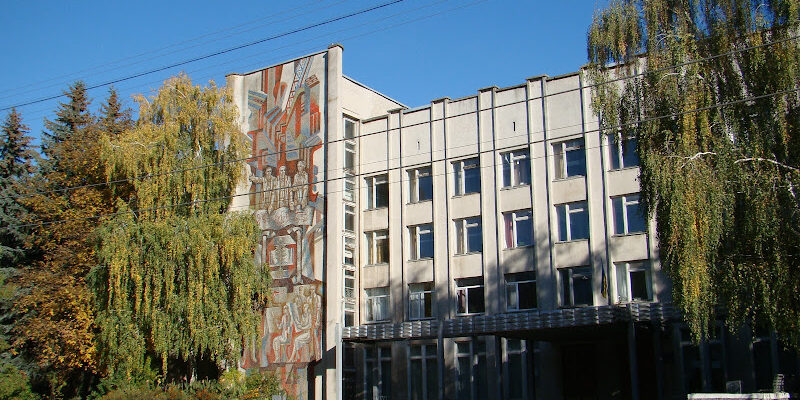
Unfortunately, even the second attempt to conduct the procurement was unsuccessful. The first tender, in August, did not take place because no one participated. In the October tender, DOZORRO identified an overpayment risk of UAH 10.6 million. According to our calculations, VinnytsiaBud LLC’s cost estimate included inflated prices for insulation materials of different densities, decorative plaster, membrane, dowels, and other items.
In November, we sent Vinnytsia Polytechnic a letter with our calculations and a request to reduce the contract price. In its response, the university said it disagreed with our calculations and considered them insufficiently substantiated. However, the contract with VinnytsiaBud LLC was not signed. No new procurement for these works has been announced yet. The DOZORRO team will continue to monitor the situation.
VinnytsiaBud LLC was founded in 2002 in Vinnytsia. The company is owned by Volodymyr Hihineishvili, an Honoured Builder of Ukraine and a winemaker. This construction company has built dozens of multi-apartment residential buildings in Vinnytsia and the region.
Contract terminated: UAH 6.5 million saved on a shelter for a lyceum in Pavlohrad
Lyceum No. 17 of the Pavlohrad City Council planned to build a radiation shelter. A contract worth UAH 128 million was signed with Spetsbudmontazh-21 PE. The company offered a price almost UAH 2 million lower than the estimated value. The contractor was to complete the works by the end of 2026.

In the construction cost estimate, DOZORRO saw inflated prices. The total likely overpayment reached UAH 6.5 million. On concrete mixes of various types alone, the lyceum could have overpaid nearly UAH 4 million. Spetsbudmontazh-21 listed ready-mixed heavy concrete (concrete class C8/10) at UAH 4,394.40 per cubic meter. Meanwhile, the market offers much cheaper options: Kovalska sold similar material for UAH 3,018 per cubic meter, and Beton-Standard for UAH 2,450 per cubic meter. In addition, the contractor proposed other materials at inflated prices.
We approached the contracting authority with a request to reduce the cost of material resources. In its response, the lyceum stated that it considered our price comparison inappropriate and the sources used to be of questionable origin. However, within a few days, the parties terminated the contract by mutual consent and recorded this in an addendum. No works under the contract began, and the budget did not lose UAH 6.5 million.
December monitoring: groundwork for future results
In December, we analyzed 84 procurements with a total estimated value of UAH 8.8 billion. We identified violations in 46 procurements. In most cases, this concerned inflated expected value or likely overpayments — such risks were recorded in 41 transactions. The total potential overpayments reached UAH 351 million. In another 5 procurements, we identified discriminatory requirements in the tender documentation. We will see the results of this work over the coming months.
This material was prepared within the framework of the “Digitalization for Growth, Integrity, and Transparency” (UK DIGIT) project, implemented by the Eurasia Foundation and funded by UK Dev.
Source: dozorro.org


