



November 20, 2026 13:45
Constitutional Court Allows Appeals Against Rulings to Transfer Seized Property for Sale
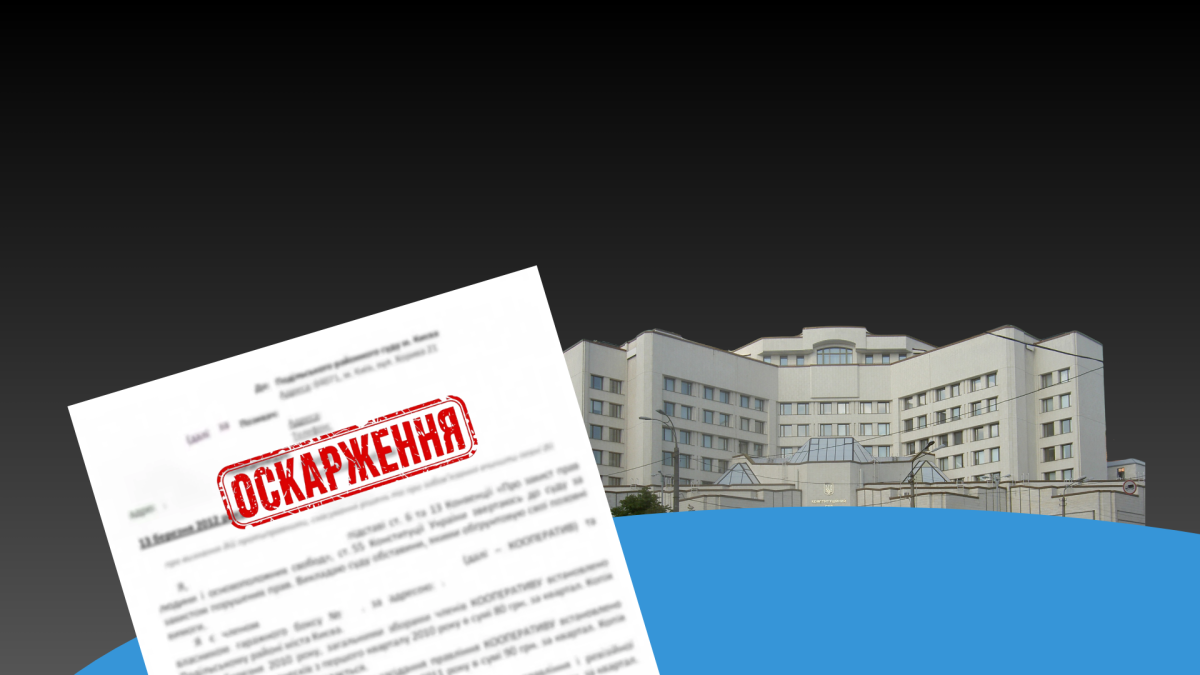
On November 17, the Grand Chamber of the Constitutional Court of Ukraine adopted Decision No. 7-r/2026 on a constitutional petition from the Supreme Court. Owners whose property an investigating judge orders transferred for sale can now challenge that ruling on appeal. Until now, the Criminal Procedure Code did not allow this.
The Court declared Article 309(1) and (2) of the Criminal Procedure Code unconstitutional insofar as they barred appeals against rulings issued under paragraph 2 of Article 100(6), that is, rulings to transfer property for sale. These provisions lost force on the day the decision was adopted. Importantly, the decision covers all rulings to transfer property for sale, not only those under which ARMA sells the property.
The decision grew out of a case involving a third party’s property. In 2022, an investigating judge lifted the seizure and allowed the property to be sold in proceedings over a non-grave offense, in which no one had been served a notice of suspicion since 2016. The appellate court refused to hear the owner’s appeal because Article 309 of the Criminal Procedure Code made no provision for one. The Supreme Court overturned that refusal and referred the matter to the Constitutional Court.
The Constitutional Court’s reasoning included the following:
- transferring property without the owner’s consent is a significant interference with the right to property, and a sale cannot be undone: once the property is sold, the owner can only hope for compensation;
- objections raised during preparatory proceedings under Article 309(3) of the Criminal Procedure Code are no substitute for an appeal. The Court stressed, however, that an appeal does not in itself suspend enforcement of a ruling to sell, so the legislature must provide effective procedural safeguards.
What comes next?
The Constitutional Court set no separate deadline for the legislature, so the Criminal Procedure Code needs to be amended without delay. We believe the amendments should:
- add provisions allowing such rulings to be appealed;
- set out how to balance the asset owner’s rights, including how soon the owner must be notified of an investigating judge’s or court’s ruling to sell their assets, and provide effective safeguards so that the property cannot actually be sold under the ruling while an appeal is pending before the appellate court.
Still, the purpose of selling property is to preserve assets that deteriorate quickly, so reviewing these rulings on time is critical. To manage seized property more effectively, the Criminal Procedure Code should also be amended to require prosecutors to identify assets in advance, and to set out how a transfer of assets into management is changed or revoked. We raised these points when the ARMA reform law was being adopted.
The Constitutional Court set no separate deadline for the legislature, so the Criminal Procedure Code needs to be amended without delay.


