



November 14, 2026 19:04
UAH 7.7 Billion Underground: How Ukraine Builds Its Underground Schools
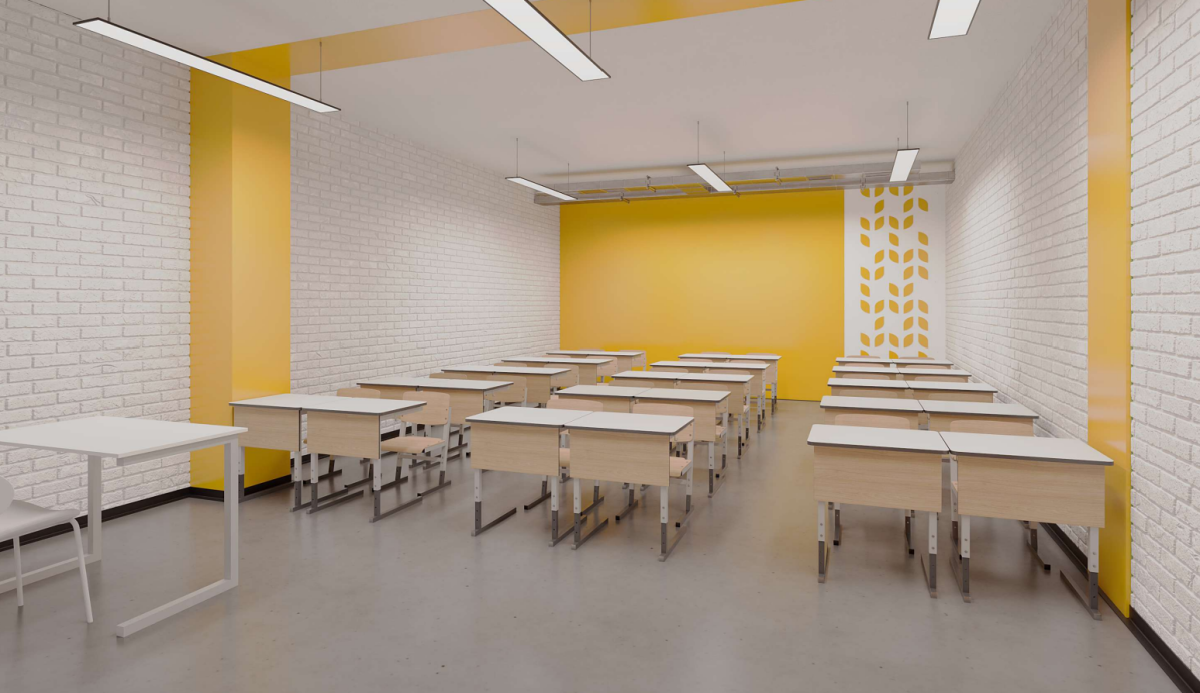
At Persha Lastivka, a primary school in Kyiv, children sometimes spend almost the entire school day underground. The school’s 216 students now use the shelter. When the security situation allows, lessons take place in ordinary classrooms.
School principal Mariia Poliakova told DOZORRO that the shelter has areas for play and rest, and after-school clubs are held there. She says the children like it. When there is no air raid alert, students are taken outside to run around and get some fresh air.
Learning underground has its difficulties, though. The space is open, so noise from different classes carries and disrupts lessons, and the school plans to install soundproof curtains. Local residents also use the shelter at night. According to the principal, after some visitors, staff have to clean up and rearrange the furniture before the children arrive. Despite these inconveniences, the school values being able to continue in-person learning even during long alerts.
“We are very satisfied, and we are very grateful that this shelter was built for us,” the principal said.
Students at other Ukrainian schools can also keep learning in person during air raid alerts. According to the Ministry of Education and Science, as of September 2026, Ukraine had 124 underground schools in operation, built with state subventions and grants. Together they can hold about 50,000 people at once.
“If the educational process is organized in two shifts, the infrastructure created could potentially provide in-person learning for up to 100,000 children,” the MES said.
Each of these facilities costs tens, sometimes hundreds, of millions of hryvnias. The 2026 State Budget alone allocated a UAH 5 billion subvention for shelters in general secondary schools. According to the Ministry of Education and Science, the funding is to cover 113 such facilities in 22 regions.
The state subvention is not the only source of funding, however. Shelters are also built with local budget money and other funds, and construction often takes several years. The value of contracts signed in Prozorro is therefore not equal to this year’s subvention and does not mean that all these facilities will be completed in 2026.
DOZORRO TI Ukraine analyzed underground school procurement across Ukraine to find out where the most expensive facilities are currently being built and who receives the largest contracts.
How we calculated
The term “underground school” has no official status, so Prozorro has no category by that name. The media often use it for protective structures at educational institutions adapted for children’s learning. Last year’s study focused mainly on frontline regions; this year, we looked at procurement across Ukraine.
As last year, we selected procurement for the construction of large protective structures at schools, lyceums, and gymnasiums ourselves. We analyzed contracts signed from January 1 to November 6, 2026. We were interested specifically in protective structures with infrastructure for children’s extended stays: classrooms, restrooms, ventilation, backup power, and so on.
We also set a lower threshold of UAH 20 million per facility. Such amounts are typical of large-scale new construction.
After manual review, the sample included 74 contracts signed since the start of 2026, worth UAH 7.7 billion. They include new facilities as well as procurement following project adjustments, repeat tenders, and contracts for structures whose construction began earlier.
We found such procurement in 18 regions of Ukraine and in Kyiv.
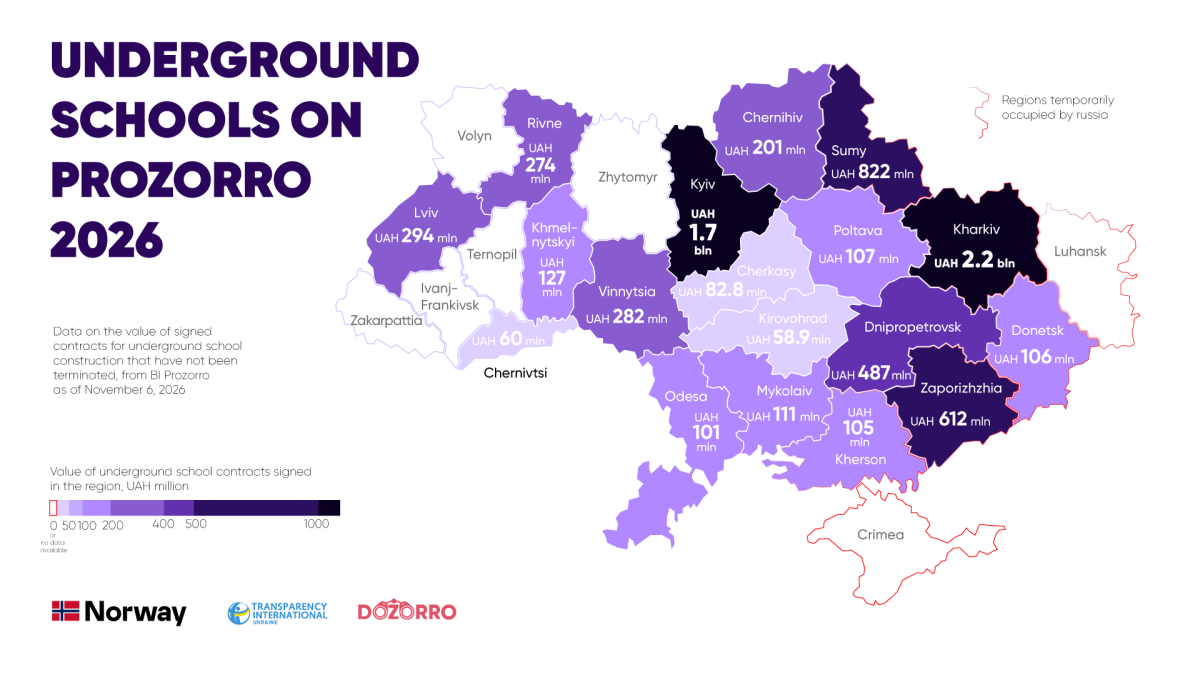
*The infographic groups contracts by the contracting authority’s region. For example, a UAH 106 million contract signed by the Capital Construction Office of Kramatorsk City Council is counted under Donetsk Region. The shelter for the relocated First Kramatorsk Lyceum, however, is being built in Perechyn, Zakarpattia Region.
DOZORRO analysts also examined the cost estimates of the largest procurements in more detail. Some showed no inflated prices; in others, we found likely overpayments for construction materials running into millions of hryvnias.
“We regularly identify likely inflated prices in the cost estimates of underground schools. But inflation can change the picture during construction. What looked like a significant markup at the time of analysis may be partly offset later as market prices rise. That is why we will keep monitoring these procurements, including checking whether material costs change in supplementary agreements and analyzing updated cost estimates and work completion certificates,” explains Aliona Yashchuk, procurement monitoring specialist at the DOZORRO TI Ukraine project.
Kharkiv Region keeps the lead
As last year, Kharkiv Region leads in both the number and value of contracts. Contracting authorities in the region signed 16 contracts worth UAH 2.22 billion, almost a third of the total value in our sample. Competition in most tenders was minimal, though: in 12 of the 16 procurements, only one bidder submitted a bid.
The region’s most expensive underground school is being built for Izium Lyceum No. 11. The Capital Construction Department of the Kharkiv Regional State Administration signed a UAH 275.7 million contract with Zhytlobud-3 LLC, the only bidder. This is Izium’s first underground school. It is designed for 1,100 people. Construction is due to be completed by December 2027.
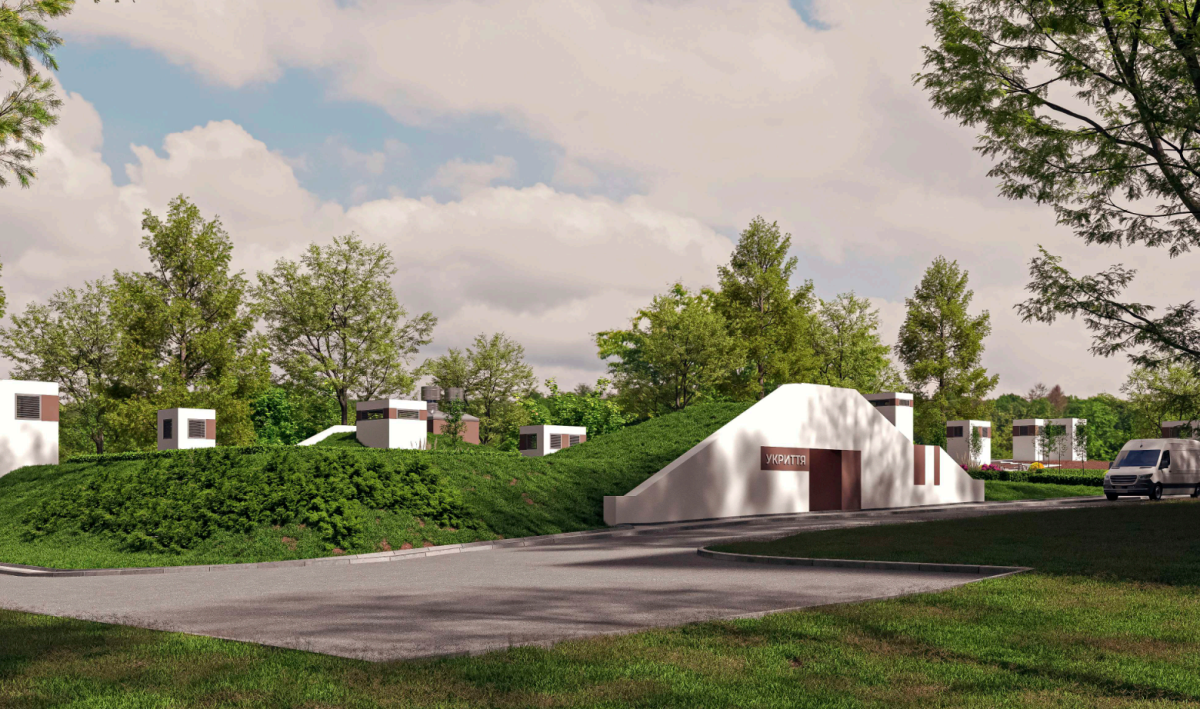
In Kharkiv itself, we counted five procurements whose descriptions match the characteristics of underground schools. The largest contract covers a protective structure for 540 people at Kharkiv Lyceum No. 51. The Department for Landscaping, Restoration and Reconstruction signed the UAH 209.9 million contract with Construction Firm Promtex PE, owned by Stanislav Brovin and Ruslan Malyi.
This year, the company won two more large contracts for protective structures in Kharkiv: for Lyceum No. 164, worth almost UAH 173 million, and for Lyceum No. 24, worth UAH 133.9 million (later reduced to UAH 116 million). With UAH 499 million in contracts, it became the largest contractor by contract value in our sample, both in Kharkiv Region and in Ukraine as a whole.
This is already the third procurement for a shelter at Lyceum No. 24 in less than a year and a half, all because of adjustments to the design documentation. Promtex was the only bidder in all three.
Besides the leader’s three contracts, new protective structures are being built for Lyceum No. 87, worth almost UAH 195 million, and Lyceum No. 162, worth UAH 178.5 million. Both contracts went to TT 2006 LLC. The construction of the shelter for Lyceum No. 162 is part of a criminal proceeding into possible misappropriation of budget funds during construction works.
Lozova community in the region also stands out. Three underground schools have been under construction there for several years. The contractors failed to complete their previous contracts on time. Interestingly, only one facility, in Krasnopavlivka, received an entirely new contractor in this year’s re-announced tenders. The second contract, in Paniutyne, went to the company that started the construction, and the third, in Lozova itself, went to a company that was part of the previous contractor consortium.
Underground schools that have already opened show how much a return to in-person learning means for children. For example, the underground school at Pisochyn Lyceum Dzherelo in Kharkiv Region has operated since September 2025. Parents see positive changes. Inna Yevtushenko said that after returning to school, her older son became more independent, and his grades and discipline improved. Kateryna Fedorenko moved her son to the lyceum specifically for in-person learning and time with his peers.
“We based the decision on the fact that you can’t buy a child a social life at any price. If it’s about knowledge, you can hire tutors and help a child with their studies, but you can’t buy them a social life. So the advantage was that the child would interact with others, understand what other people are like, and know how to deal with them and how to behave in society,” Kateryna Fedorenko told Suspilne. She said that since moving to the underground school, her son has grown more confident, answers more actively in class, and enjoys going to school more.
Kyiv and the region: over a billion for four schools in the capital
Since the start of 2026, we counted 14 contracts for underground schools in Kyiv and Kyiv Region, worth UAH 1.7 billion, the second-largest total after Kharkiv Region. Most of this amount, UAH 1.16 billion, comes from five school shelters in Kyiv itself. Another UAH 517.9 million comes from nine contracts in Kyiv Region.
According to the Kyiv City State Administration, seven underground schools were completed in the capital in 2024–2025. They include those for Persha Lastivka and the Lastivka Educational Complex in Obolonskyi District; Schools No. 83, No. 154, and No. 197 in Sviatoshynskyi District; and School No. 41 and Universum Lyceum in Shevchenkivskyi District. Not all of these shelters have been officially commissioned yet: two structures in Obolonskyi District have been included in the protective structures fund, while the procedure for the rest is still under way.
Meanwhile, the capital plans to build four more underground schools. The most expensive, at UAH 304.7 million, is being built for Lyceum No. 105 in Darnytskyi District. The shelter will hold 430 people, and construction is planned to finish by the end of 2028. The underground school for Pavlo Tychyna Lyceum No. 191 in Dniprovskyi District will cost slightly less, at UAH 294.1 million, with works due by the end of 2027. Another protective structure is being built for School No. 63 in Podilskyi District. It will cost UAH 242.4 million, and works are also due by the end of 2027. The least expensive of the four is for Oleksandr Bilash Specialized School No. 24 in Shevchenkivskyi District, where the local Education Office contracted UAH 189.9 million. The structure will hold 1,060 people, and construction is due by the end of 2027.
The fifth contract in the capital concerns a shelter whose construction began back in 2024: a protective structure for School No. 146 in Dniprovskyi District. At that time, the Education Office of the Dniprovskyi District State Administration signed a UAH 176.5 million contract with Smart Universal Group LLC. But construction dragged on, and the contract was terminated on August 31, 2026. The contractor was paid over UAH 160 million for the works completed. After the project was adjusted, the contracting authority announced a new tender to complete construction. The UAH 129.5 million contract went to the same company, Smart Universal Group LLC. Works are due by the end of 2027. Taken together, the two contracts may bring the cost of the shelter to almost UAH 290 million.
To find out what the new underground schools will look like inside, DOZORRO sent requests to the four district education offices asking for sketches, renderings, or other images of the future premises. We did not receive a single one. We contacted the Education Office of the Darnytskyi District State Administration twice. It replied that there are no renderings and that disclosing detailed information about the shelter could threaten security. Yet we had not requested any technical or protective specifications of the structure. The office also stated that, because of our repeated request, it was forwarding our correspondence to the Security Service of Ukraine to assess possible risks.
In Kyiv Region, the contracts are smaller. The largest, almost UAH 119 million, is for a shelter for 600 people at Vasylkiv Gymnasium No. 8. It is being built by Ukrbud Architectural and Construction Company LLC, owned by Yurii Nahornyi.
Sumy Region: scaling up
Sumy Region rounds out the top three regions by value. According to the MES, the state is funding the most school shelters here this year: 13. Our sample includes six contracts worth UAH 822.3 million. Five of the six projects are funded through the Ukraine Facility. Competition in the tenders was low: in four procurements, only one bidder submitted a bid.
The most expensive underground school is being built in Konotop for Lyceum No. 9. The lyceum signed a UAH 178.1 million contract with Kortakoz LLC; the contract value was later reduced to UAH 177.6 million. One of the company’s owners, Andrii Moshchanetskyi, has been linked to Volodymyr Khomko, former mayor of Rivne and former member of the city council from the For the Future faction, who resigned his seat early in September 2025. The future shelter will hold 520 people.
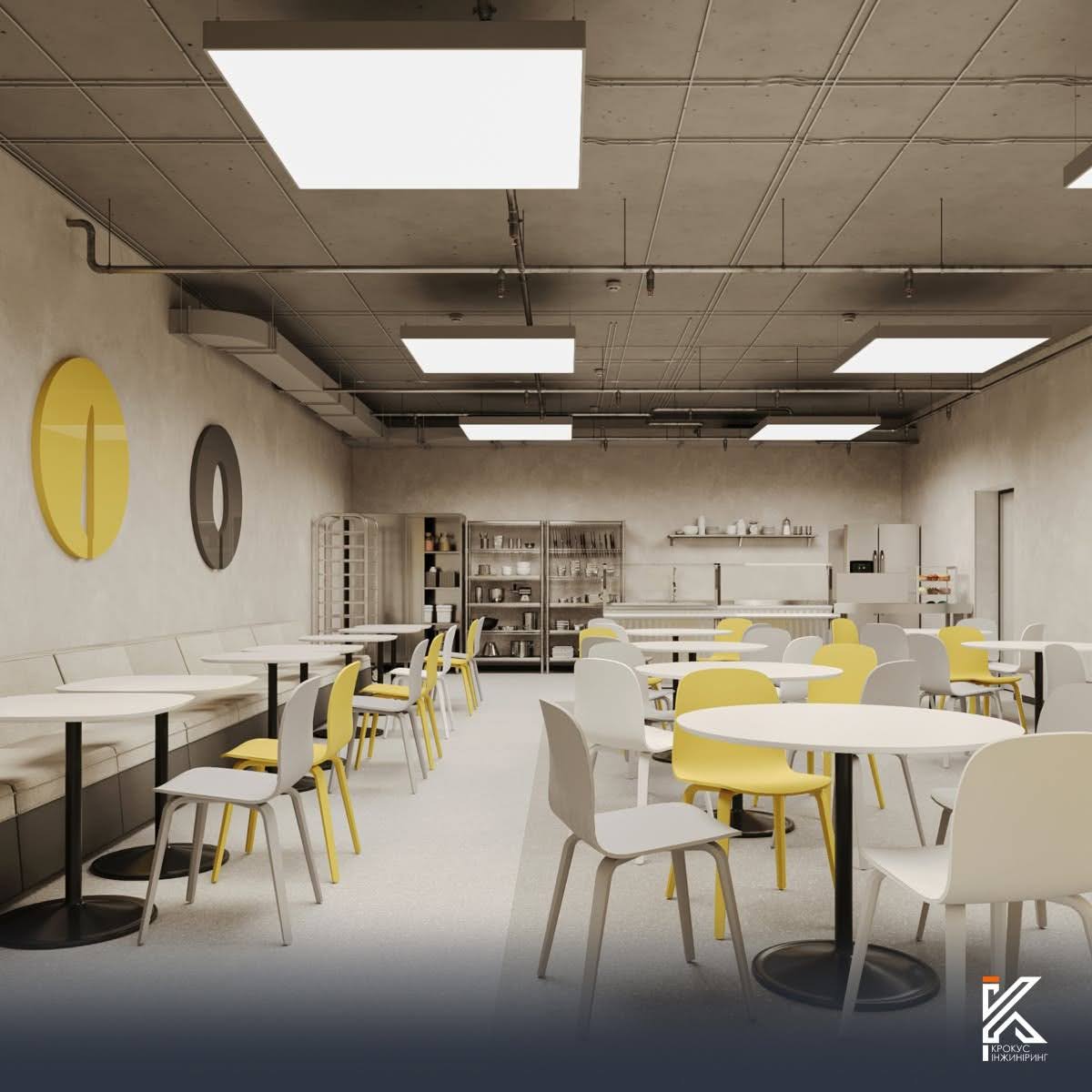
Photo: Facebook page of Crocus Engineering, the company that designed the underground school.
Konotop also contracted UAH 153.7 million for a protective structure at Leader Regional Academic Lyceum. It is designed for 500 people. Two projects in Sumy itself cost almost as much. The Capital Construction Office signed a UAH 154.3 million contract for Specialized School No. 29. The new shelter for Sumy Educational Complex No. 16 will cost UAH 153.3 million.
The sample also includes shelters for Sumy School No. 13 and the hub school in Korovyntsi. Most of these protective structures are due to be completed by the end of 2026. The exception is the shelter for the Korovyntsi school, where works are scheduled until June 30, 2027.
While some underground schools in Sumy Region are still under construction, others are ready for students. According to the Ministry of Education and Science, five such facilities were completed in the region before the new school year: four in Sumy community and one in Shostka community. Together they have 1,360 places, while these five schools have 1,944 students.
In October, a new underground school for 500 people opened in Sumy. Learning there is organized in a blended format. Before classes began, 11th-grader Karyna Svystiula told Suspilne that she had studied mostly online since seventh grade and now hopes to spend her final school year alongside her classmates.
“At least this year, to try to interact somehow. To see teachers, friends, people we haven’t seen in a long time,” she said.
Zaporizhzhia: construction has slowed
New underground schools are being built in Zaporizhzhia at a slower pace than last year. In 2026, the sample includes five contracts worth UAH 612 million. Four of them, totaling UAH 572.3 million, are for new shelters. The fifth covers additional works at a facility started earlier. As the year is not over, the number and value of contracts may grow. One trend has not changed so far: low competition in tenders.
The most expensive facility is a shelter for 500 people at Zaporizhzhia Gymnasium No. 97. SE Local Roads of Zaporizhzhia Region signed a UAH 162.4 million contract with Interprofservice LLC.
The same company won the contract to build a shelter for 500 people at Gymnasium No. 95, worth UAH 152.8 million.
Another UAH 152.4 million was contracted for a shelter for 500 people at the educational institution at 13B Chumachenka Street. It will be built by Melcity LLC.
The fourth facility is a protective structure for 200 people at 16 Lotsmanska Street. Its construction was contracted for UAH 104.8 million, with Kalmius Construction Company LLC as the contractor.
Three of the four shelters are due to be completed by the end of 2026. The protective structure at 16 Lotsmanska Street is scheduled for completion by the end of March 2027. All four projects are funded through the Ukraine Facility.
Separately, in September, SE Local Roads of Zaporizhzhia Region signed a UAH 39.7 million contract for additional works on the shelter for Zakhysnyk Zaporizhzhia Regional Lyceum.
In response to DOZORRO’s request, SE Local Roads of Zaporizhzhia Region provided us with a presentation of a standard design for an underground school for 500 people.
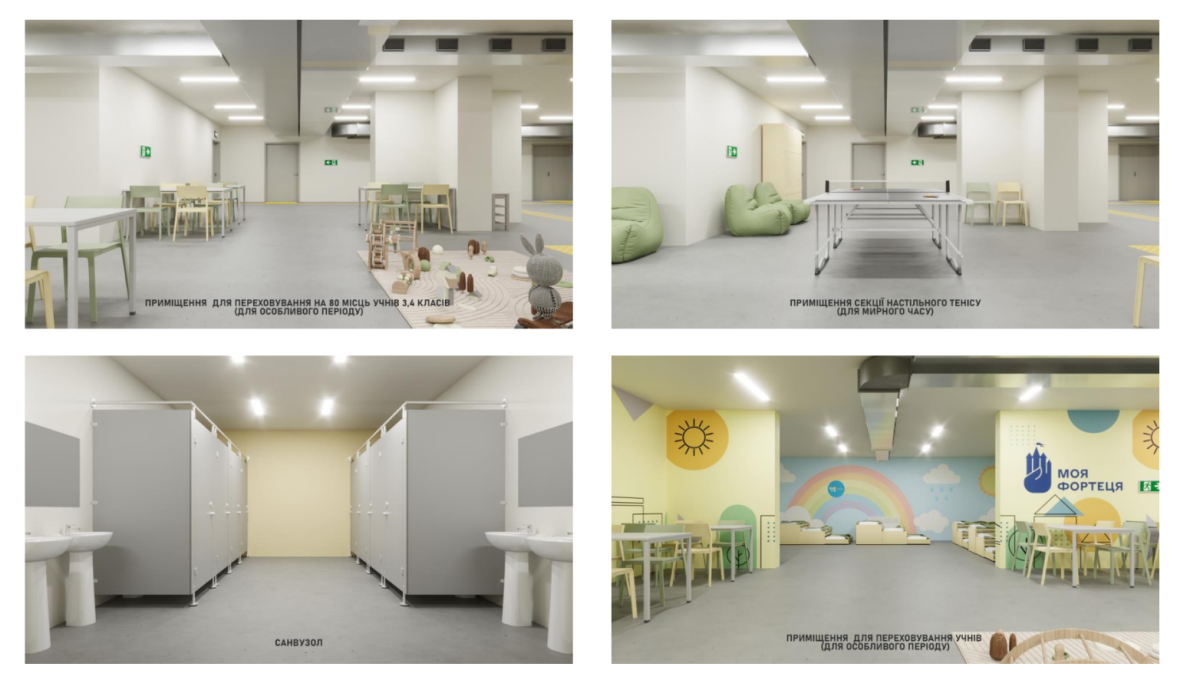
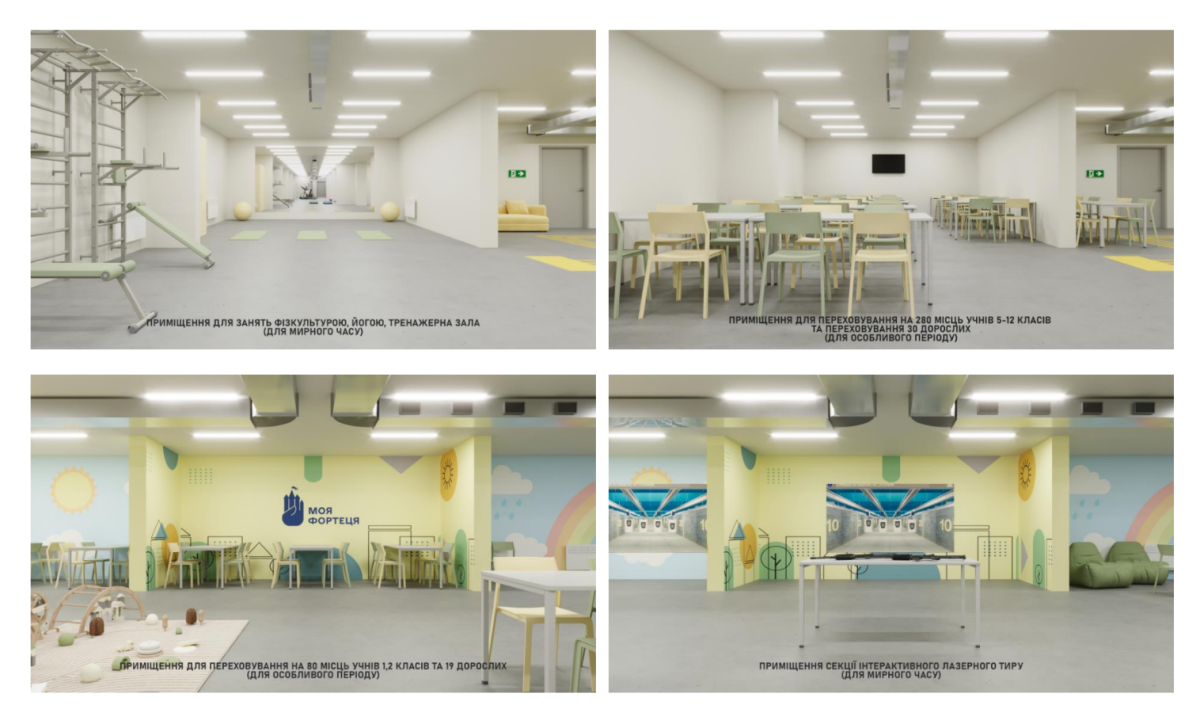
This year’s contractors have worked on underground schools in Zaporizhzhia before. Melcity and Kalmius received such contracts in the past, and in 2025 Interprofservice was a subcontractor to Esco Zaporizhzhia LLC.
The experience of underground schools already open in Zaporizhzhia shows that problems arise beyond the procurement and construction stages. In 2026, parents and students at some schools complained of ventilation and water supply problems during power outages. One school installed a more powerful generator afterwards. In spring 2026, the ground subsided near the underground school of Lyceum No. 46, which opened in May 2025. Ivan Fedorov, Head of the Zaporizhzhia Regional Military Administration, attributed this to local soil conditions and soil compaction after construction and said the contractors had fixed the defects under their warranty obligations.
Questions were also raised about the commissioning of some underground schools. In September, Zaporizhzhia City Council member Kateryna Zvierieva stated that some facilities had been used in the previous school year before official commissioning because they did not meet certain technical conditions. We were unable to find independent confirmation of this.
The most pressing question, however, concerns the safety of underground schools near the front. On November 2, 2026, Russian airstrikes destroyed the underground school in Komyshuvakha, killing dozens of people. The facility opened in October 2025 about 20 km from the front line, but children attended classes there in person for only about two months. As the security situation worsened, they were moved to remote learning, and the premises were put to community use.
This case raises questions not only about the protective characteristics of underground schools, but also about whether it makes sense to build them in communities this close to the front.
Dnipropetrovsk Region: fewer new contracts here too
Dnipropetrovsk Region has also slowed noticeably for now. The number and value of contracts have fallen by more than half. In 2025, we counted 13 contracts worth over UAH 1.2 billion here. As of early November 2026, there are six contracts worth UAH 486.6 million.
The most expensive new shelter is being built in Pavlohrad for Lyceum No. 17. The Education Department of Pavlohrad City Council signed a UAH 146.6 million contract with Spetsbudmontazh-21 PE. Works are due by the end of 2027. The project is funded through the Ukraine Facility.

Spetsbudmontazh-21 also received UAH 38.6 million to complete the protective structure for Yevhenii Yenin Lyceum No. 9. The main contract for this facility was signed last year for UAH 104 million. In spring 2026, after the design and cost estimate documentation was adjusted, the contract value was reduced to UAH 77.3 million.
In Dnipro, construction of a protective structure for Gymnasium No. 29 continues. This facility already featured in our 2025 study. At that time, the local Capital Construction Department signed a UAH 120.9 million contract with Techbudresource LLC. Under that contract, the contractor was paid about UAH 47.3 million for completed works. In 2026, the project was adjusted, and a new procurement was held to complete construction. The new UAH 137.1 million contract again went to Techbudresource LLC. Works are due by the end of 2027.
Another UAH 28.3 million was contracted for a shelter at Educational Complex No. 122 in Dnipro.
A protective structure is also being built in Kryvyi Rih for Lyceum No. 95, with UAH 92.5 million contracted.
Problems have also arisen at Kryvyi Rih’s completed underground schools. In fall 2025, after heavy rain, the soil subsided at two such schools, leaving holes under the paving and the sports field surfaces. As Suspilne reported, the shelters themselves and their waterproofing were not damaged. The contractor began repairing the damage at its own expense and was to install additional drainage. The works were planned to take two weeks, but Pershyi Kryvorizkyi later reported that they were still under way after that deadline.
Kherson Region: unfinished shelters
In Kherson Region, only two contracts made it into this year’s sample: UAH 57 million for a shelter at Kyselivka Gymnasium and UAH 47.7 million for additional works at Velyka Oleksandrivka School No. 2.
The construction of school shelters in Kherson itself has been marked by scandal. Large protective structures began to be built there back in 2024, but some residents opposed them because of constant Russian shelling. In October of that year, after an airstrike on a school next to which a shelter was being built, people took to the streets in protest. They feared the construction could draw Russian attention and endanger nearby buildings. The city authorities denied any link between the works and the shelling and stressed that the shelters were needed not only by schoolchildren but also by other residents.
In October 2026, Bihus.Info journalists reported that construction of three shelters in Kherson had been halted and the contracts with the contractors terminated. According to Yaroslav Shanko, Head of the Kherson City Military Administration, violations of construction standards and design requirements were found at the sites, and criminal proceedings were opened. The contractors had already been paid tens of millions of hryvnias, and the community has still not been compensated for the losses, the official said.
What this procurement shows
In 2026, DOZORRO’s sample included contracts for underground schools worth UAH 7.7 billion. Some of the money will go toward completing shelters whose construction began earlier. Because of design changes and problems with contractors, works at some facilities drag on, contracts are terminated, and new procurements are held to finish construction.
Funding for these projects is another issue. In response to DOZORRO’s requests, some contracting authorities said there had been no delays in funding or in payment for completed works. Other facilities fared differently. In Kyiv, for example, only UAH 100,000 was allocated for 2026 for the UAH 294.1 million shelter at Lyceum No. 191, so works have not even started. In Kharkiv, supplementary agreements were signed under two contracts stating that the works would not be funded in 2026.
Problems also arise after construction is completed. Ground subsidence has been recorded at underground schools already in operation, and parents and students have complained about ventilation and water supply disruptions. Even so, underground schools give children a chance to return to in-person learning after years of remote lessons. There, they can study during air raid alerts and see their classmates and teachers. This matters most in communities where constant shelling keeps ordinary schools from holding in-person classes.
But an underground school does not guarantee full protection against Russian strikes. Under the state building codes, blast shelters fall into four protection classes (A-I to A-IV) and radiation shelters into six groups (P-1 to P-6). They differ in their protective characteristics, including blast wave resistance and radiation attenuation. The current codes, however, do not account for a direct hit by FAB glide bombs, as happened in Zaporizhzhia Region, or by another powerful aerial bomb or missile.
The tragedy in Komyshuvakha, where Russian airstrikes destroyed a completed underground school, makes the question of building such facilities near the front especially urgent. In communities farther from the fighting, properly equipped shelters can let children study in person even during air raid alerts. In frontline settlements, where the threat of direct strikes is much higher, their protective characteristics may prove insufficient. That is why, before starting new construction and continuing projects already under way, it is important to consider proximity to the front, the current security situation, and the nature of the threats. Special attention should go to the technical specifications of shelters: whether the level of protection in the design matches the threats in a given community, and which damaging factors the structure can actually protect people from. This needs to be checked at every stage, from design and construction to commissioning.
This material is funded by Norway. Its content is the sole responsibility of Transparency International Ukraine and does not necessarily reflect the views of the Norwegian Government.
Source: glavcom.ua


