



February 20, 2026 12:28
Interview Notes from HACC Judge Candidate Interviews — Week One
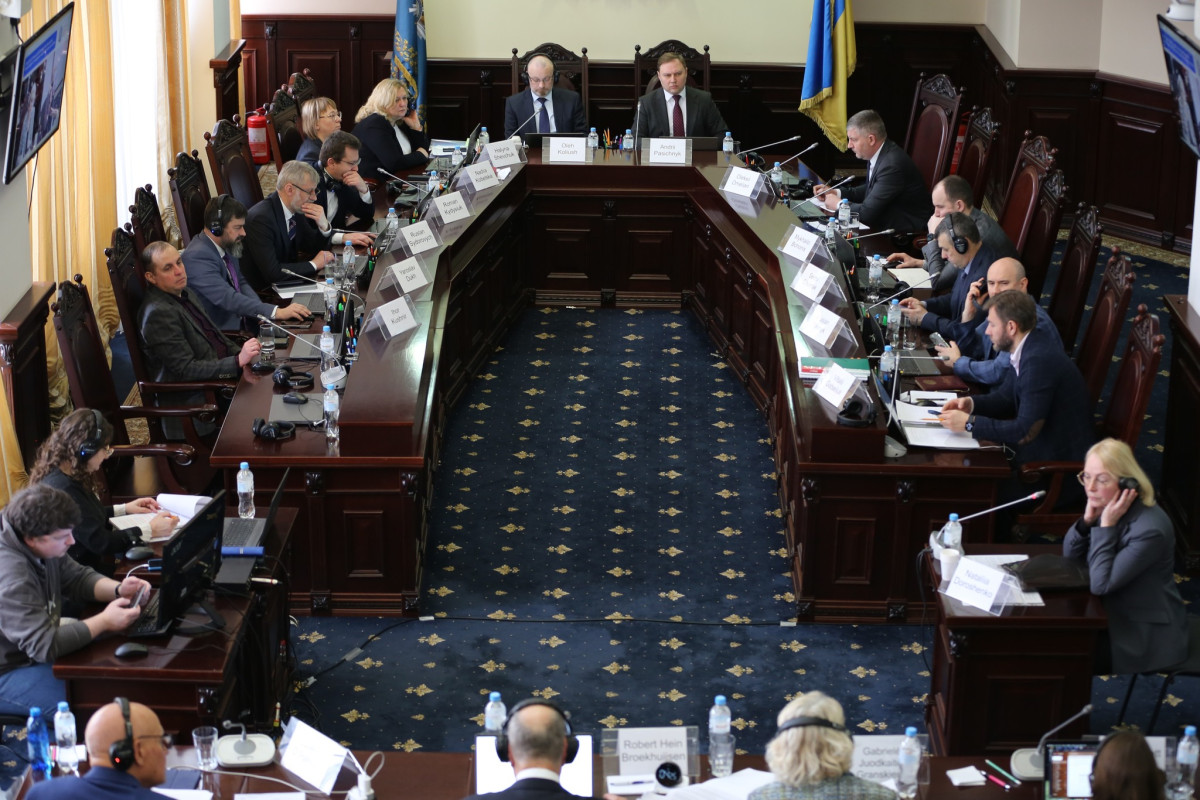
On February 16, the Public Council of International Experts and the High Qualification Commission of Judges began interviews with candidates for the positions of HACC judges.
During the first week, the following candidates completed this stage of the competition:
- Nataliia Doroshenko
- Vladyslav Kukhta
- Ihor Makaryk
- Olena Tanasevych
- Mykola Rubashchenko
- Iryna Kuzina
- Dmytro Ostapenko
- Nazar Hryn
- Vita Matolych
- Dmytro Movchan
- Oleksii Zaitsev
- Marta-Mariia Yatsynina
- Ivan Posokhov
- Oksana Hutsal
- Oleksandr Ostrohliad
- Yevhen Kapitonovych
- Andrii Dudikov
- Pavlo Shtifonov
- Viktor Antypenko
- Oleksandr Dudchenko
Transparency International Ukraine experts watched all interviews and compiled the most notable moments in these notes. Candidates are listed in the order in which their interviews were conducted by the Public Council of International Experts and the High Qualification Commission of Judges.
All photos: HQCJ.
Transparency International Ukraine experts watched all interviews and compiled the most notable moments in these notes.
Nataliia Doroshenko
Judge, Rivne District Administrative Court
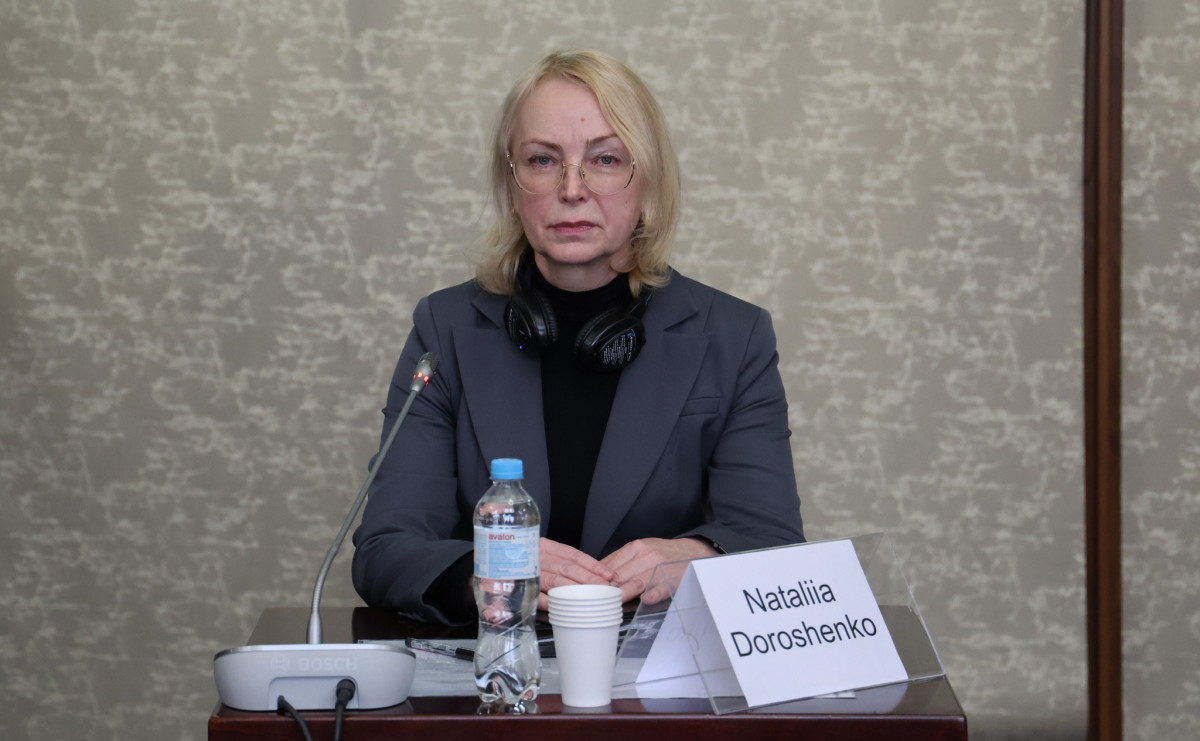
The interview opened with questions about a garden house declared in 2013. According to the candidate, her husband and his father built it on their own back in 2003. However, the land plot was privatized only in 2024, which drew the attention of the PCIE experts because the construction had taken place on land that had not been privatized at the time. Doroshenko explained that the house was built within a summer-house community association, and that the association’s land is currently being transferred into the ownership of the territorial community. The house is not registered as a residential property; she said it will be registered as such once it meets the relevant requirements.
Members of both PCIE and HQCJ also asked about Doroshenko’s husband’s garage business. She said he has been self-employed since 1998 and is currently registered as a first tax group individual entrepreneur. In 2025, he paid nearly UAH 46,000 in rent for the premises used for his business.
However, a HQCJ member questioned the profitability of his car repair business. Doroshenko said that her husband’s income is UAH 350,000; however, given taxes, rent, utilities, and the cost of parts, the commission member suggested the business would appear unprofitable and raised doubts that all income was being declared. Doroshenko responded that there is no division into “men’s” and “women’s” work in their family; they have been married for 36 years, she relies on her husband’s support, and—she said—no one who knows how he works has such doubts.
HQCJ members also asked about decisions Doroshenko made during the Revolution of Dignity period, when she served as a judge at the Rivne District Administrative Court in 2013. Among other things, they asked about rulings that annulled decisions by local councils to display the European flag alongside the State Flag of Ukraine during holidays and international events. Doroshenko was asked whose rights, and which specific rights, had been violated by those local council decisions, given the purpose of administrative justice.
She replied that although both sides in those cases were public authorities, the claims had been filed by prosecutors who, under their powers at the time, were required to protect the interests of the state, and the legislation then in force allowed them to do so. In her view, establishing that circumstance was sufficient grounds to cancel the local council decisions.
Questions were also raised about her professional competence. Asked how the amount of a whistleblower reward is determined, Doroshenko was unable to provide a correct answer. Her explanation of the definition of a “whistleblower” was also not sufficiently clear.
At the end of the interview, a PCIE member appeared surprised by Doroshenko’s response to a question about whether she had personally encountered corruption. She said no one had ever tried to influence her and no one had ever approached her about corrupt ways of resolving cases. The panel member replied that this was “hard to believe.”
Questions were also raised about her professional competence. Asked how the amount of a whistleblower reward is determined, Doroshenko was unable to provide a correct answer. Her explanation of the definition of a “whistleblower” was also not sufficiently clear.
Vladyslav Kukhta
Chairman of Chernihiv District Court, Chernihiv Region
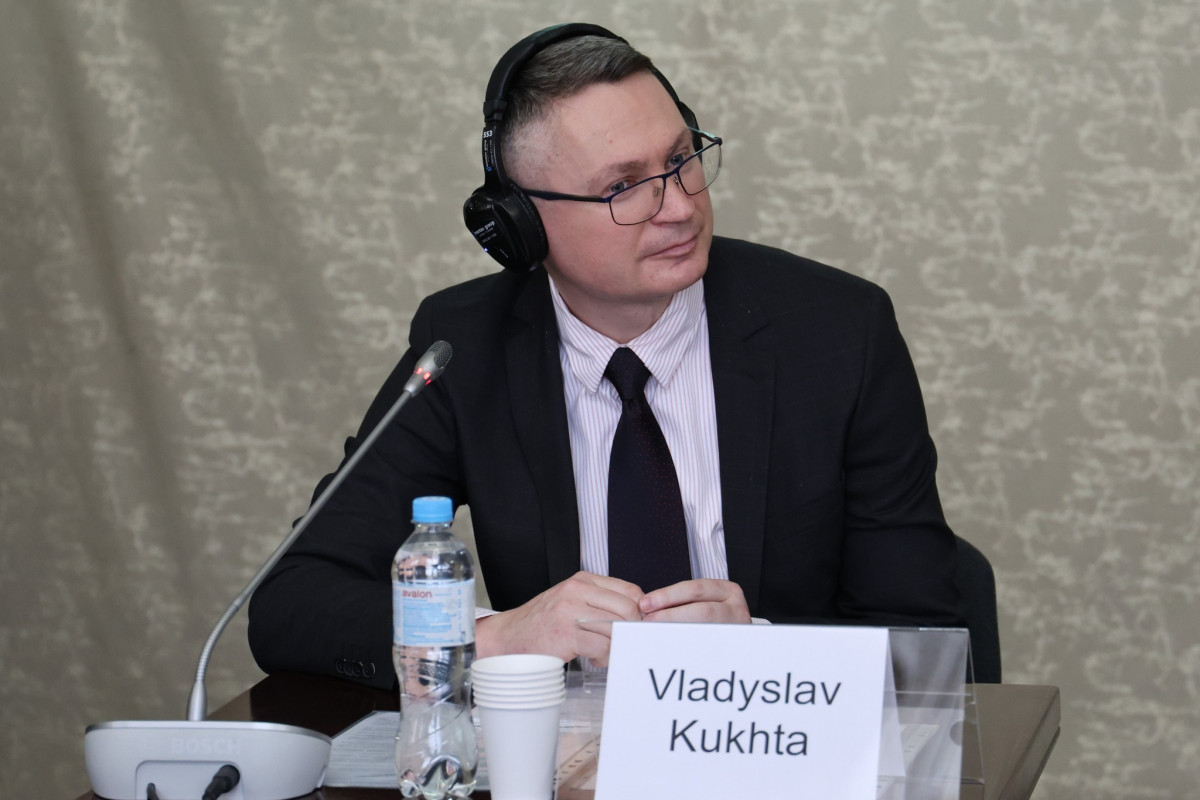
The interview began with a question from PCIE about what the candidate, as chief judge, had done to foster a corruption-free environment in the court. Kukhta responded that the court currently has only four judges, and that they are essentially “in full view” of one another. Any deviation from fair and honest adjudication, he said, would be noticeable to colleagues.
A PCIE representative then asked whether the candidate saw additional corruption risks in the fact that all judges can see case assignments, and that, in some situations, it may even be possible to predict who will receive a case if, for example, someone is out sick. Kukhta replied that their court uses an automated case assignment system. He added that some cases require a three-judge panel, so hearings are postponed until colleagues return from sick leave. In his view, there have been no situations in which it was possible to anticipate which judge would receive a particular case.
PCIE then asked about a disciplinary sanction imposed on the candidate by the High Council of Justice in 2020 for removing himself from a criminal case. The recusal was based on the fact that the candidate’s wife was acquainted with one of the defense attorneys in the case. Kukhta said that he and the other judges on the panel granted the recusal so the defense would not be able to challenge the decision on that basis. As a result, however, the High Council of Justice sanctioned him for violating recusal rules. He did not appeal that decision.
Kukhta did not disclose this in his 2021 integrity declaration because, he said, he believed that in 2019 he had not yet been held liable, and by December 2020 the sanction had already been expunged. He therefore saw no need to report it, though he later acknowledged that this might not have been entirely ethical.
The judge was also asked about the negative practice of closing DUI cases (Article 130 of the Code of Administrative Offenses) due to the expiration of the statutory time limit. He explained that such decisions occurred when the limitation period was three months. Because the court has jurisdiction over rural areas, sending postal notices takes at least three days, and additional time is needed for a summons to be delivered or returned if not received. In that way, the deadline could expire. He noted, however, that since the limitation period was extended to one year, the court has not had such cases.
The commission pointed out that in another Article 130 case (driving under the influence), the judge had treated the offense as minor. At the time, however, legislative amendments had already entered into force, prohibiting courts from classifying Article 130 offenses as minor. The judge acknowledged the error, after first explaining that the person facing administrative liability had cancer.
Further questions concerned the candidate’s judicial ethics—specifically, a situation in which he stepped down as court chairman for two months and then was elected chairman again for a third term. Under the law, the same judge may not serve more than two consecutive terms as court chairman. A brief “pause” in leadership therefore appeared to the commission to be an attempt to circumvent that restriction in order to secure a third term. Another notable aspect was that the judge elected as court chairman after Kukhta, who served for those two months, resigned immediately upon reaching the required length of service, obtaining lifetime judicial benefits. Legislation also provides a 10% salary supplement for serving as court chairman. As a result, that judge retired with the additional 10% reflected in her benefits, while Kukhta was able to be elected for a third term.
Kukhta said he views the three-year term limit positively, but that his colleagues did not want to run for chairman. He added that after completing his second term, he took leave to give colleagues time to discuss and agree on a candidate. However, aside from the colleague who ultimately resigned, no one volunteered.
When asked by the commission whether he knew about that judge’s intent to resign, he initially said yes, but then stated that he “did not know for sure.” He also said he had hoped she would “work at least another year and a half.” Asked whether he vacated the court chairman’s office during her two-month term, he replied, “No.”
HQCJ asked why he had not explained these circumstances in response to PCIE’s inquiry. He answered that at the time he did not see a need to do so, because he had “always acted honestly.”
Further questions concerned the candidate’s judicial ethics—specifically, a situation in which he stepped down as court chairman for two months and then was elected chairman again for a third term.
Ihor Makaryk
Attorney
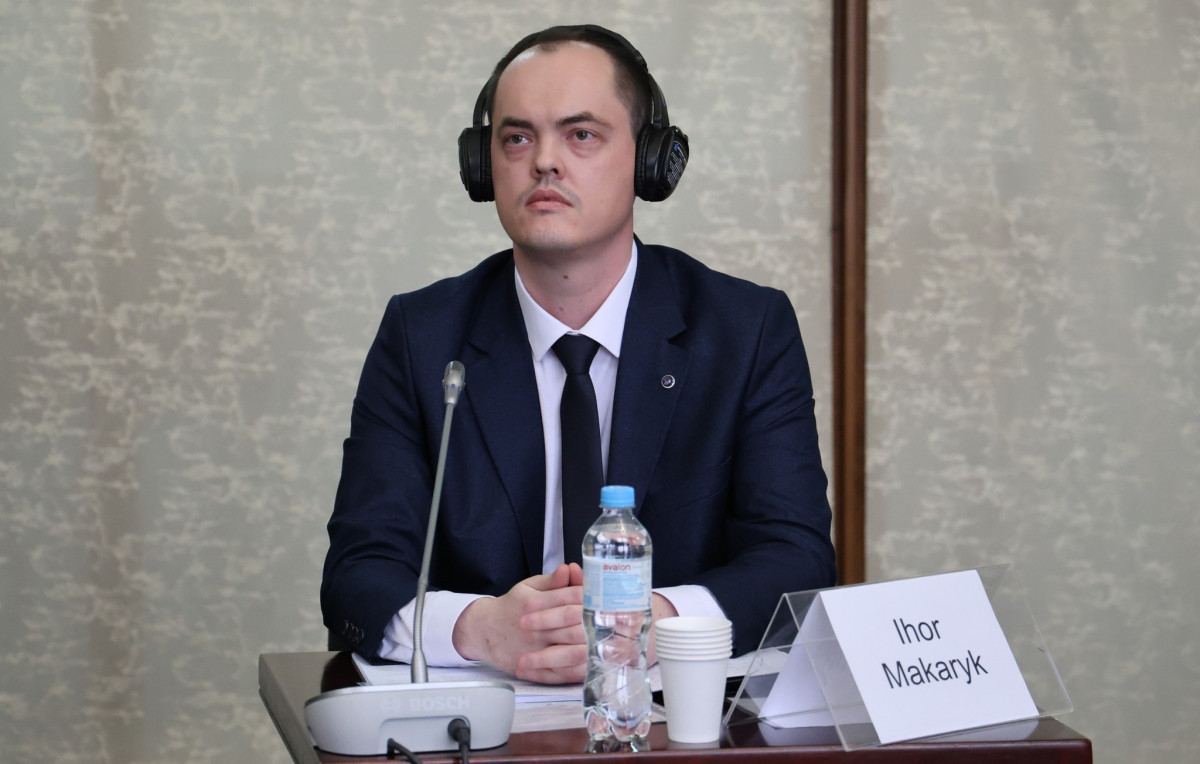
The interview opened with questions about Makaryk’s motivation and his lack of judicial experience. Ihor Makaryk said he views the absence of courtroom experience as an advantage because it allows him to approach criminal procedure from a different perspective. He also emphasized his high level of competence, stating that he performed well on the exams and drafted procedural documents that, in his words, were even better than those prepared by sitting HACC judges.
A substantial portion of the questions from PCIE and HQCJ focused on financial integrity and potential conflicts of interest. In particular, the panel was interested in Makaryk’s lease of office space for his legal practice. He rents a 49.1 m² office in Lviv from his employer for UAH 1,000. Asked whether this rate reflects market pricing, he said it does, citing the experience of other attorneys.
During the interview, it also emerged that the candidate had represented, free of charge, relatives of the owners of the company where he works, and from which he rents office space for UAH 1,000. Makaryk said he does not see this as a conflict of interest or connected to the low rent: “All my work and my entire legal life—I consider it a hobby, my true calling.” He added that under martial law he decided he would provide all legal services pro bono.
HQCJ pointed to a 2023 decision of the Sykhiv District Court under which UAH 5,000 in legal fees was awarded in favor of the candidate’s client, but those funds were not reflected in his tax reporting. Makaryk explained this by saying either the contract had been terminated or the funds were never actually paid despite the court decision.
TI Ukraine also found a case involving this candidate in which, in the Terebovlia District Court, he represented the claimant, his father, a former judge of the same court. In 2022, the court granted his father’s claim and ordered reimbursement of his litigation costs, including UAH 2,000 in legal fees, from the state budget.
Separate attention during the interview was given to military service obligations. The candidate received “reserved” status in the summer of 2024 as in-house counsel for a critical enterprise. Asked what he had done to comply with his obligations between 2022 and 2024, Makaryk said he contacted the Territorial Recruitment and Social Support Center to update his records, where he was allegedly told that “his candidacy was not being considered.”
Makaryk was unable to answer a question about how many European countries have anti-corruption courts, even though during the interview he referred to his desire to join the “European family.” He also interrupted members of the commission, prompting remarks asking him to listen to questions through to the end.
Makaryk was unable to answer a question about how many European countries have anti-corruption courts, even though during the interview he referred to his desire to join the “European family.” He also interrupted members of the commission, prompting remarks asking him to listen to questions through to the end.
Olena Tanasevych
HACC Judge
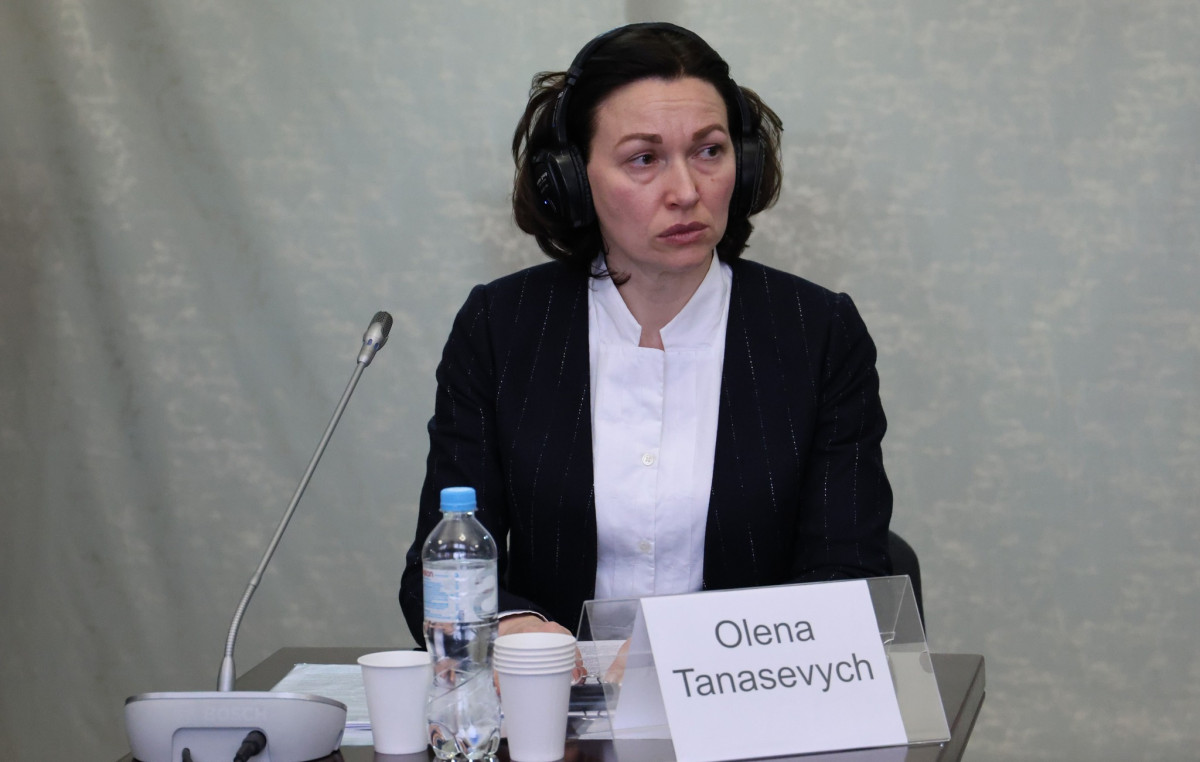
Olena Tanasevych’s interview focused largely on the circumstances of her attendance at an event that attracted public attention as the “Kivalov party.” According to Tanasevych, she came to the educational institution’s premises outside working hours to discuss organizing online lectures. Once she arrived, the head of the institution informed her that a pre–New Year’s event was taking place and invited her to join briefly. She agreed, saying she planned to stay for no more than 15–20 minutes.
Describing what happened at the event, Tanasevych said that upon entering the venue she noticed people present whom she described as figures in publicly known criminal proceedings. She stated that she understood the potential sensitivity of the situation and therefore avoided any communication with those individuals; she added that they did not attempt to initiate contact with her either. Tanasevych also emphasized that no complaints about her actions had been filed with the High Council of Justice. She referenced her public explanations, including participation in a conversation with the Executive Director of Transparency International Ukraine. Asked whether she was aware of allegations involving Serhii Kivalov, Tanasevych said she had not interacted with him personally but rather with the head of the relevant unit at the institution, and added that she was not aware of any criminal proceedings involving Kivalov.
The next block of questions concerned asset declarations and financial circumstances. PCIE and HQCJ pointed to the results of a full review of her declarations and noted inaccuracies. Tanasevych attributed these issues to the specifics of anti-corruption legislation and the possibility of differing interpretations, denying any intent to conceal information.
The cost of vehicles was discussed separately. Tanasevych said that some of the vehicles were owned by legal entities and used by her under a right-of-use arrangement; in her view, she was therefore not responsible for their purchase and did not know their value. She emphasized that she still listed them in her declarations even when, as she put it, there was no direct legal obligation to do so. A PCIE member also raised the possibility of concealing assets through companies, noting that the lack of clear answers about vehicle values could create that impression and that, as a HACC judge, she should demonstrate a high standard of disclosure.
HQCJ also asked a series of follow-up questions about the nature of Tanasevych’s cooperation with educational institutions, reports of interference in her work as a judge, cross-border travel, and certain aspects of her declarations. Tanasevych acknowledged that a land plot had not been reported in her 2021 declaration and said her husband provided the information too late. She said that once she learned her husband had acquired it, she contacted the National Agency on Corruption Prevention through her personal online account.
The interview also addressed her use of official housing in Kyiv. Tanasevych said that while she was on maternity leave she does not actually live there and instead stays with her child in the suburbs of Kyiv. She explained that the apartment is located near a military facility and lacks heat and electricity, which makes it unsafe to live there with a small child.
Olena Tanasevych’s interview focused largely on the circumstances of her attendance at an event that attracted public attention as the “Kivalov party.”
Mykola Rubashchenko
Associate Professor, Criminal Law Department, Yaroslav Mudryi National Law University
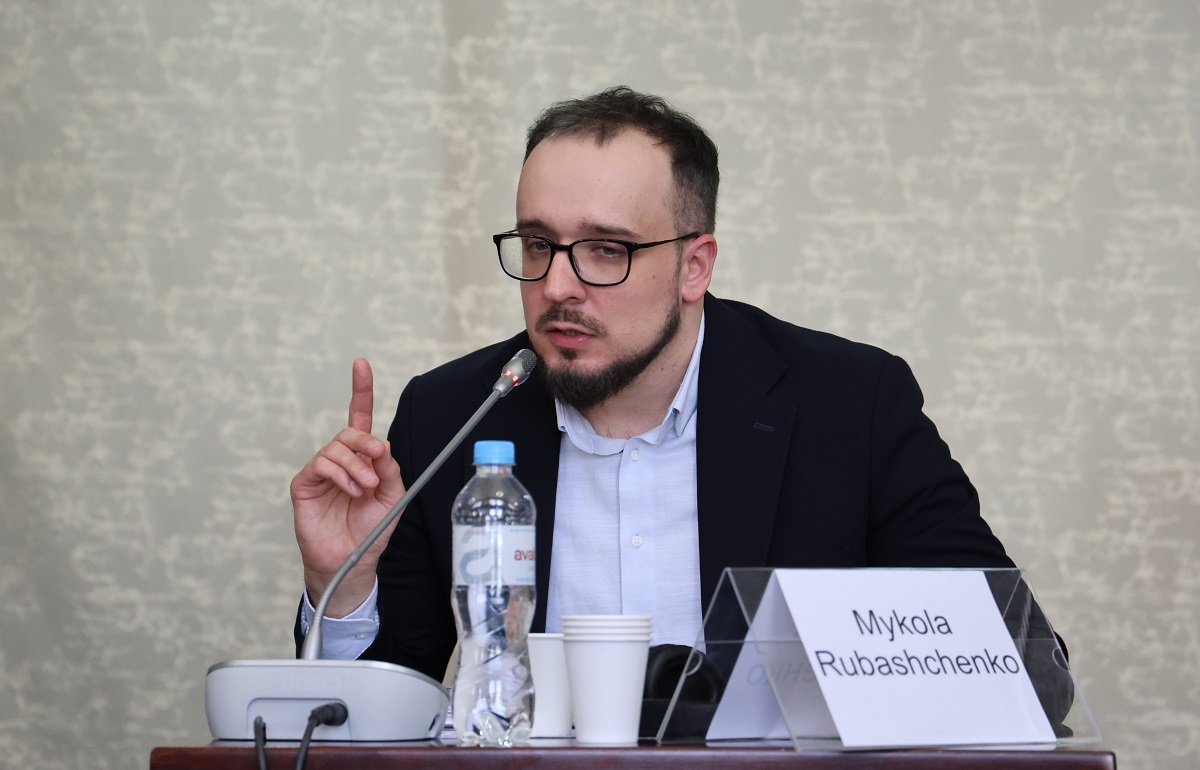
The interview began with a question about the professional accomplishments the candidate is most proud of. Among five key achievements, Rubashchenko cited his academic work, including dissertations on national security and liability for collaborationism, as well as his expert involvement in drafting legislation to criminalize sanctions violations. In response to a PCIE follow-up about his membership in a working group on amendments to the Criminal Code, the candidate clarified that he served as an expert evaluating the concept and helping develop the draft law on criminal liability for violations of sanctions legislation.
Asked about a point in his motivation letter regarding insufficient reasoning in court decisions, the candidate was unable to recall specific examples from HACC case law. He explained this by noting that he has published relatively few articles on anti-corruption topics. PCIE also asked about his work with the “Institute of Legislative Ideas” and whether that could create a conflict of interest if he became a HACC judge. Rubashchenko said that while conflicts of interest are a potential risk in any field, in his case the risk is not “extremely high.”
PCIE questioned his motivation given that he is simultaneously participating in a competition for a position at the Kharkiv Court of Appeal. Rubashchenko stated candidly that if he were successful in both competitions, he would choose the Kharkiv Court of Appeal. He explained that Kharkiv is his alma mater and that appellate work appeals to him because it involves a broader range of cases than the narrower specialization of the HACC.
PCIE and HQCJ pointed to inconsistencies in his declarations regarding his place of residence and family composition. Rubashchenko explained that from 2006 to 2022 he lived in a dormitory, and after the start of the full-scale invasion he moved to his parents’ home in the village of Myronivka. He said he listed the dormitory in his declarations only as long as his rental agreement remained in effect. As for why his brother, who also lived with him in the village, was not included in his 2022 declaration, Rubashchenko referred to the “183-day rule,” stating that he carefully calculated the duration of their shared household in order to comply with legal requirements.
HQCJ also raised questions about the lease of an apartment in Kyiv, including the absence of the owner’s details. The candidate said the arrangement had no legal significance and was signed between a friend of the owner’s mother and his own friend. Asked about his father’s income from cultivating approximately 11 hectares of land in 2022, reported as only UAH 16,000, Rubashchenko said he does not get involved in those matters and that he took the figure from his father’s online taxpayer account. He added that such income is entirely plausible and that the activity could even have been loss-making.
HQCJ noted the candidate’s atypical activity as an individual entrepreneur: in 2023, after six months of work and UAH 76,000 in income, he closed his business, then later entered into two additional contracts as an individual, and in 2024 reopened his individual entrepreneur account. Rubashchenko described this as a “first attempt,” explaining that clients had been unwilling to work with him as an individual entrepreneur. He denied that this was an effort to optimize taxes. HQCJ also asked about the royalties he declared in the amount of UAH 12,000 for an expert examination. The candidate said this wording reflected requirements imposed by the commissioning organizations, for which he developed tests.
In the end, responding to questions about his lack of judicial experience, the candidate acknowledged that he has no courtroom experience at all. He said his qualifications are also based on analyzing judicial decisions and watching livestreams of HACC hearings. Rubashchenko added that he is inspired by academic colleagues who have gone on to serve at HACC and at the Supreme Court.
In the end, responding to questions about his lack of judicial experience, the candidate acknowledged that he has no courtroom experience at all. He said his qualifications are also based on analyzing judicial decisions and watching livestreams of HACC hearings. Rubashchenko added that he is inspired by academic colleagues who have gone on to serve at HACC and at the Supreme Court.
Iryna Kuzina
Attorney
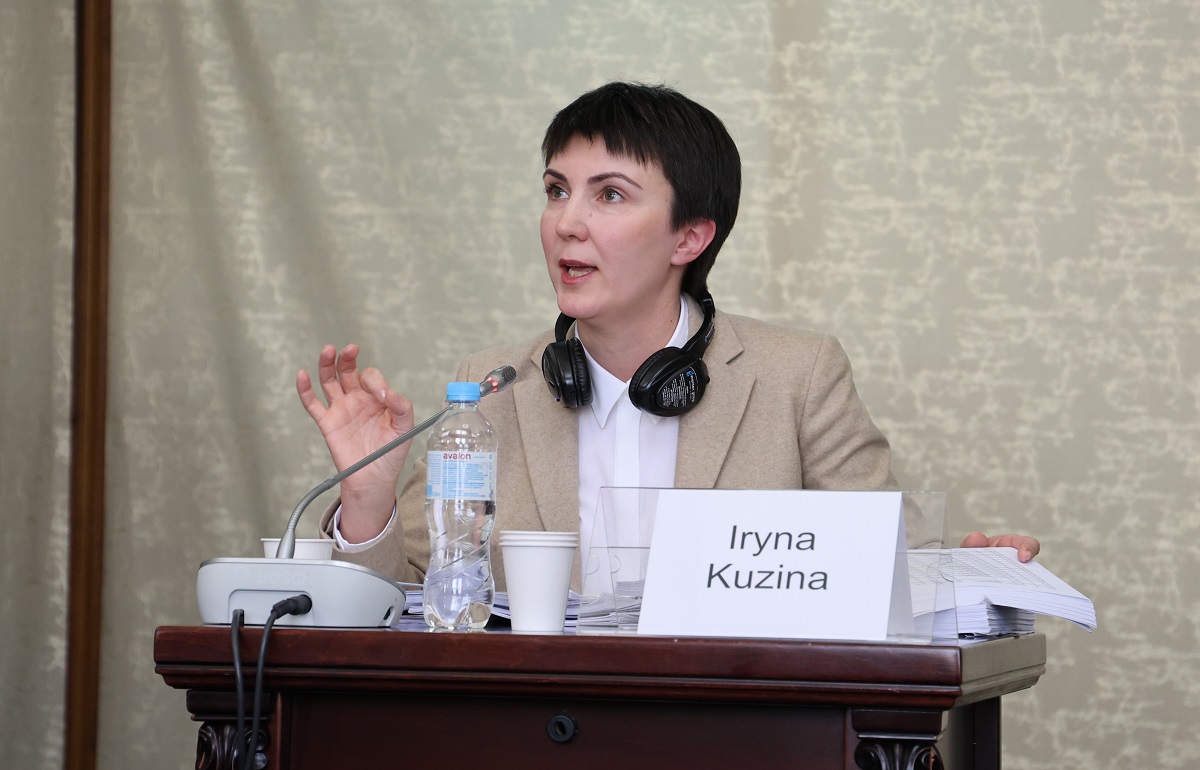
During Iryna Kuzina’s interview, members of PCIE and HQCJ paid particular attention to her income, which appeared significantly understated in certain periods. The candidate explained that early in her career, or when she wanted to gain experience, she worked “for her name,” including within the pro bono legal aid system, and that she reduced her workload during periods of pregnancy.
The panel separately examined the issue of so-called “gray” salary and Kuzina’s income during her employment at the law firm Ilyashev & Partners. When asked directly about the practice of unofficial payments, the candidate confirmed that in the past she had agreed to such arrangements, noting that she would act differently today.
The subsequent discussion was about the relationship between her description of the firm’s prestige and compensation level, and the amounts reflected in official records (approximately UAH 50,000 for part of 2015, and for 2016–2017 combined). Kuzina pointed to the employer’s responsibility for accurate financial reporting and said she was limited in what she could disclose about her income due to a nondisclosure agreement. At the same time, given the discrepancy between the circumstances she described and the recorded income, these explanations do not objectively eliminate reasonable doubts that she may have received unofficial payments during that period, especially in light of her own description of the firm’s high status.
Many questions concerned matters reviewed by the High Council of Justice in connection with a 2018 report of interference in a judge’s activities. Members of PCIE and HQCJ examined Kuzina’s role and procedural conduct as defense counsel in detail, including her lateness to hearings, the filing of numerous motions, and the overall logic of the defense strategy. The candidate disagreed with the assessments contained in the High Council of Justice materials, emphasized concerns about the Council’s review procedure, and presented her own account of the situation. In particular, she said the delays were due to objective reasons and that she informed the court in advance, which is confirmed by the case materials.
The interview also addressed the candidate’s trip to the Russian Federation in 2018. Kuzina explained that the business trip to Moscow was professionally necessary as part of her work at Ilyashev & Partners and related to work for a client from Kazakhstan. She said she did not stay overnight in Moscow and did not spend any money, as all expenses were paid by the law firm, and that her work that day took place at the firm’s Moscow office.
The panel separately examined the issue of so-called “gray” salary and Kuzina’s income during her employment at the law firm Ilyashev & Partners. When asked directly about the practice of unofficial payments, the candidate confirmed that in the past she had agreed to such arrangements, noting that she would act differently today.
Dmytro Ostapenko
Attorney
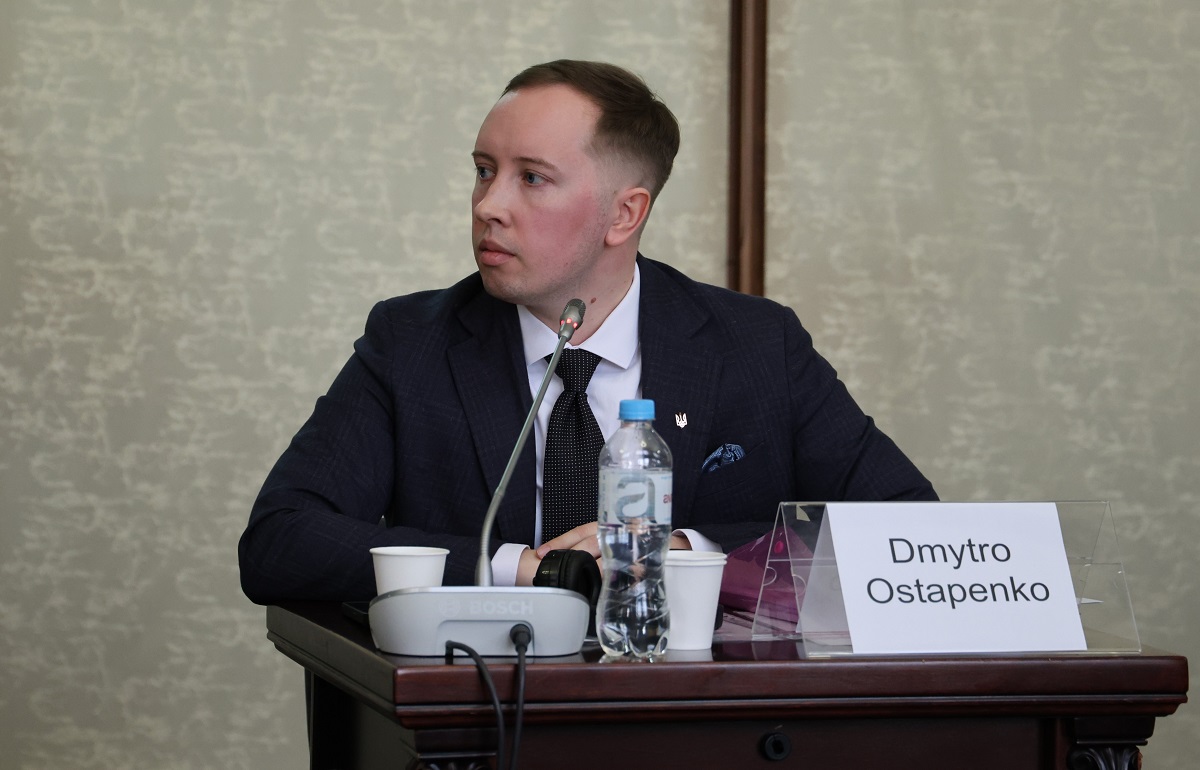
The first questions from PCIE focused on how Ostapenko responded to attempts at corrupt influence—both from clients and from colleagues who tried to leverage his membership in the Public Integrity Council to make it easier to pass the qualification assessment. He referenced these incidents in his dossier. Ostapenko said he cut off any communication with such people, viewing them as a threat to his reputation and career. However, he noted that as an attorney he is bound by confidentiality and professional ethics rules, and therefore could not cooperate confidentially with law enforcement to investigate such approaches.
Asked whether he informed colleagues on the Public Integrity Council about specific cases of pressure, Ostapenko confirmed that such discussions took place in the council’s group chat. In response to a hypothetical question about what he would do in a similar situation as a HACC judge, he said the law requires a judge to report any interference in their work and that he would follow that requirement.
Most of Ostapenko’s interview focused on his role on the selection commission for the head of ARMA, specifically his vote for Olena Duma in the final round. After civil society criticism of Duma’s appointment as head of ARMA, he withdrew his vote and publicly apologized for the decision. Notably, Ostapenko was the only commission member to publicly acknowledge that his vote had been a mistake.
A PCIE expert asked who had delegated Ostapenko to the commission, and he replied that it was then–Prosecutor General Andrii Kostin. The expert then asked what motivated Ostapenko to vote for Duma, and later to withdraw that vote. Ostapenko explained that some materials about the candidates were sent to him by email, while other documents were stored on a computer at the Cabinet of Ministers, and he was not always informed when new information appeared. In particular, he said that the full information from NABU concerning a criminal proceeding involving Duma, as he later learned, was available only on that computer. The documents he had access to did not indicate that she was a suspect. He said that if he had had the full information, he “would never have voted for Ms. Duma.”
He also said the voting procedure had not been clarified in advance and in fact conflicted with the rules of procedure. Ostapenko said he believed the public vote was only meant to rank candidates, but in practice the commission chair announced the winner essentially after the first round.
Members of PCIE and HQCJ noted, however, that a clear agenda should have been set before the official vote and that commission members had information from the NACP, NABU, NGOs, and other sources—and therefore should not have made such an error. Ostapenko again stated that he did not have access to all the information. His withdrawal of the vote prompted a further PCIE question: did that mean that, as a judge, Ostapenko might similarly respond to public pressure and reverse decisions after high-profile media coverage? Ostapenko said he sees a clear difference between serving on a selection commission and serving as a judge: in the first case there is far more discretion; in the second, there is a strict procedure, deliberations in chambers, and a system of appellate review. “A judge cannot withdraw their vote,” he emphasized, adding that the ARMA selection process was “more political than legal.”
HQCJ also asked directly whether the candidate felt he had developed “professional distortion” from identifying with civil society. Ostapenko replied that he does have a form of distortion, but an attorney one—an inclination toward critical assessment of information and distrust even toward his own clients. At the same time, he acknowledged that some NGOs irritate him because of the way they communicate.
Among other issues, HQCJ focused on several facts from the candidate’s dossier. These included a $25,000 loan received in 2020, part of which ($9,000) was repaid that same year, although the repayment was not declared as debt repayment. Ostapenko explained that the declaration form in use at the time did not technically allow him to record such a repayment.
Regarding his membership in the Svoboda party in 2013–2014 and his candidacy for Parliament in single-member District No. 54 (Shakhtarsk, Donetsk Region), Ostapenko said this reflected his desire to counter trends of Russification and separatism in Donetsk Region during the Yanukovych era. According to him, at the time only that party promoted a clearly pro-Ukrainian stance. He said that beginning in March 2014 he ceased all party involvement.
Most of Ostapenko’s interview focused on his role on the selection commission for the head of ARMA, specifically his vote for Olena Duma in the final round. After civil society criticism of Duma’s appointment as head of ARMA, he withdrew his vote and publicly apologized for the decision.
Nazar Hryn
Judge, Saksahanskyi District Court of Kryvyi Rih
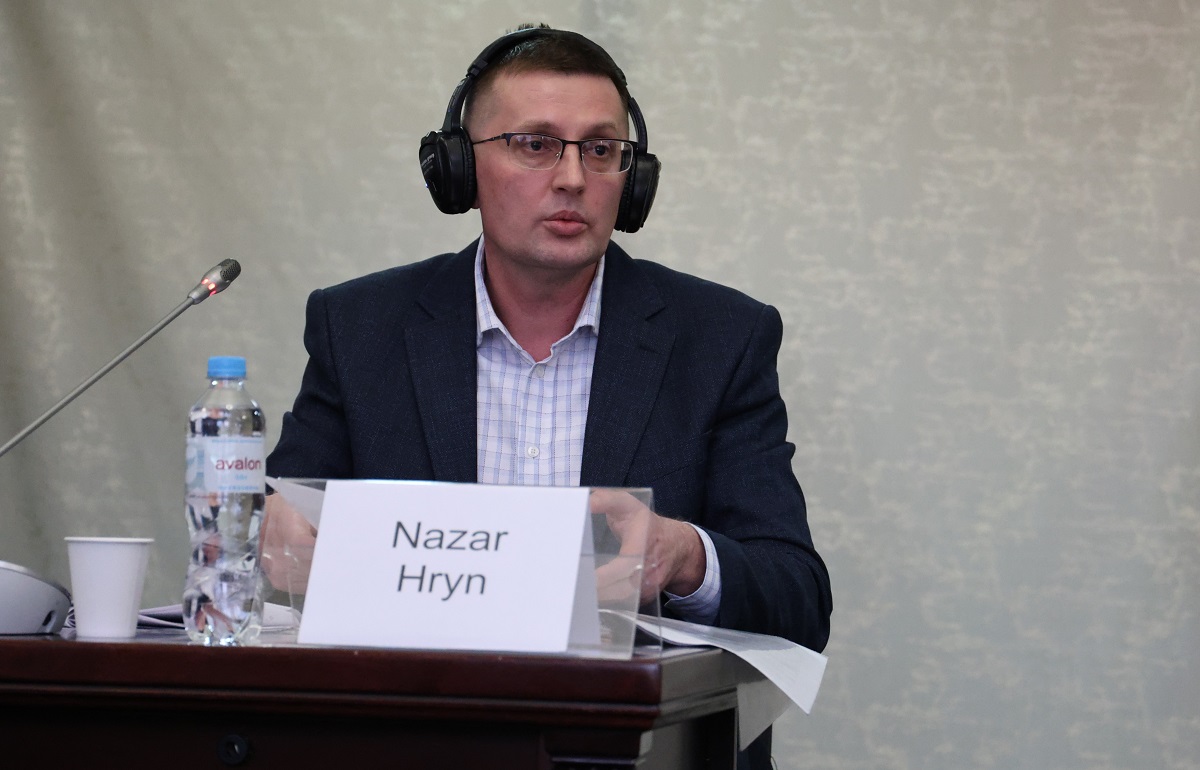
The interview opened with PCIE questions about a land plot in Poltava that Hryn received in 2010 while working as a prosecutor. The commission noted that his brother, also a prosecutor, received a similar plot around the same time. Hryn said he acted strictly within the Land Code: he filed an application and completed the paperwork to obtain land for construction. He denied exerting any influence on the council or making any payments, and explained that no construction took place because he ultimately continued working in Kryvyi Rih.
PCIE also raised questions about the candidate’s official housing in two different cities. Regarding an apartment in Kryvyi Rih, for which he received a right of use in 2018, Hryn said he did not actually live there and lost the right to it in 2022. According to him, he was not given keys to the apartment and was advised to climb in through a window to access it. It also emerged that unhoused people were living inside, so he had to rent alternative housing.
Questions were also raised about an official apartment in Poltava that he received in 2010. The candidate said he did not vacate it after moving from the prosecutor’s office to the judiciary because his wife (a prosecutor) continued living there, and later her parents—who have internally displaced person status—began living there as well. Although he had only about nine years of service at the time he left, he said he believed he had the right not to vacate the apartment. He also noted that his ex-wife has not actually lived there since 2018.
PCIE drew attention to the purchase of an apartment in Kryvyi Rih by the candidate’s mother-in-law, where Hryn now lives with his wife. Questions arose because the candidate held a power of attorney for the purchase but did not state the purchase price in his declaration. Hryn acknowledged this as a mistake, explaining that although he knew the price when the contract was signed, he failed to include it. The panel also focused on the price itself: the apartment was purchased for UAH 164,000, which PCIE said was three times below market value. The candidate denied that the price was understated, explaining that the owners needed to leave urgently for Poland and that the apartment had an old Soviet-era renovation. He also stressed that he did not contribute any personal funds, as the purchase was made entirely with his mother-in-law’s money.
PCIE raised the issue of child support litigation. In 2018, the candidate’s first wife filed a claim; in 2020, his current wife filed a claim even though they were married at the time. Hryn explained that his second wife did so to equalize the rights of the children. He later filed his own claim to reduce the payment amount.
HQCJ noted that the candidate’s questionnaire did not have examples of cases involving corruption-related offenses, even though he had handled nine such administrative proceedings. Hryn said he remembers that one was closed due to the statute of limitations, and in the others he did not issue a final decision because his judicial term ended.
HQCJ also discussed delays in a case on holding a judge liable. Hryn attributed this to the case being transferred among courts over an extended period and to the inability to consider the matter without the person concerned being present. The commission also pointed to 24 disciplinary complaints, including one from the Prosecutor General regarding a case under Article 130 of the Code of Administrative Offenses, involving a prosecutor. HQCJ was struck by the speed of the review—the case was closed within a week. The candidate denied there were grounds for recusal, saying that although the prosecutor had supported the prosecution in some of Hryn’s cases, their relationship was purely professional. Hryn closed the case for lack of an offense.
HQCJ also asked about the repeated viewing, in the unified database of court decisions, of information about a person with the surname Mehamiedov. According to system logs, searches were conducted using the candidate’s access key over the period 2018–2025. Hryn said he did not recognize the name, was not monitoring anything, and could not explain the activity. He added that an internal inquiry would be conducted.
During HQCJ’s theory questions, the candidate appeared uncertain. He was unable to clearly list corruption-related crimes and gave a vague answer about how to distinguish administrative corruption offenses.
HQCJ also asked about the repeated viewing, in the unified database of court decisions, of information about a person with the surname Mehamiedov. According to system logs, searches were conducted using the candidate’s access key over the period 2018–2025. Hryn said he did not recognize the name, was not monitoring anything, and could not explain the activity.
Vita Matolych
Judge, Nadvirna District Court, Ivano-Frankivsk Region
PCIE asked Matolych to explain her commute, since she lives in Lviv while working in Nadvirna, Ivano-Frankivsk Region (about 86.1 km from Lviv). Matolych said she wakes up at 5:00 a.m. almost every day to catch a 5:30 a.m. bus to Ivano-Frankivsk, where she transfers to another bus to Nadvirna. She said the trip takes about three hours one way. When she had to work late, she said she rented hotel rooms, but could not provide proof. For example, because she paid in cash. Matolych confirmed that this schedule sometimes meant violating curfew.
HQCJ expressed doubts that she truly spends up to seven hours per day commuting to and from work. Matolych answered she had considered moving to Ivano-Frankivsk, but no longer had that opportunity by the time of her appointment; she did not provide additional details, citing personal circumstances.
A particularly notable point was that in 2018, while serving as a judicial assistant, Matolych searched for court decisions involving her relatives by name or phone number using her full access to the court decisions register. She claimed that name-based searches can be performed not only with full access but also via the public portal of the judiciary. As for the phone numbers, she confirmed they belonged to her relatives but could not recall why she ran the searches: “All of these phone numbers belong to members of my family; I don’t remember why that search request was made.”
PCIE also asked about her motivation to pursue academic work, given that she defended a dissertation titled “Protection of Professional Secrets in Criminal Proceedings.” She explained that in 2017 she decided to become a judge, but the competition was canceled by a Supreme Court decision, so she chose to develop in another field.
Experts also asked Matolych to provide her academic papers in DOC format, but she did not, saying she only had PDF versions. She later acknowledged that she had drafts, but the final DOC files that she exchanged with her academic supervisor were not saved. PCIE found this unusual.
The candidate reported no savings despite a judge’s relatively high salary, explaining that additional expenses and full financial support for her parents were the reason.
HQCJ suspected that the candidate uses her mother’s undeclared vehicle. The first question concerned a traffic accident involving an undeclared TOYOTA RAV4 owned by her mother. On the day of the accident, Matolych was driving that car to work and picked up a colleague. The commission found it odd that she drove the car only once and caused an accident. Matolych added that she had been at her parents’ home that day, there was no public transportation connection, and the only option was to go by car; she also said her mother sometimes gives her a ride.
Matolych claimed she travels to her parents in Stryi by public transportation, not the other way around. However, HQCJ said it had information that the vehicle in question had traveled the Stryi–Lviv route dozens of times. Matolych said her parents traveled to Lviv because they have an apartment there, but that does not mean they were traveling to see her. She did not provide complete information about how her parents serviced and maintained the vehicle.
Questions were also raised about her professional performance: despite a relatively light caseload, there were 193 instances of missing deadlines for sending the texts of court decisions to the Unified State Register of Court Decisions. Matolych attributed these problems to power outages in 2023–2024.
It was also noted that the candidate listed no referees in her questionnaire, because she believed she was supposed to name someone competent in the anti-corruption field. Asked about dismissals in DUI cases, she responded that the problem lay with case participants who failed to appear and did not provide necessary evidence, police officers included.
Overall, during the interview, Judge Matolych at times avoided giving direct answers, which required experts to repeat certain questions multiple times.
Overall, during the interview, Judge Matolych at times avoided giving direct answers, which required experts to repeat certain questions multiple times.
Dmytro Movchan
Judge, Novokodatskyi District Court of Dnipro
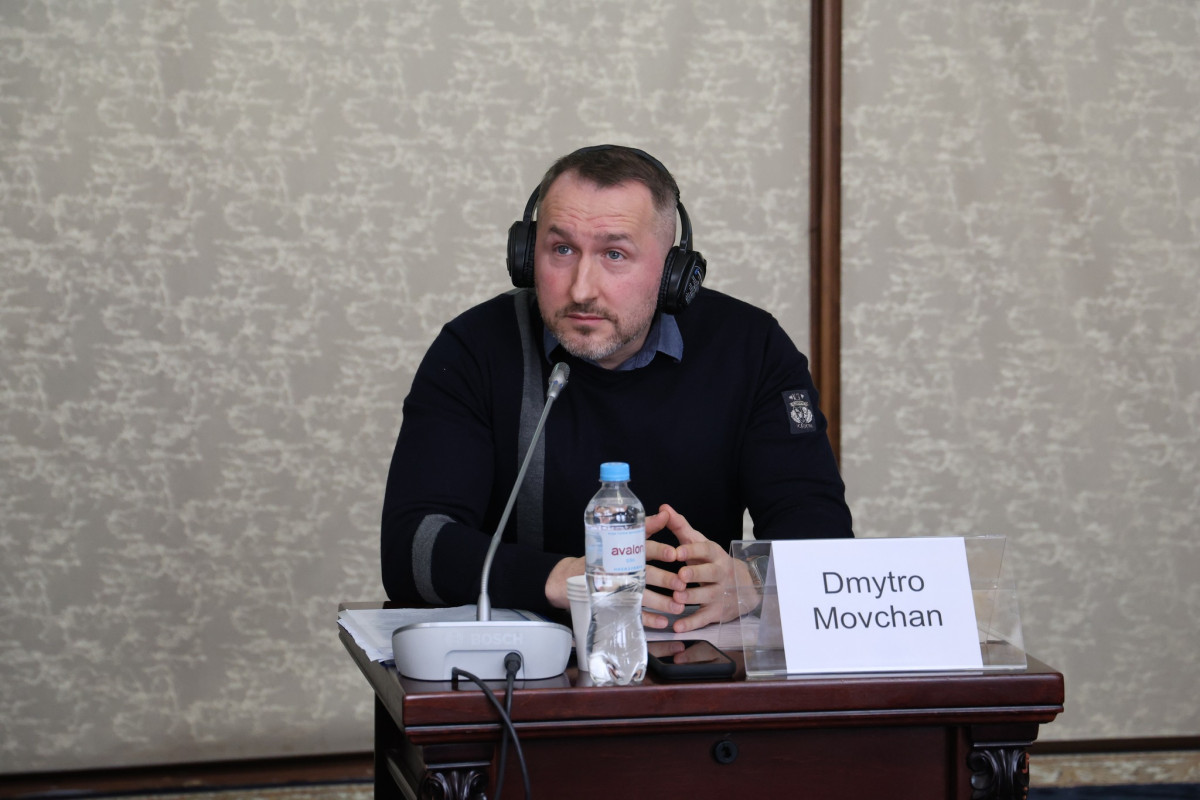
During the interview, PCIE paid particular attention to an analysis of access logs for the Unified State Register of Court Decisions. Movchan was asked about systematic searches (more than 100 times between 2018 and 2025) conducted using the full name of a third party with whom the candidate is said to have long-standing personal ties and indirect property and financial connections. A PCIE member noted that this frequency of checks required a separate explanation given the nature of full access to the register and judicial ethics standards.
The candidate gave two reasons explaining the searches. First, he said he was trying to avoid a potential conflict of interest. According to Movchan, in one criminal proceeding, there was a piece of real estate that a long-time acquaintance of his intended to acquire in the future. Even though he received a response from the pretrial investigation authority stating that the person was not involved in the proceeding, the judge said he decided to verify this himself in the register, explaining that he needed to personally confirm there were no risks. However, in response to follow-up questions from HQCJ about the legal nature of such a conflict of interest and what it might have entailed, the candidate did not provide a clear answer.
Second, Movchan said the same individual had approached him for advice about another matter the person had in a different court. The person reportedly contacted him because of doubts about the attorney’s legal position. Movchan said he checked information about the proceeding to understand its substance and possible risks in that legal strategy, and then allegedly advised the person to change counsel. This episode also drew PCIE’s attention in terms of the limits of permissible judicial conduct outside a judge’s own procedural powers and the use of full-access tools in the register.
The interview also addressed Movchan’s simultaneous status as both an attorney and a judge. He said he obtained his attorney’s certificate during a period when he did not have judicial authority, and that, at the time, this was not regarded as a violation. He stressed that he did not actually practice law and that he suspended the certificate on the same day it was issued.
PCIE also examined his family’s assets and publicly available information about his wife’s professional activity. In particular, PCIE noted social media references suggesting she had a substantial consulting practice as a psychologist, while no corresponding income was reflected. Movchan explained that her work was purely unpaid because she is still in training, and such practice is required as part of the certification process. He said it was not accompanied by any income.
The interview also addressed Movchan’s simultaneous status as both an attorney and a judge. He said he obtained his attorney’s certificate during a period when he did not have judicial authority, and that, at the time, this was not regarded as a violation. He stressed that he did not actually practice law and that he suspended the certificate on the same day it was issued.
Oleksii Zaitsev
Associate Professor, Criminal Law Department, Yaroslav Mudryi National Law University
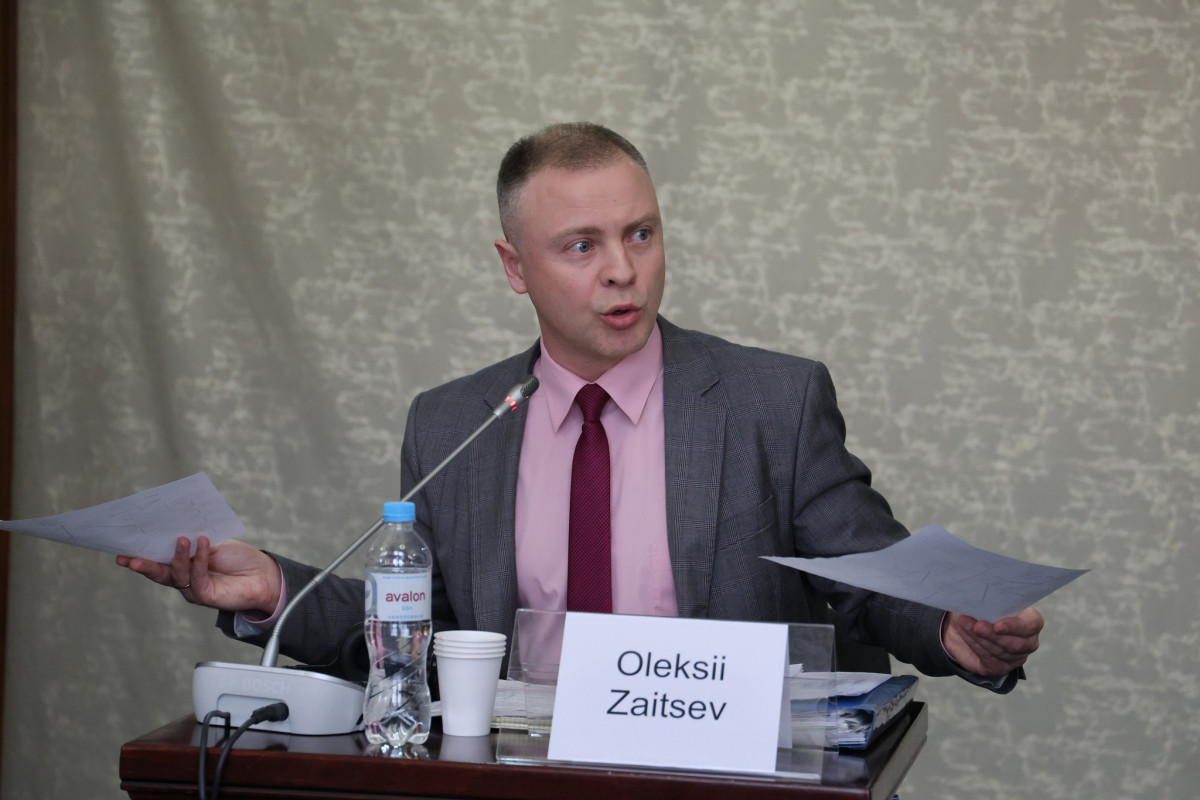
During the interview, PCIE focused primarily on financial and asset-related issues. A major point of discussion was the candidate’s opening of a large number of bank accounts within a short period of time. Zaitsev explained that this was part of a strategy to place funds in deposits and earn interest income, adding that in previous years he had received substantial amounts of interest. To illustrate the cash flow, he filed a request to submit a separate explanatory chart.
PCIE noted that in earlier years the candidate declared significant funds held in bank accounts, while in more recent declarations bank accounts are scarce, suggesting that savings may have been kept in cash. Zaitsev linked this decision to tax changes affecting passive income and to broader risks to the banking system during the full-scale war. PCIE emphasized that a sharp change in how funds are stored, combined with previously significant deposits, requires additional assessment in terms of financial consistency.
The interview also discussed Zaitsev’s privatization of an apartment and its sale almost immediately afterward. In particular, in 2005, as a servicemember, he received an apartment in Kharkiv Region, even though he had expected to receive housing in Kharkiv. He said that as early as the first viewing he decided to sell the apartment. He explained this by citing the inconvenient location, stressing that disposing of the property was his legal right.
Separate questions were raised about income from notarial practice. The candidate described the declared amounts as ordinary professional fees and explained that he stopped working as a notary when he transitioned into academia.
The commission also returned to the issue of holding attorney and notary status simultaneously. Zaitsev referred to the lack, at the time, of a clear mechanism for suspending an attorney’s certificate and said he did not, in practice, engage in legal work as an attorney. Nonetheless, the legal incompatibility itself became a distinct focus of the evaluation, because such dual status was essentially prohibited by law even if no attorney work was performed.
Additional topics concerned Zaitsev’s living in his sister’s apartment, his publication of an academic article in a Russian journal in 2014, and certain property-related matters involving family members. As in other parts of the interview, these issues were considered through the lens of the completeness of his explanations, consistency with his declarations, and the overall perception of the candidate’s integrity.
The commission also returned to the issue of holding attorney and notary status simultaneously. Zaitsev referred to the lack, at the time, of a clear mechanism for suspending an attorney’s certificate and said he did not, in practice, engage in legal work as an attorney. Nonetheless, the legal incompatibility itself became a distinct focus of the evaluation, because such dual status was essentially prohibited by law even if no attorney work was performed.
Marta-Mariia Yatsynina
Senior Lecturer, Ukrainian Catholic University
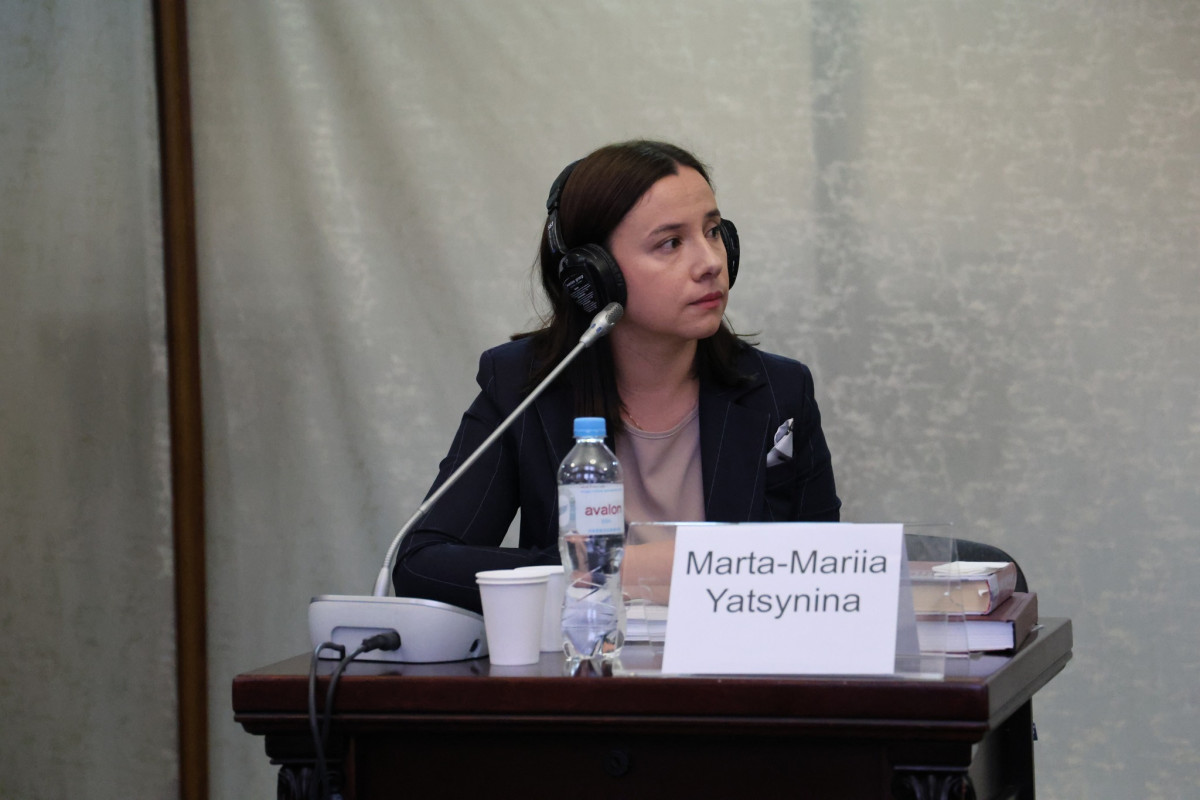
The interview began with a detailed discussion of the candidate’s employment history. From 2014 to 2023, she worked for 11 different companies involved in retail fuel sales.
PCIE members noted that the gas station chain where the candidate worked (including ANP) has been publicly linked to Ihor Kolomoiskyi’s Privat Group. Yatsynina said she worked as in-house counsel and had no information about the ownership structure; she added that she learned about the alleged links to Kolomoiskyi later from media reports. She also said that her numerous transfers among companies (registered under the same address and phone number) occurred without her involvement. Overall, she said she did not see any legal violations in this and was primarily interested in receiving official remuneration and ensuring taxes were paid.
In 2019, the candidate purchased a new car. PCIE members questioned whether she had sufficient funds for the purchase. Yatsynina provided detailed calculations of her family’s savings over several years, explaining what funds were available in each period to demonstrate her ability to pay for the vehicle.
PCIE also raised the similarity between the candidate’s dissertation and another dissertation defended in 2020. Yatsynina rejected allegations of plagiarism, stating that she had published articles on the topic as early as 2016–2017. In her view, it could have been the other scholar who adopted her sequence of presentation, rather than the reverse.
Since 2021, the candidate has served as the anti-corruption compliance officer at Ukrainian Catholic University while also teaching. She explained her desire to become a HACC judge as a logical next step in her career, saying that in teaching the law is “static” rather than “dynamic,” and that she is also interested in practical work. Although her legal practice has mostly involved administrative and commercial disputes, she emphasized her strong academic interest in criminal law and in “special subjects” (public officials).
PCIE also raised the similarity between the candidate’s dissertation and another dissertation defended in 2020. Yatsynina rejected allegations of plagiarism, stating that she had published articles on the topic as early as 2016–2017. In her view, it could have been the other scholar who adopted her sequence of presentation, rather than the reverse.
Ivan Posokhov
Judge, Siverskodonetsk City Court, Luhansk Region
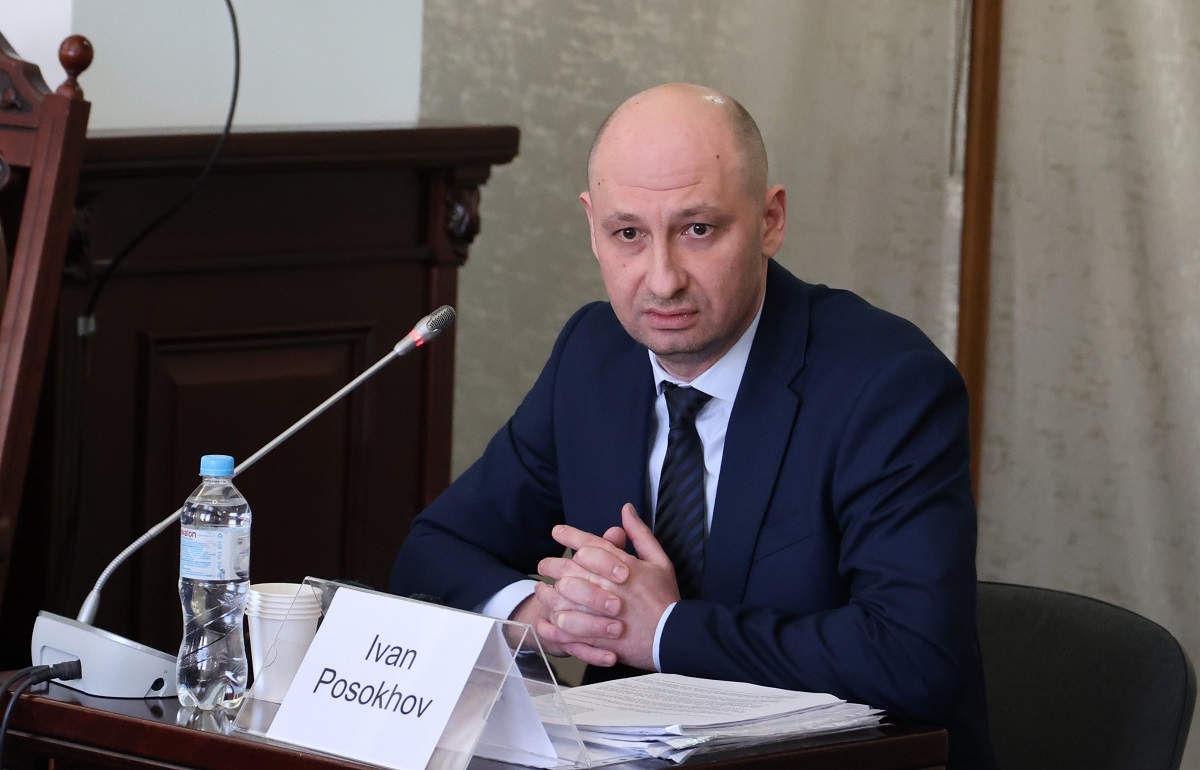
The interview began with PCIE questions about Posokhov’s management experience at the Storozhynets District Court. Asked what he had done to build a corruption-free culture in the court, the candidate said that when he was appointed, the court chair assured him there was no corruption. Posokhov stated that he is not aware of any instances of misconduct within the staff and that he did not hold any special meetings on the issue.
Regarding his own experience handling corruption-related cases, the candidate said he had dealt with relatively few. He explained that he often did not manage to issue final decisions because his judicial term ended. Posokhov confirmed that he wants to work at the HACC, noting that he has experience handling other complex categories of cases, including those involving drug trafficking and crimes against life and health.
PCIE noted that since 2015, the candidate has kept all savings exclusively in cash. Posokhov said his only source of funds is his salary, and that he prefers cash because of exchange-rate volatility and for his own peace of mind, despite the risks of keeping money in rented housing. He said he keeps only current salary payments in bank accounts.
There were also questions about a land plot whose declared value increased twelvefold over two years. The candidate explained the discrepancy by valuation methodology: he said the plot was initially purchased with an expert valuation of UAH 9,000 because it was an empty piece of land. Later, however, for tax purposes the tax authority required a new monetary valuation, which set the value at UAH 116,000.
HQCJ asked about an enforcement proceeding from 2014 in which the debtor’s full name and date of birth exactly match the candidate’s. Posokhov denied having any enforcement proceedings against him, stating that he had been held administratively liable only once, back in 2007.
PCIE asked about a 2016 HQCJ conclusion that the candidate’s actions contained a disciplinary offense, but he was not sanctioned only because the limitation period had expired. The candidate acknowledged that he extended an interim measure for a defendant without first considering a pending recusal motion. He described this as choosing “the lesser of two evils,” explaining that the defense was systematically delaying the process and the detention deadline was approaching. Posokhov said that in similar situations today he involves legal aid attorneys for specific procedural steps and never schedules hearings for the last days of an interim measure.
PCIE asked about a potential conflict of interest because the register contains a decision by Posokhov in a case where the attorney was his sister’s husband. The candidate said he checked the decision and did not find the relative’s surname there. He also said he mistakenly listed the person as his brother-in-law in his integrity declaration because he misunderstood the terminology, although he does not consider him a close person (his sister is now divorced).
Posokhov was unable to provide a specific answer on the content and adoption procedure for the Anti-Corruption Strategy and anti-corruption programs. He also said he was unfamiliar with the basic legal concept of habeas corpus.
HQCJ also reviewed the candidate’s decision in a case under Article 130 of the Code of Administrative Offenses, in which a person with a recorded alcohol level of 2.57‰ was released from liability. The commission noted that the ruling evaluated only the defense’s arguments and that witnesses were not examined. Posokhov explained his decision by pointing to the episodic nature of the video recording. He also said police officers cannot serve as witnesses and that no motions were filed to summon other individuals.
When discussing “zero tolerance” for corruption, the candidate described it as complete rejection of corrupt conduct and avoidance of questionable schemes. Asked about exposing corruption and actively supporting anti-corruption efforts, Posokhov said he was not aware of any abuses by colleagues or others. When an HQCJ member remarked ironically that the candidate had been “lucky,” Posokhov agreed, adding that while corruption exists as a phenomenon, he has not personally encountered such cases.
Posokhov was unable to provide a specific answer on the content and adoption procedure for the Anti-Corruption Strategy and anti-corruption programs. He also said he was unfamiliar with the basic legal concept of habeas corpus.
Oksana Hutsal
Judge, Orikhiv District Court, Zaporizhzhia Region
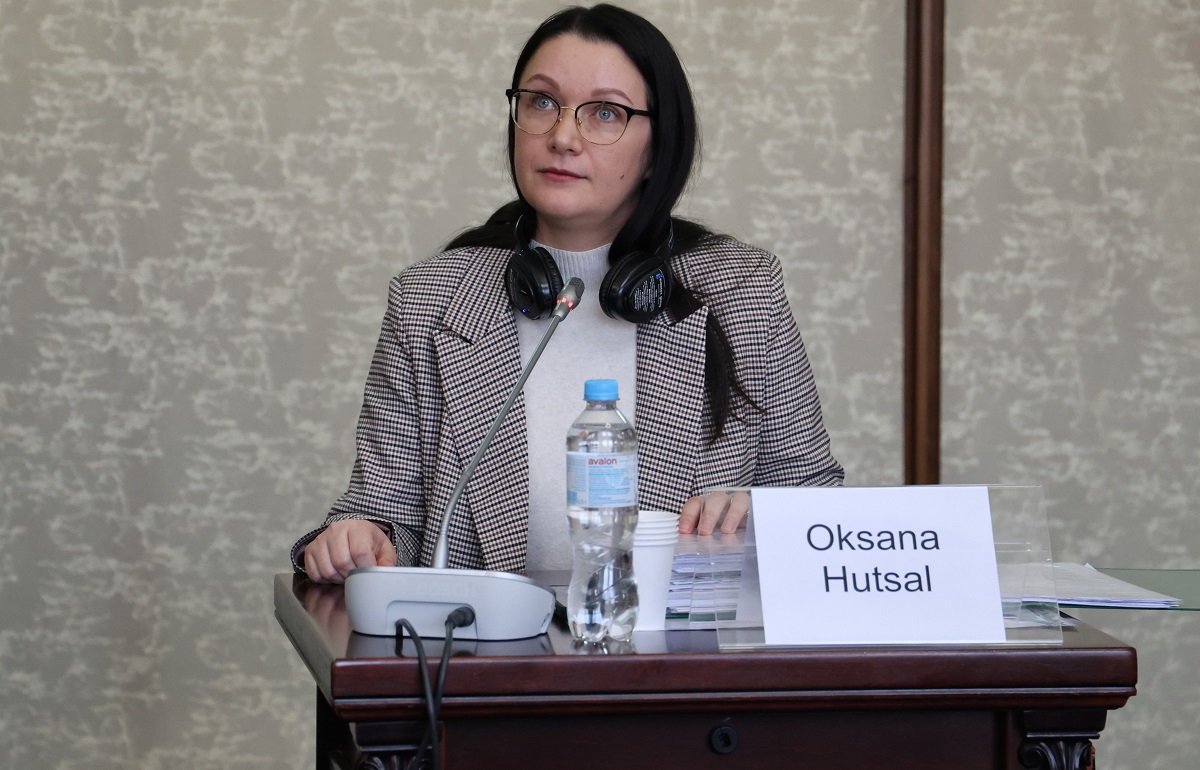
During Oksana Hutsal’s interview, a substantial share of the questions concerned financial and asset-related matters. Members of PCIE and HQCJ asked about the candidate’s living arrangements and her daily travel to work. She lived in Zaporizhzhia but worked at a district court in the region. Hutsal said that for several years she commuted by public transportation, and that she purchased a personal vehicle only after about three and a half years of commuting because earlier she had not been able to save money and had not yet obtained a driver’s license.
HQCJ asked specifically whether her income in 2015–2020 was sufficient given typical living expenses and transportation costs. Hutsal said her family lived frugally and that her parents helped cover some household expenses, including by providing food.
A separate set of questions was about her husband’s income, including a situation in which, in 2015, her husband reportedly had no income. The candidate linked this to personal circumstances and asked to provide an explanation in closed session, which was accepted by HQCJ and PCIE.
PCIE also drew attention to her handling of cases under Article 130 of the Code of Administrative Offenses of Ukraine, particularly instances where proceedings were closed due to the expiration of statutory time limits. Hutsal explained these episodes by pointing to the parties’ procedural behavior, including motions requesting adjournments.
Additional questions concerned her rent-free use of housing. Hutsal said she lives in an apartment owned by her parent’s cousin, who, she added, provided documentation confirming their family relationship. The candidate said she covers utility costs and also paid off her relative’s outstanding utility debt.
HQCJ asked specifically whether her income in 2015–2020 was sufficient given typical living expenses and transportation costs. Hutsal said her family lived frugally and that her parents helped cover some household expenses, including by providing food.
Oleksandr Ostrohliad
Associate Professor, Department of Law and Law Enforcement, Zhytomyr Polytechnic State University
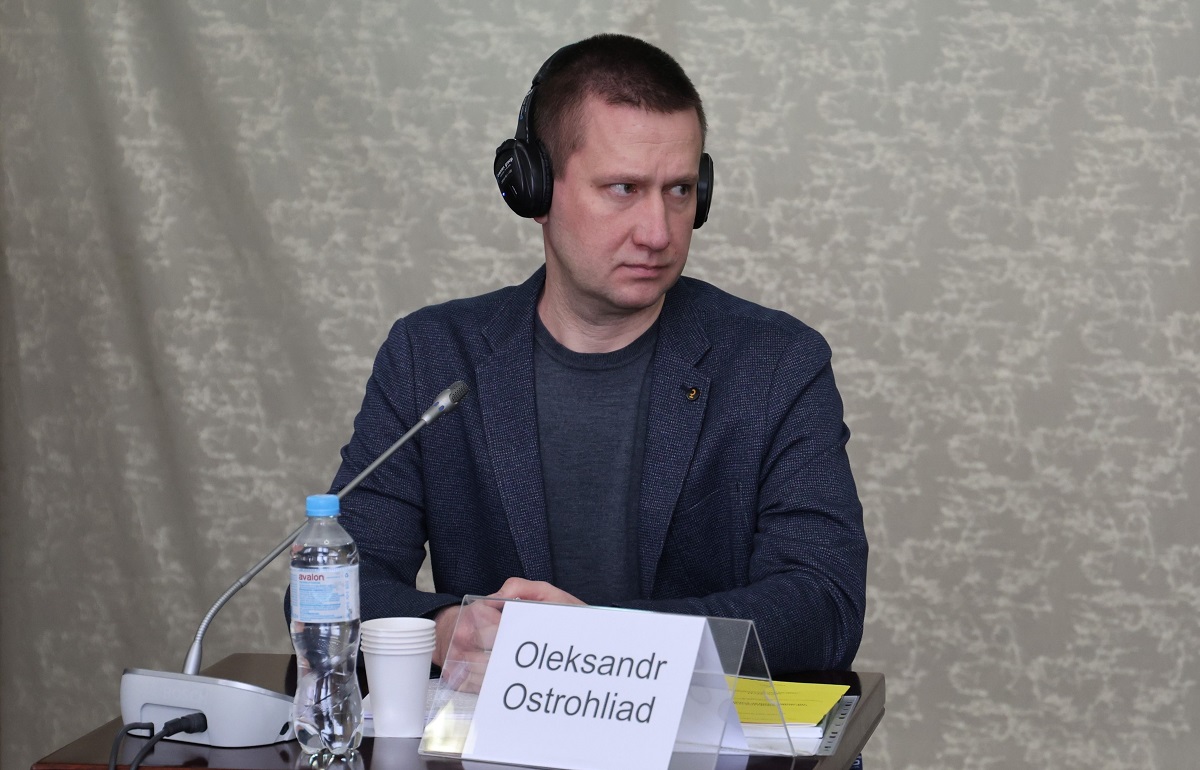
The most extensive questions from PCIE and HQCJ concerned Ostrohliad’s household expenditure calculations. According to his declarations, in 2016 a family of five spent only UAH 25,600 for the entire year (about $83 per month), and UAH 36,000 in 2017. Given that the state subsistence minimum for a family of that size was about three times higher, the candidate explained the family’s austere spending by pointing to support from parents: his in-laws covered utilities (they live in the same building on different floors), while his own parents provided food and preserved goods. The candidate claimed he saved up to 70% of his income, although the commission noted that even taxes were not included in the calculations he provided.
Despite the modest lifestyle described, the family regularly upgraded its vehicles with new, showroom purchases:
- 2016 — Citroën (UAH 616,000)
- 2021 — Opel (UAH 673,000)
- 2025 — Toyota valued at over UAH 2 million.
Questions were also raised about Ostrohliad’s real estate. He purchased a house from the son of his academic supervisor at an undervalued price, which he explained by the property’s “neglected condition.” His father-in-law and mother-in-law purchased an apartment in central Kyiv for UAH 867,000, while comparable apartments in that residential complex cost around $220,000. Later, in the same complex, another apartment (107.4 m²) was purchased with his in-laws’ funds in the name of his wife’s brother. The commission questioned both the stated prices and whether there were lawful funds for such purchases. The candidate said his in-laws had the means because his father-in-law is a businessman and his mother-in-law is a notary; he added that they also receive pensions and that the apartments were purchased when the complex was still “problematic” and not yet commissioned.
In 2022, Ostrohliad’s family obtained UK residence permission as a “backup option,” citing security conditions and responsibility for three children.
HQCJ also pointed to his notary wife’s low official income, which could indicate underreporting of earnings. The candidate attributed her low income to maternity leave.
In summary, HQCJ representatives emphasized that the combination of asset purchases worth millions of hryvnias with declared spending below the minimum amounts set by the state for people of the relevant age groups creates “reasonable doubt” that the candidate should have dispelled.
According to his declarations, in 2016 a family of five spent only UAH 25,600 for the entire year (about $83 per month), and UAH 36,000 in 2017. Given that the state subsistence minimum for a family of that size was about three times higher, the candidate explained the family’s austere spending by pointing to support from parents: his in-laws covered utilities (they live in the same building on different floors), while his own parents provided food and preserved goods.
Yevhen Kapitonov
Judge, Vilniansk District Court, Zaporizhzhia Region
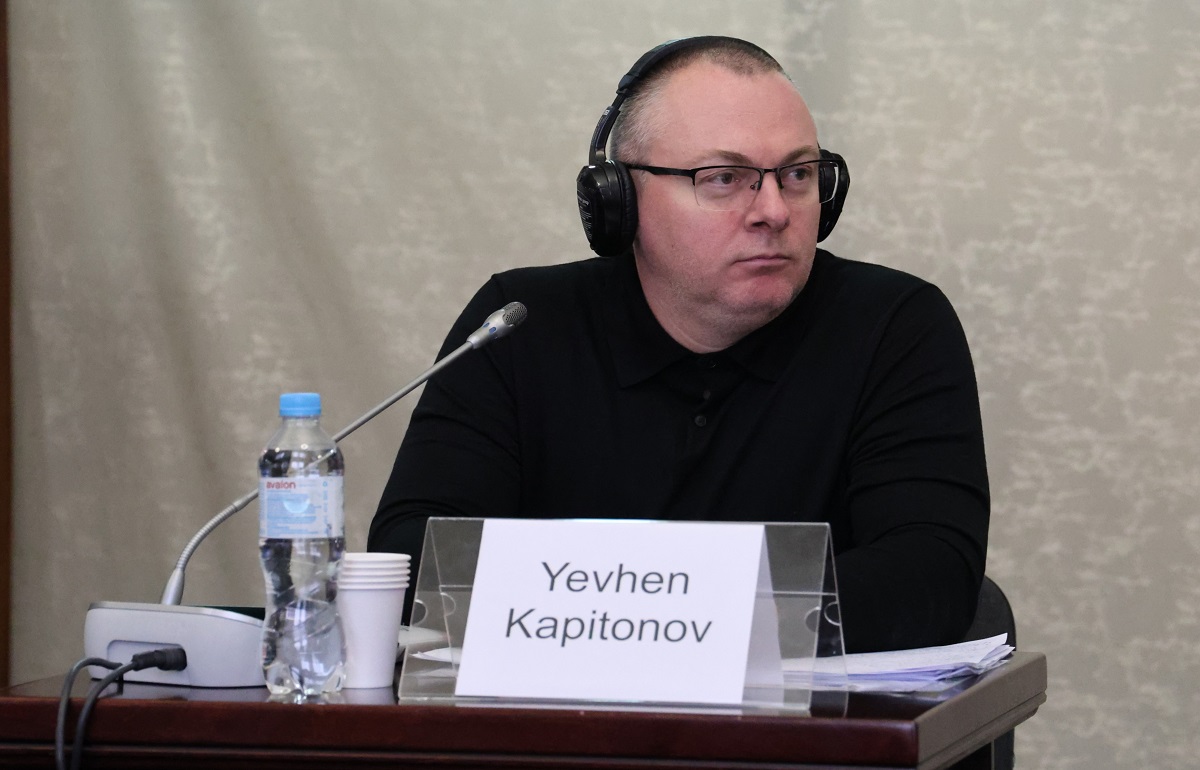
The interview began with questions about systematic irregularities in Kapitonov’s asset declarations. In 2015–2019, he did not report the property in Vilniansk where he lived with acquaintances, explaining that he believed declarations were mandatory only for ownership rights, not for use. Despite becoming aware of the requirement back in 2019, he took no steps to correct the information, commenting, “What happened, happened.”
PCIE also noted that in Section 11 of his declaration, regarding a Mercedes-Benz, the candidate did not identify the actual buyer and instead listed himself as the source of income. In addition, the value of a Dacia Logan was not declared, and its sale for UAH 140,000 was not reflected in his annual declaration. In 2018, the value of a Mitsubishi Outlander was also not declared.
The candidate acknowledged all of these errors and also agreed with the decision of the Ethics Council of the High Council of Justice, which in December 2025 found that he did not meet the standards of professional ethics and integrity.
HQCJ also asked about his wife’s vehicle transactions, including the sale of a Toyota Auris with a $2,000 price increase, which the candidate attributed to repairs. HQCJ also noted her purchase of a Toyota Land Cruiser Prado in 2022 for $6,000 despite a market value of around $20,000; Kapitonov explained the discrepancy by saying the purchase was made at the start of the full-scale invasion.
Questions were also raised about whether the candidate’s father could afford to purchase an Acura MDX in 2020. Kapitonov said it was funded by proceeds from selling a Skoda and a house (sold about six months after the Acura purchase), but he did not provide supporting documents, citing his father’s illness.
PCIE drew attention to his systematic closure of cases under Article 130 of the Code of Administrative Offenses of Ukraine (driving under the influence) due to the expiration of statutory time limits. Kapitonov explained that the delays were caused by the parties’ abuses, the filing of numerous motions, and the need to comply with fair-trial standards as outlined in the case law of the European Court of Human Rights.
The interview also addressed his trip to the Russian Federation in 2016, which Kapitonov said was motivated by a desire to visit close relatives. HQCJ also pointed to the candidate’s lack of attention to detail, noting that in a previous HACC competition he was rejected because he had failed to submit an application.
HQCJ examined the candidate’s approach to recusals in detail. Kapitonov recused himself in a case involving a prosecutor from the Zaporizhzhia Prosecutor’s Office who had handled prosecution in some of his cases, explaining that he was being overly cautious.
HQCJ, however, noted selectivity, because the candidate did not see a conflict of interest in cases involving his wife that were heard by his colleagues in the same court (including a challenge to a traffic fine and the establishment of the fact of death in an occupied territory). Kapitonov said he had only ordinary professional relationships with those judges and did not ask them for anything, so there were no grounds for them to recuse themselves.
The interview also raised his handling of cases involving deprivation of mothers’ parental rights. HQCJ identified nine cases in which Kapitonov issued judgments in absentia. The candidate explained that in those cases the mothers’ ties with their children had long been severed (in one instance the mother had moved to the Russian Federation), and that his decisions were based on the best interests of the children and the available evidence, despite the mothers’ failure to appear.
The candidate acknowledged all of these errors and also agreed with the decision of the Ethics Council of the High Council of Justice, which in December 2025 found that he did not meet the standards of professional ethics and integrity.
Andrii Dudikov
Judge, Ternivskyi District Court of Kryvyi Rih
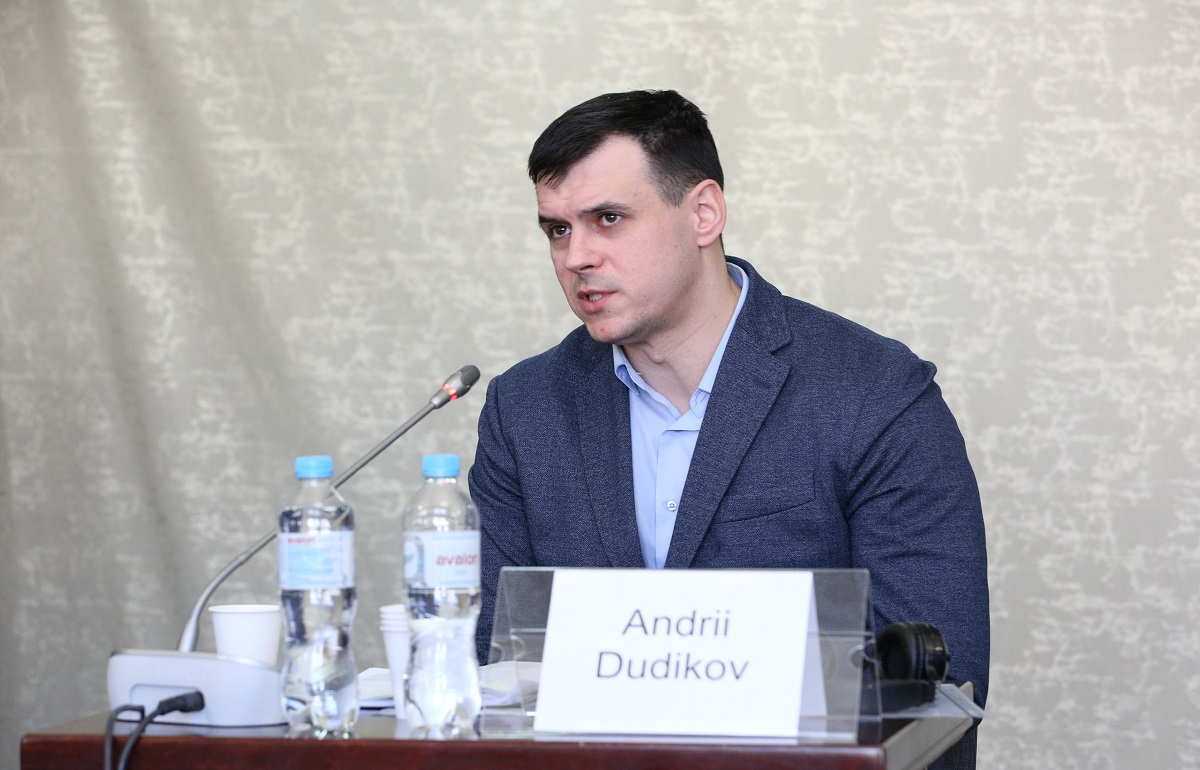
PCIE paid the greatest attention to Dudikov’s improper use of full access to the Unified State Register of Court Decisions. Under the candidate’s login, 240 targeted searches were recorded that were unrelated to his own cases. In particular, Dudikov searched 75 times for information about his sister’s ex-husband and that person’s companies, in relation to whom a criminal proceeding has been registered. He also checked information about another person and about himself, 30 times. At first, the candidate gave vague answers, suggesting he may simply have forgotten to log out of the system, but later explained the searches as professional curiosity and, as to the searches about himself, a desire to learn the outcome of an appeal.
The Commission also raised questions about his asset declarations. In 2018–2020, he used a car owned by his ex-wife but did not report its value. He explained this by saying his ex-wife did not tell him the price, and he did not want to mislead by providing an inaccurate figure.
Dudikov was also asked about his rent-free use of housing in Kryvyi Rih. He said that in practice it was like a rental arrangement, but the owners did not formally lease it to him, so the arrangement was based on friendly relations, while he reimbursed utility costs. HQCJ also noted that in 2021 the candidate’s father bought an apartment in Chabany, and in the same year his ex-wife bought a parking space there as well. Dudikov insisted this was a coincidence—he does not use it, and his ex-wife made that decision on her own.
According to the NACP, there is also a significant discrepancy between the value of property Dudikov declared and the values reflected in the register, including a parking space declared at UAH 400,000 but listed in the register at UAH 50,000. The candidate said he reported prices that reflected the actual amounts.
It also emerged that in 2025, the Territorial Recruitment Center was searching for a candidate as someone who had committed an administrative offense. Dudikov called this “strange” and suggested it could be an employer’s error, insisting that he himself had not violated anything.
HQCJ also asked about several of Dudikov’s cases under Article 130 of the Code of Administrative Offenses that were closed due to expired time limits. The candidate attributed this to the nonappearance of the parties and other delays. Quoting The Garden of Gethsemane, he said he does not share the idea that “it is better to convict 100 innocent people than let one guilty person go,” and that he always seeks the truth. He also made an error in the practical assignment by failing to apply the law in force at the time the offense was committed—something he himself acknowledged during the interview.
HQCJ paid separate attention to the candidate’s motivation for changing courts. In 2019, he was seconded from the Ternivskyi District Court of Kryvyi Rih, where the normative caseload was critical (31,000 cases), to a court in Vinnytsia Region, where the caseload was lower—about 4,000 cases.
Dudikov explained that decision by saying he wanted to live closer to home and claimed that at the time the court to which he was transferred had no judges at all. However, HQCJ members noted that, according to their information, there were two sitting judges there at the time, and they said they would verify this further. Questions were also raised about Dudikov’s secondment to the National School of Judges, which he said was an attempt to maintain his professional level after his judicial term expired.
PCIE paid the greatest attention to Dudikov’s improper use of full access to the Unified State Register of Court Decisions. Under the candidate’s login, 240 targeted searches were recorded that were unrelated to his own cases.
Pavlo Shtifonov
Attorney
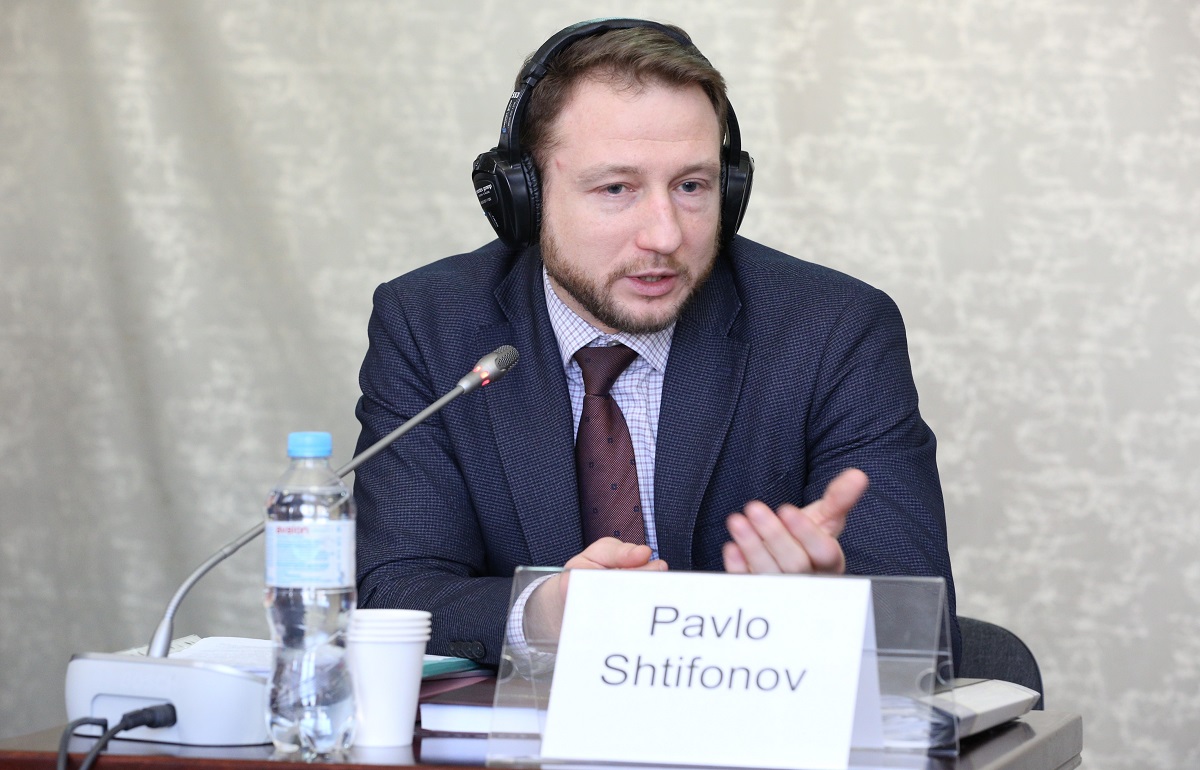
The most controversial issue in the interview was the candidate’s income. In 2023–2024, he received more than UAH 10 million (about $264,000) from a single client. Shtifonov explained that he, in fact, played the role of an “outsource legal department,” engaging other colleagues under oral arrangements.
An HQCJ member pointed out that the client company’s total revenue was about UAH 30 million, meaning it paid roughly one-third of its turnover to a single attorney, significantly reducing its taxable base. However, Shtifonov’s active participation in the company’s cases is not reflected in court registries. The candidate was unable to state how much he spent on services provided by the colleagues he engaged, saying only that his goal was not only to complete the work but also to make a profit. The commission calculated that most of the income received (more than $220,000) was converted into the candidate’s personal assets and a new car.
A separate block of questions concerned military registration obligations. Oleksandr Shtifonov acknowledged that from the start of the full-scale invasion until he obtained reservation status in summer 2025, he had neither a deferment nor reservation status. He also admitted that, despite the legal requirement to update his records by July 2024, he did so only on August 11, 2025, explaining the delay by his own “understanding of the legislation,” and only shortly before obtaining reservation status. Shtifonov currently works as a staff employee at a company owned by his long-time client, where he received reservation status; he said he took the job because of the need to preserve information confidentiality and due to signing an NDA. The attorney also did not fulfill continuing legal education requirements, stating that he does not comply with requirements he considers unlawful.
The candidate visited Crimea three times after 2014. Once, he said, was to find out the status of a criminal case in which he was the injured party and to visit his sister; the other two visits were to see his sister.
The Commission also asked about a profile on the Pravoved.ru service, where legal advice on Russian law may have been provided in the candidate’s name in September 2014. Shtifonov stated that he was “unaware of such registration.”
Shtifonov ran in local elections from the Nash Krai party and advised the Civil Position campaign headquarters. During the interview, he initially said he “did not know about one of the candidacies,” but later recalled that he had personally signed the documents and had simply forgotten about it over the past 10 years.
Oleksandr Shtifonov explained his motivation for becoming a HACC judge as a desire to be useful to society, since as an attorney he is limited by the client’s interests.
During the interview, the candidate interrupted Commission members without listening to questions to the end and systematically avoided giving direct answers.
The Commission also asked about a profile on the Pravoved.ru service, where legal advice on Russian law may have been provided in the candidate’s name in September 2014. Shtifonov stated that he was “unaware of such registration.”
Oleksandr Dudchenko
Associate Professor, Department of Criminal Procedure, Yaroslav Mudryi National Law University
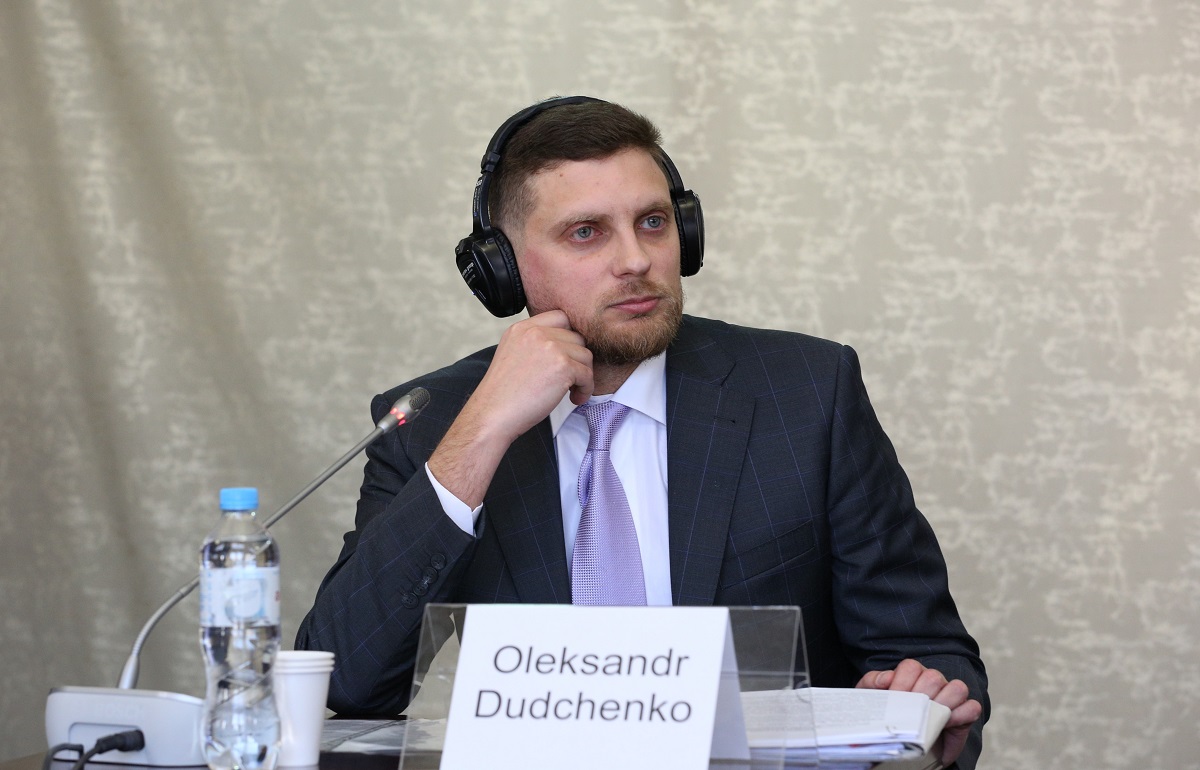
At the start of the interview, PCIE pointed to the fact that during 2004–2009, while studying at university, the candidate was able to save $12,000. Dudchenko explained this by his status as an orphan: he received state assistance and had free housing and transportation, which allowed him to save nearly all of his funds.
In 2011, the candidate received $12,000 from his grandmother. He described this as a combined inheritance. Specifically, a share of proceeds from the sale of property after the deaths of his grandfather and father, as well as his mother’s savings, which he said he had entrusted to his grandmother for safekeeping while still in school.
More broadly, Dudchenko explained his ability to save through what he described as “the restrained lifestyle of a lecturer.” According to him, until 2023 his family did not spend one-third of its income, avoiding unnecessary expenses such as buying flagship smartphones.
PCIE also paid particular attention to Dudchenko’s experience as an individual entrepreneur. The candidate said that in 2019, together with friends who were investors, he opened a retail outlet (coffee, snacks, fast food) opposite an office center. Although he terminated his business in 2020, during that short period he declared substantial income—UAH 1 million.
Dudchenko said margins on some products reached 60–120%, while ordinary goods carried margins of 20–30%. When PCIE noted that margins are usually only 15–20%, he attributed the success to the favorable location in front of an office center and to taking goods on consignment. Overall, he described his role as creating a ready-made business. Once operations were established, he transferred management to an administrator, took the proceeds, and ceased the business activity.
The commission also established that the candidate and his wife purchased an apartment in Kharkiv for UAH 1.2 million and a Volkswagen car using funds from his wife’s parents. After 2022, Dudchenko lived rent-free with friends—first in Vinnytsia, then in Kyiv.
In his questionnaire, the candidate did not report 2 of 7 instances of administrative liability because, as he explained, he did not find them in his driver’s online account. He also failed to disclose one disciplinary sanction imposed by the regional bar disciplinary body, explaining that he learned about it only recently. He explained arrears in bar membership dues by his mistaken belief that payment was not required if he was not practicing law.
HQCJ also focused on Dudchenko’s dissertation, which concerned administrative positions in the judicial system. The candidate correctly noted that the powers of the HACC Chair do not extend to the HACC Appeals Chamber. Asked about the procedure for electing court leadership, he also pointed out that the HACC had not yet been established at the time he wrote his academic work. Dudchenko also answered questions about which courts are prohibited from being established and explained how they differ from specialized judicial institutions.
He explained a border crossing into Belarus in 2018 as part of a trip to Poland. Regarding relatives, he said he rarely communicates with his biological brother, and that his wife had learned only recently about her brother’s trips to Crimea; according to Dudchenko, she had seen him only once in her life. The candidate also said he himself was last in the Russian Federation in 2014 for a funeral.
Dudchenko was unable to immediately state the bail limits for especially serious crimes. After an HQCJ member prompted him by referring to ranges in subsistence minimums, he gave an unclear answer about the possibility of going beyond those limits. The candidate also misstated the term of office of an HACC investigating judge, naming three years instead of two. He was also unable to provide specific ideas for improving judicial self-governance, even though he had mentioned such ideas in his motivation letter. It also emerged that the candidate had been in a courtroom only during his university studies and postgraduate training.
More broadly, Dudchenko explained his ability to save through what he described as “the restrained lifestyle of a lecturer.” According to him, until 2023 his family did not spend one-third of its income, avoiding unnecessary expenses such as buying flagship smartphones.
Viktor Antypenko
Judge, Rokytne District Court, Kyiv Region
The interview opened with a question about why the candidate was applying to the HACC after working as a judge for only a year and a half. Antypenko said his motivation had two components: a professional one, wanting a “more prestigious profession,” and a social one, because although working at the HACC is much harder, this is “offset by a powerful social package,” including better financial support (for example, on housing) and a higher level of state protection.
The commission was also interested in the cash assets he declared in 2023. The candidate explained that they came from long-term entrepreneurial activity during the period from 2016 to 2023, when he was not filing declarations. The panel also discussed why the declared price of his TOYOTA COROLLA was below market value, which the candidate explained by significant damage (the vehicle’s safety system has still not been repaired). As for the savings that appeared in the accounts of his son, a student, the candidate said they were transfers he had made for his child’s future education.
HQCJ paid special attention to the candidate’s access logs for the Unified State Register of Court Decisions. It turned out that in June 2023 Antypenko used full access to search for decisions using the keyword “Alperin” (the surname of a figure in high-profile anti-corruption cases). The candidate could not recall the specific reason for this interest, but explained it as general professional curiosity and drew a parallel to the Kernes case: “I was interested, from a professional standpoint, in how such cases are decided.”
HQCJ paid special attention to the candidate’s access logs for the Unified State Register of Court Decisions. It turned out that in June 2023 Antypenko used full access to search for decisions using the keyword “Alperin” (the surname of a figure in high-profile anti-corruption cases). The candidate could not recall the specific reason for this interest, but explained it as general professional curiosity.


