



February 26, 2026 16:17
Interview Notes from HACC Judge Candidate Interviews — Week Two
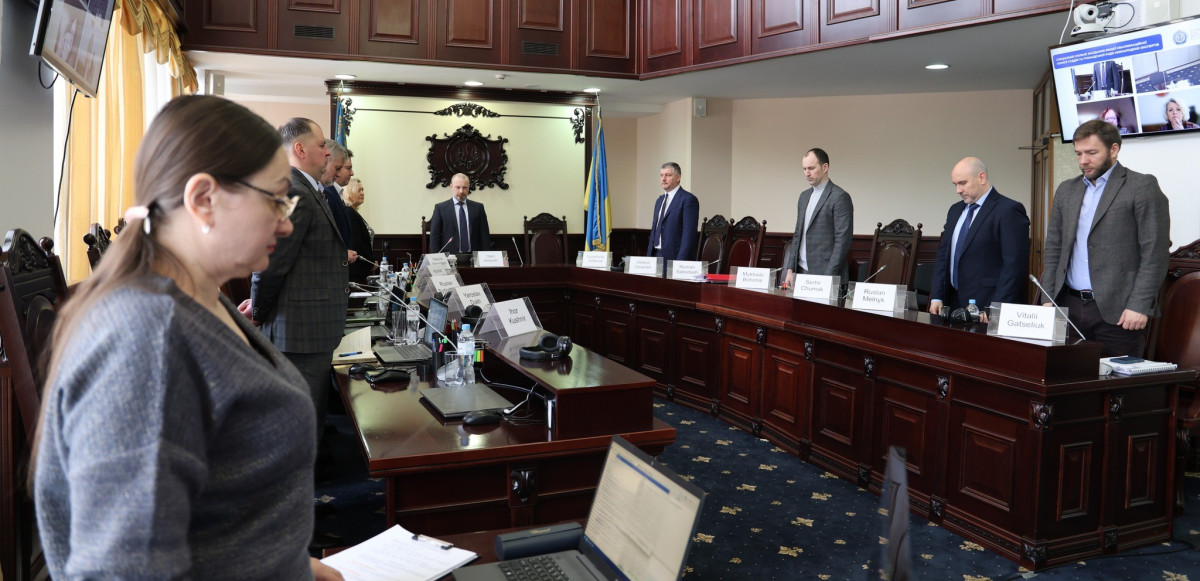
TI Ukraine continues to monitor interviews in the competition for positions at the High Anti-Corruption Court.
During the second week, the following candidates completed this stage of the competition:
- Yevhen Didenko
- Oleh Kimstachov
- Iryna Teslenko
- Dmytro Kravets
- Viktor Maslov
- Oksana Yevlakh
- Vitalii Koriahin
- Oleksandr Ivasyn
- Petro Romanenko
- Yurii Bodnaruk
- Serhii Kovalchuk
- Viktoriia Bazeliuk
- Oleh Batiuk.
This piece highlights key points from interviews held February 23–27.
All photos: HQCJ.
This piece highlights key points from interviews held February 23–27.
Yevhen Didenko
Judge, Pryazovske District Court, Zaporizhzhia Region
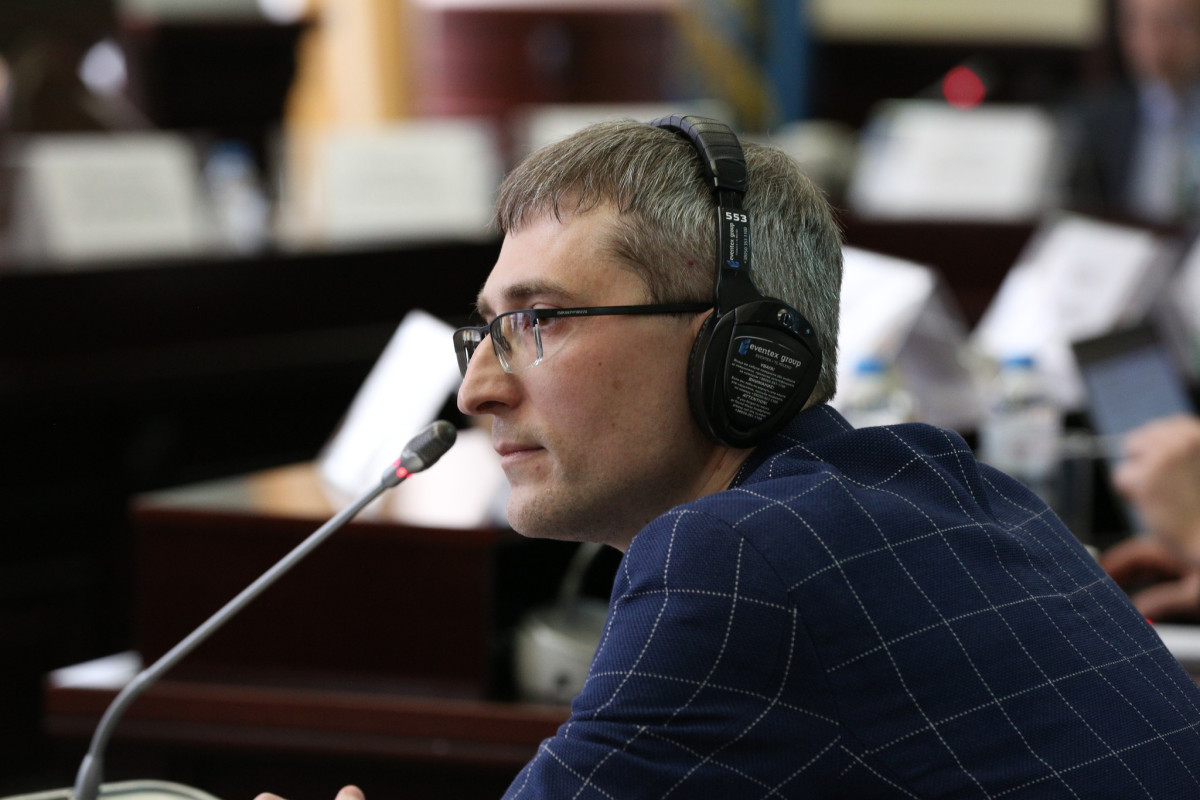
The interview opened with questions about how the candidate’s mother, a pensioner, was able to save more than half a million hryvnias to give her son as a gift. Didenko said that, at least as of 2019, his mother’s pension exceeded UAH 40,000, which, given her limited expenses—allowed her to save roughly UAH 31,000 per month. He said the gifted funds were used to purchase a car and cover household expenses.
Experts also asked about the $9,000 purchase price of an apartment owned by the candidate’s mother and used by Didenko. This amount is nearly half the market price, but the candidate said it was not significantly different from market rates because the seller discounted the price due to sewerage problems and because another person was still registered at the address. He added that his mother purchased the apartment in part with proceeds from the sale of an apartment in Zaporizhzhia. PCIE noted that the candidate declared the apartment as being rented from his mother, even though he was in fact living there rent-free. Didenko said he had described the arrangement inaccurately and that it was actually free use. He said he separately reported this to the NACP.
Questions were also raised about the fact that in 2020 the candidate’s mother gifted him the apartment, but the gift agreement listed the apartment’s value as UAH 20,000, even though she had purchased it for UAH 193,000. Didenko could not recall why UAH 20,000 was listed instead of UAH 193,000, but said the figure did not affect anything, including the tax base, and that there was therefore no intent to evade taxes.
PCIE pointed to possible signs of a conflict of interest in Didenko’s work, noting that he served as the judge in a case where defense counsel was his recommender, attorney Hanna Lapshyna, who in the 2000s was also his mother’s business partner. Didenko said that until 2011 he rented a workspace from Lapshyna, but that, in his words, there was no joint work between them, and that his mother also ended her cooperation with Lapshyna by that date.
The panel also asked about Didenko’s challenge to a tax audit report on his declarations in 2015. The audit found, among other things, that he had acquired two land plots in the Zaporizhzhia region. Didenko said he had no connection to those plots and that the issue was apparently a match on name and patronymic. He therefore went to court to contest the audit report.
The interview also had questions about his searches in the Unified State Register of Court Decisions. Didenko made a number of full-access searches concerning people involved in illegal border crossings. He could not recall the specific reason, but suggested it may have related to a case in his docket where some suspects were severed into a separate proceeding.
Didenko did not answer all professional questions precisely. For example, he could not clearly list the circumstances in which “extortion” as an aggravating element is excluded. Asked about the academic novelty of his dissertation, the candidate said, among other things, that it was the first comprehensive study of its kind. HQCJ also recalled that in the practical assignment the candidate ordered the special confiscation of a laptop used by the defendant to file a false asset declaration. Didenko responded that, formally, such items may qualify as instruments of the offense, adding: “I don’t know how judges, for example, at the HACC, resolve these issues in criminal cases involving intimate products: is everything confiscated, destroyed…?”
The interview also had questions about his searches in the Unified State Register of Court Decisions. Didenko made a number of full-access searches concerning people involved in illegal border crossings. He could not recall the specific reason, but suggested it may have related to a case in his docket where some suspects were severed into a separate proceeding.
Oleh Kimstachov
Judicial Assistant, HACC Appeals Chamber
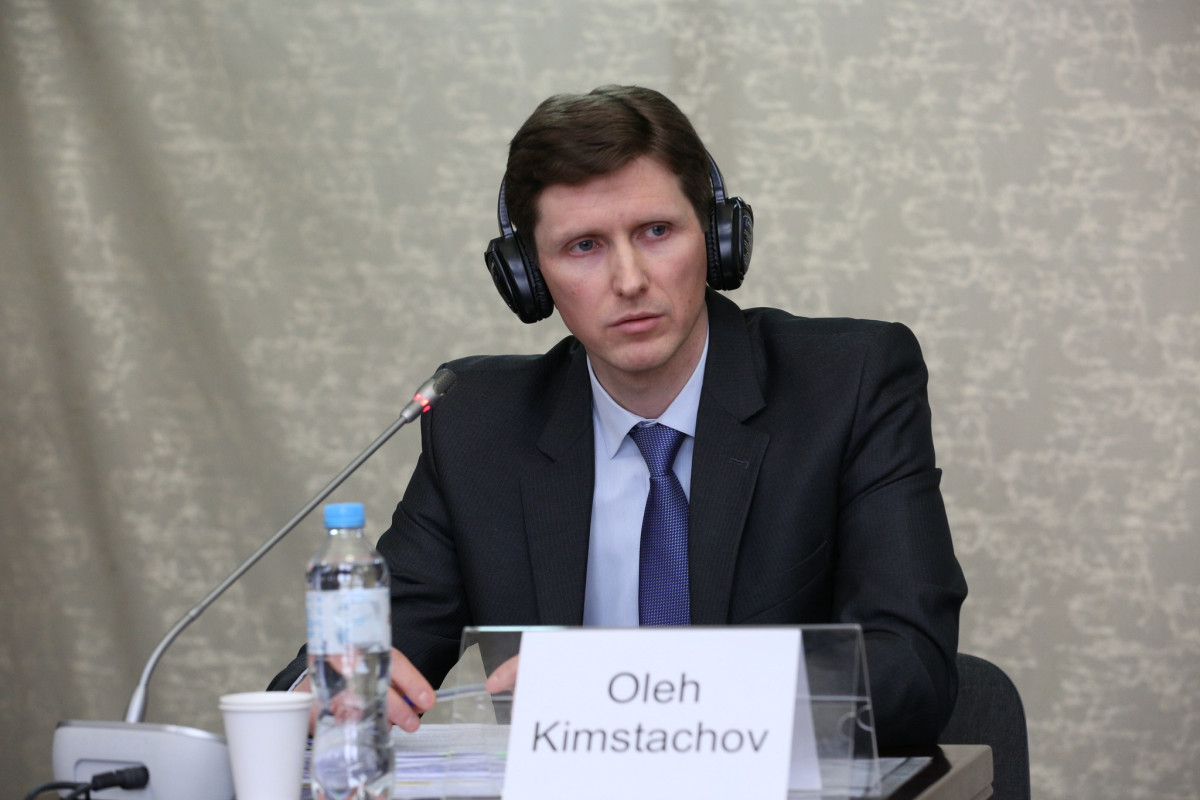
Kimstachov is participating in the HACC competition for the third time. His previous attempt, about a year ago, ended unsuccessfully at the assessment stage involving PCIE. At that time, the candidate did not dispel reasonable doubts regarding the circumstances of his resignation as a judge, his handling of a case involving a judge with whom he had worked, and the origin of funds for a cryptocurrency gift he received from his mother.
In the current interview, the central question was essentially what had changed in the candidate’s explanations and position compared to the previous competition, so that PCIE and HQCJ could reach a different conclusion. The panel also noted that Kimstachov challenged the decision on his assessment, but the Supreme Court did not uphold his claim.
A separate set of questions concerned the candidate’s resignation, at his own request, from his position as a judge of the Uman City District Court. Several disciplinary proceedings involving him were being considered during that period. This timing prompted pointed follow-up questions from HQCJ, because it raised the issue of whether resigning “by request” was a way to avoid possible dismissal as a disciplinary sanction. Kimstachov insisted that he made the decision because he intended to participate in the HACC competition, and that his resignation was not connected to any attempt to evade accountability.
In the current interview, the central question was essentially what had changed in the candidate’s explanations and position compared to the previous competition, so that PCIE and HQCJ could reach a different conclusion. The panel also noted that Kimstachov challenged the decision on his assessment, but the Supreme Court did not uphold his claim.
Iryna Teslenko
Judge, Kreminna District Court, Luhansk Region (seconded to the Solomianskyi District Court of Kyiv)
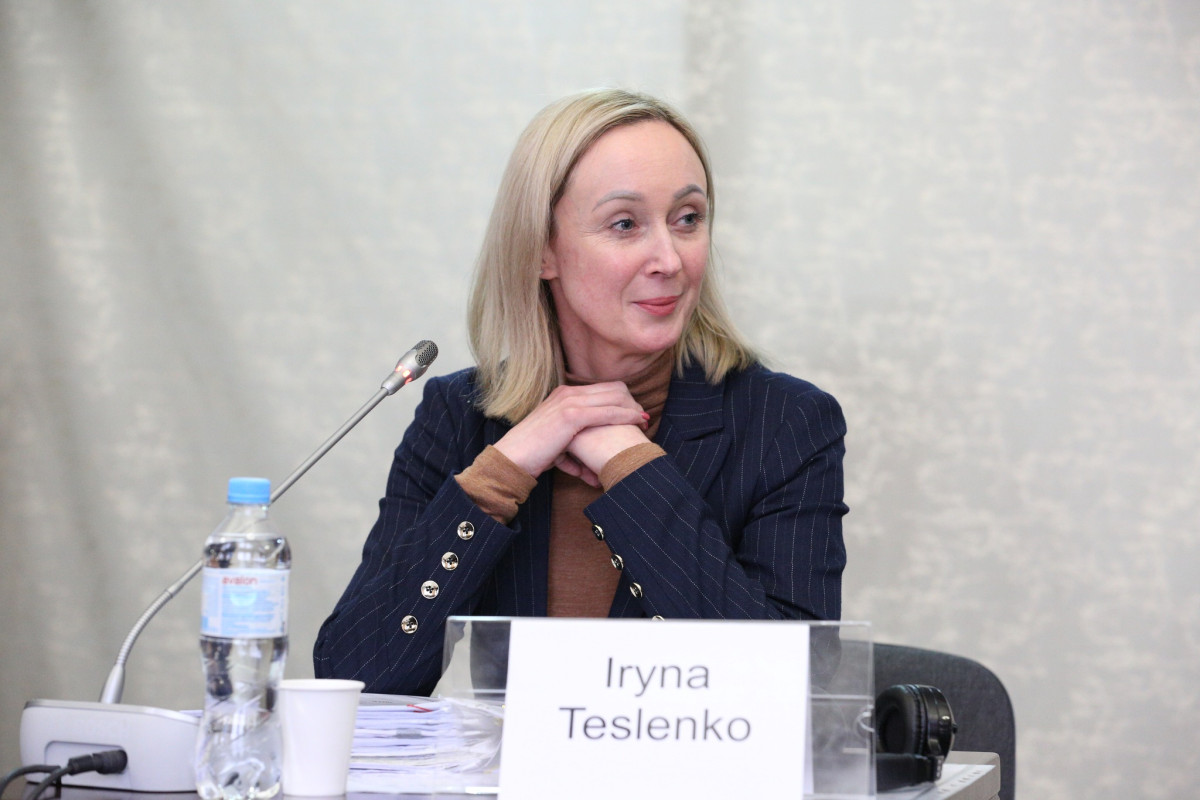
Teslenko’s interview began with her motions to recuse two HQCJ members—Sydorovych and Volkova. She argued that they had previously voted in favor of a decision finding that she lacked the competence required for appellate court positions, a competition in which she had also participated.
Teslenko said that competition had taken place only two months earlier and that her dossier was essentially unchanged, so those commission members already had an established view of her. HQCJ rejected this reasoning, stating that the subject of evaluation was different: in the appellate court competition, the focus was competence, whereas here the central issue was integrity. The recusal motions were denied.
PCIE spent considerable time examining why the candidate had not declared any housing in Kreminna, Luhansk Region, where she served as a judge from 2016 to 2022. Teslenko said that in 2016–2017 she stayed in hotels or short-term rentals, arriving in Kreminna on Mondays and returning to Kharkiv on weekends. She said she did not rent any single place long enough to trigger the NACP declaration requirements. From 2017 to 2020 she was on maternity leave and therefore stayed in Kharkiv. After returning to work in February 2020, she said she continued using short-term rentals and only in 2021 found permanent housing, which she then began declaring.
Asked about hotel prices, Teslenko gave an estimate of about UAH 150–200 per night, but said she cannot even find the hotel on Google because Kreminna is a very small town. She said she likely paid for gasoline by card, but paid cash for apartments and hotels, without supporting documents. Teslenko said the distance from Kharkiv to Kreminna is about 200 kilometers. In HQCJ’s view, this weekly travel would normally leave at least some documentary trail, but she was unable to provide any, citing the fact that she cannot access the court in Kreminna due to the full-scale invasion.
PCIE also focused on the family’s vehicle transactions. According to her declarations, over several years the family bought cars and then sold them at much higher prices—even accounting for inflation and exchange-rate changes. When asked how it was possible to sell vehicles for more than they had cost, Teslenko said her husband, a retired law enforcement officer, repaired the cars, which increased their value. She said she could not describe this as entrepreneurial activity because, as she put it, the repaired cars were bought for family use and sold after one or two years of use.
According to Teslenko’s 2019 declaration, her savings were about UAH 345,000. That same year, the family purchased a Toyota RAV4, yet the amount of savings increased further, even though she was on childcare leave. Asked how the family could buy the car and still increase savings, Teslenko said the car was purchased using proceeds from selling a previous vehicle. As for savings, she said they existed already at the end of 2018, and in 2019 the family simply converted $10,000 into hryvnias. She added that the family’s expenses were minimal—food, utilities, and childcare. The family lived in its own house, so utility payments were limited to electricity and gas. She also said the grandparents provided financial support for the grandchildren by purchasing clothes, vitamins, and food.
HQCJ was not satisfied with her explanation of the purchase price of a 98.2 m² apartment in Kharkiv, which she bought in 2020 for UAH 849,900. HQCJ pointed out that the document she provided to confirm the property’s value was an appraiser’s “consultation,” not a formal appraisal report. The distinction matters, HQCJ noted, because a consultation does not carry liability for the appraiser, whereas a formal report can result in loss of a license if it contains errors. Teslenko responded that a long time had passed since the purchase, and the apartment’s condition and appearance were now very different from what they were at the time of purchase.
HQCJ also noted that a retrospective valuation can be ordered to establish a property’s value as of a specific past date, but Teslenko did not commission such an assessment either. She explained this by pointing to tight deadlines in the qualification process, her physical absence from Kharkiv, and her inability to provide the appraiser access to the apartment.
HQCJ also asked about travel to the Russian Federation, which her declarations described as being in “extreme necessity.” Teslenko said that in 2016 she needed to pick up medication for her parents, and that in 2014 she flew out of Belgorod airport, which is near Kharkiv. When asked again why she had an urgent need to travel to Moscow after 2014, she repeated that it was for her parents’ medication and stressed that no one else could collect it.
Teslenko’s interview began with her motions to recuse two HQCJ members—Sydorovych and Volkova. She argued that they had previously voted in favor of a decision finding that she lacked the competence required for appellate court positions, a competition in which she had also participated.
Dmytro Kravets
Legal Counsel, Legal Service of the Central Base of Military and Technical Support, National Guard of Ukraine
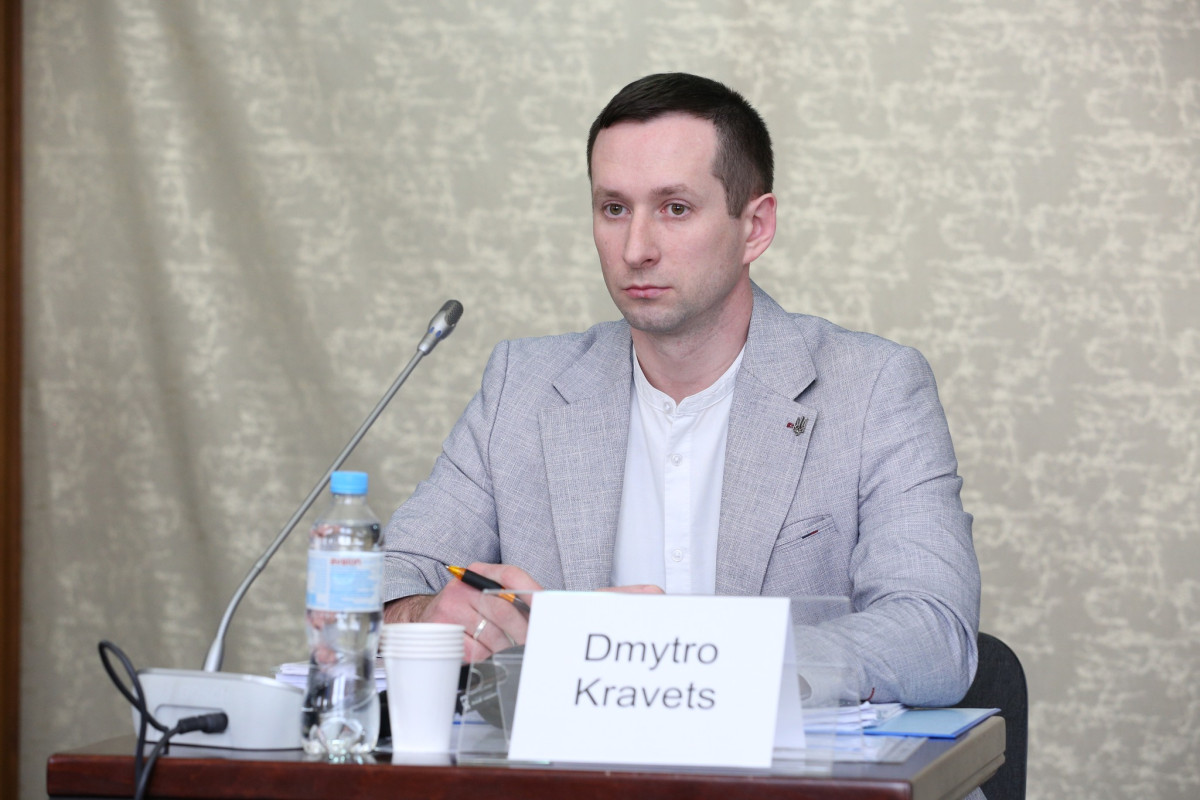
PCIE opened the interview by reviewing Dmytro Kravets’s career. He has worked as a lawyer since his student years and has experience as an attorney. In 2025, he served as legal counsel within a military service structure and later moved to the Main Directorate of the National Guard of Ukraine. Kravets said he worked on criminal proceedings involving misappropriation of property, abuse of office, and nondisclosure (in declarations), but that his practice was primarily civil. He said he has no experience participating in court hearings in corruption cases.
Discussion of the candidate’s law firm revealed significant financial anomalies. Kravets said the drop in income in 2024 to UAH 93,000 was due to having fewer cases. He also explained his family’s low standard of living (below the subsistence minimum) by saying they are “an ordinary Ukrainian family”: they do not go to restaurants, they save money, and they receive food from his wife’s parents. Despite his claim that he had only 10 cases in 2024, the court register reflected his involvement in more than 50 cases.
The biggest questions concerned the source of funds for an apartment in Sofiivska Borshchahivka purchased for UAH 1.4 million (2021). By the commission’s calculations, Kravets’s official income for 2013–2018 totaled only about $13,000; at the same time, he reported saving $13,000, and his first real estate investment was $20,000. Kravets said he supplemented his savings with wedding gifts (about $15,000) and a loan from relatives, and that he conducted all transactions exclusively in cash.
The commission also pointed to questionable employment history at an insurance company (2013–2015), where official records showed he earned a very modest salary. Kravets did not clearly rebut suggestions of “cash-in-envelope” payments, nor did he provide a convincing explanation of how he managed to accumulate foreign currency without spending earnings on basic needs.
Continuing the questions about the apartment purchase, the commission also raised doubts about his investment activity. Kravets said he invested $20,000 in a property and, a year later, earned $42,000 in profit from assigning the rights—funds that, together with a loan from his brother, allegedly went toward the purchase of the new apartment. However, he provided no contracts, saying the documents were not preserved—neither by him nor by the developer.
The panel also questioned the underreported values of vehicles. In 2016, he bought a Honda for UAH 100,000 and sold it for only UAH 40,000, which is far below market. Even more doubts were raised by a Volkswagen purchased for UAH 49,000: that price allowed him to bypass the legal requirement for non-cash payments (the threshold is UAH 50,000) and pay in cash.
HQCJ emphasized that Kravets might appear to be an “unsuccessful attorney” with minimal income, yet the court register for 2024 alone shows his participation in 82 court decisions. In one case, he formally sought reimbursement of UAH 50,000 in legal fees; in another, the file reflected a direct transfer from a client to his personal account in the amount of UAH 16,000. Even though the cost of just one of his statements of claim (UAH 9,000) exceeded his official monthly income, Kravets continued to deny receiving undeclared money.
When a commission member asked him directly, “If you were an observer, would you believe this?” Kravets did not give a concrete answer, limiting himself to the statement that the law firm’s income is “distributed across months.”
A separate block of questions concerned military registration and the candidate’s current service. Oleksandr Kravets said that since April 2025 he has been on active military service and holds the position of senior officer in the National Guard’s legal service, where he provides legal support for procurement in the construction sector. There was also confusion about the dates of updating his military records: the candidate said he updated information through “Reserve+” in 2022, but commission members noted that the app did not exist at that time. He said he underwent a military medical commission for the first time only in March 2025.
HQCJ emphasized that Kravets might appear to be an “unsuccessful attorney” with minimal income, yet the court register for 2024 alone shows his participation in 82 court decisions.
Viktor Maslov
HACC Judge
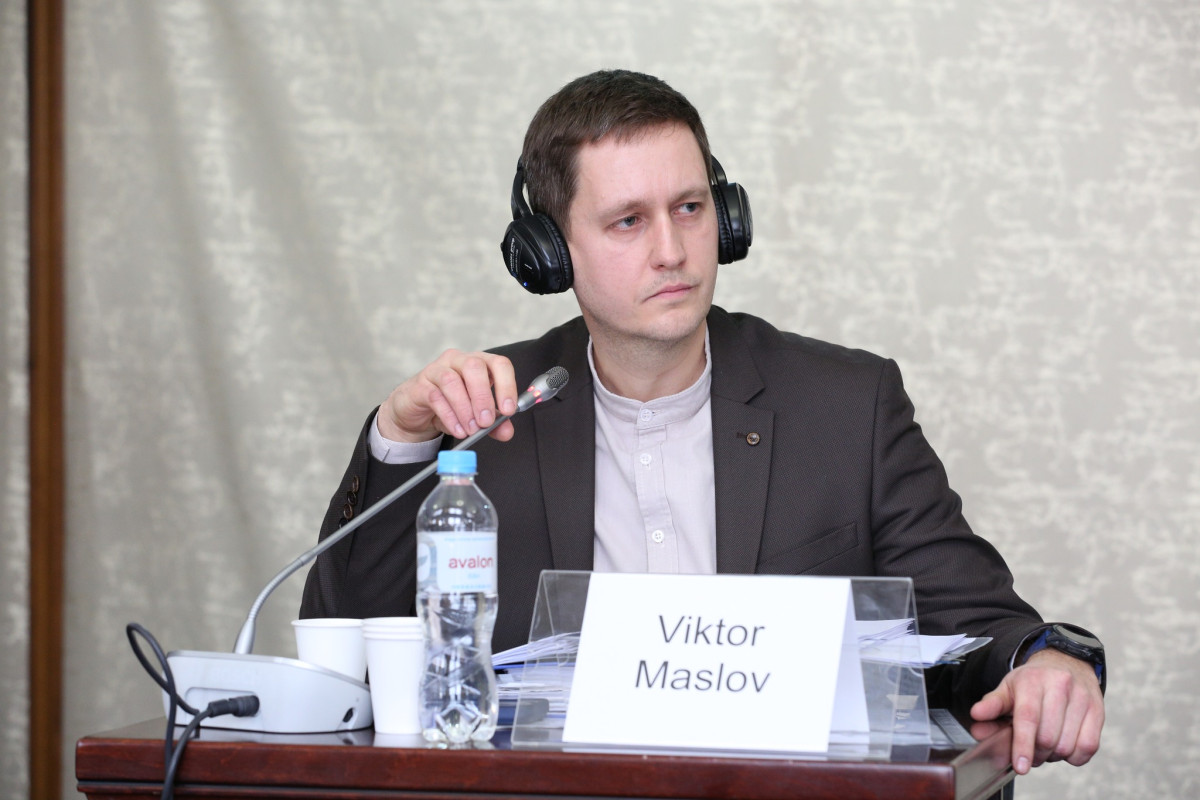
Viktor Maslov’s interview opened with a discussion of his views on EU requirements in the context of judicial reform. He said he closely follows legal developments and is familiar with the full list of Ukraine’s commitments to the European Union. In particular, he supported the involvement of international experts in selection commissions, describing it as justified and beneficial for transparent recruitment.
PCIE noted that his position is sensitive because in 2019, as a member of the Council of Judges of Ukraine, Maslov participated in delegating representatives to the selection commission for HQCJ members. Responding to public criticism that the process was allegedly being blocked, Maslov said the Council of Judges did not obstruct competitions and acted only after they were officially announced, in line with legal requirements.
The interview then turned to the Onyshchenko case and Maslov’s role in it. PCIE first asked about the episode in which the former MP himself reported to anti-corruption authorities an unsuccessful attempt to bribe a HACC judge.
PCIE then raised an older case in which Maslov was alleged to have persuaded a suspect to plead guilty. Maslov said it was one of the first cases assigned to him after HACC was established, and that a different panel considered the plea agreement. According to him, his panel later heard the indictment after a reclassification of charges and ultimately issued an acquittal, which was later upheld by the appellate instance and the Supreme Court.
One of the central issues was the decision by the HACC Appeals Chamber to return the Onyshchenko case for a new trial. Maslov’s panel spent several months in deliberations. The HACC Appeals Chamber found that the judges had breached the secrecy of deliberations by attending training events and a judges’ congress while drafting the verdict. Maslov argued that it is not realistically possible to remain in the deliberation room for months without leaving the courthouse at all. He said the judges did not communicate with third parties and that the events they attended were mandatory, so he did not view their actions as a violation.
A separate part of the interview covered financial matters. PCIE asked about a 2020 loan from his father of approximately UAH 700,000 and a subsequent cash gift to Maslov of UAH 1.53 million (nearly $50,000). Maslov said half of the gifted amount was counted toward repayment of the loan, and he used the other half to purchase a land plot. He said the transaction was notarized, the funds were declared, and the bank conducted financial monitoring.
PCIE also asked about allegedly undeclared property belonging to Maslov’s wife in the Sumy region. The judge said everything was correctly reflected in the declarations: his wife inherited a house and land plots in the Sumy region, but sold them to a relative in the same year and declared the income. HQCJ asked about a reported sale amount that did not match tax data. Maslov suggested the tax authority may have entered the appraised value into the register rather than the contract price.
The interview also addressed Maslov’s disciplinary record. Specifically, a warning issued by the High Council of Justice in June 2025. Under the law, a judge with an unexpunged disciplinary sanction cannot participate in a competition for a position in another court. Maslov said the sanction is now considered expunged because six months have passed. He added that he is challenging the decision in the Supreme Court and that the hearing is scheduled for April 2. Explaining why he submitted documents while the sanction was still in effect, Maslov said he did not consider it an obstacle because the competition was for the same court where he already serves.
The final question concerned eight speeding tickets issued between 2021 and 2025. Maslov said he considers himself a disciplined driver and described the incidents as isolated and unintentional. He also said he would make efforts to avoid such violations in the future.
The interview also addressed Maslov’s disciplinary record. Specifically, a warning issued by the High Council of Justice in June 2025. Maslov said the sanction is now considered expunged because six months have passed. He added that he is challenging the decision in the Supreme Court and that the hearing is scheduled for April 2. Explaining why he submitted documents while the sanction was still in effect, Maslov said he did not consider it an obstacle because the competition was for the same court where he already serves.
Oksana Yevlakh
Judge, Romny City District Court, Sumy Region
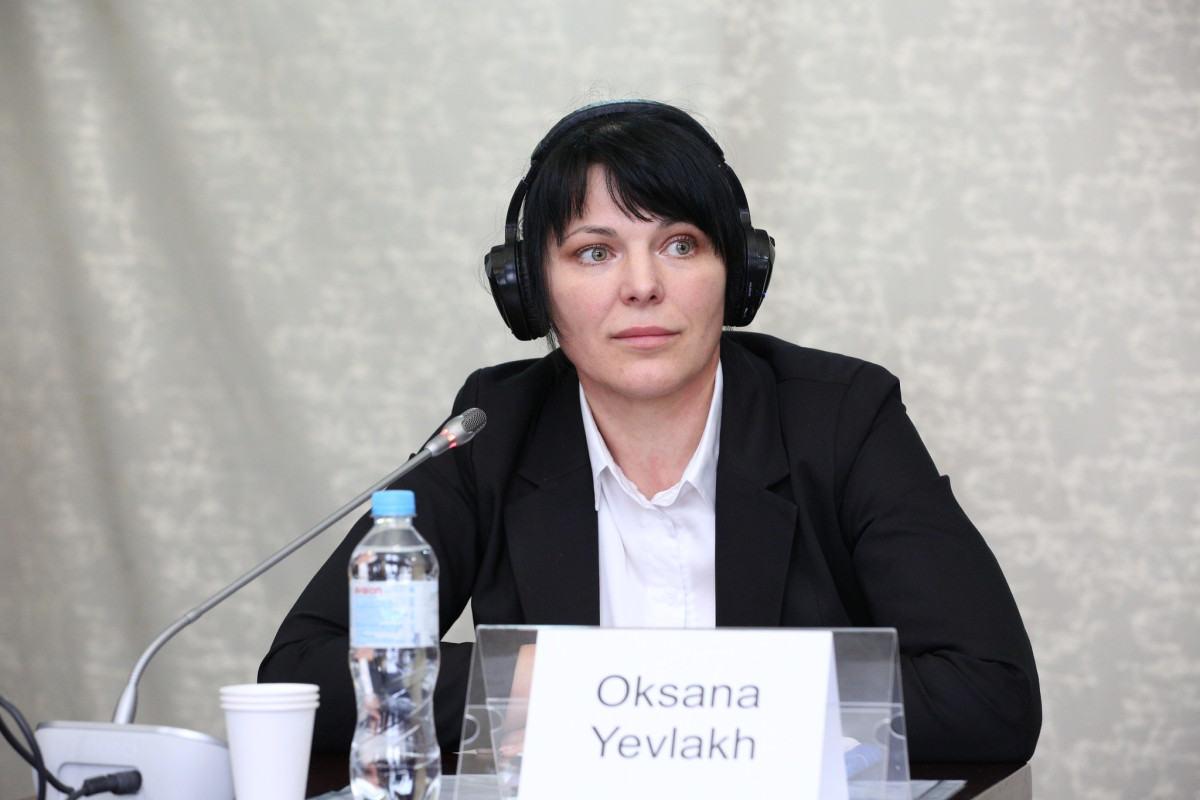
The first pointed question for Judge Yevlakh concerned the gift of a house in Romny in the summer of 2022. PCIE demanded an explanation of why such a gift was made and the status of the person who provided it. The candidate said that during her divorce, her husband proposed that he keep the jointly acquired marital home, and that he would instead find (purchase) property for her in Romny. They found the house through listings, and her husband arranged with the owner to execute the transfer as a gift deed in Yevlakh’s name. She said she did not witness the actual transfer of money at the time of the purchase and has no evidence of it.
Yevlakh said she does not view this as a violation of gift restrictions for public officials. She said she reached that conclusion by reviewing court decisions stating that a gift constitutes a violation only if it is provided in connection with the recipient’s official position. However, she added that today it looks “at least complicated and strange,” and that “a judge should not act that way.”
She said she did not know the donor and saw him only when the documents were signed before a notary. Later, the candidate transferred the house to her aunt as a gift for 10 months and then transferred it back into her own ownership, because for a period of time she was concerned that her husband might try to challenge how she obtained it after a conflict.
PCIE also asked about the allegedly understated value of a 2004 Toyota Avensis. Yevlakh said the declared figure reflected the car’s real value given the need for repairs. The experts also considered understated the price of a land plot purchased for UAH 15,000, which the candidate said she intended to use for office premises. The plot’s appraised value was nearly UAH 50,000, but Yevlakh said a realtor selected the property for her and negotiated the price because the sale was urgent.
Asked about purchasing a house for her daughter in the village of Ovlashi, Yevlakh said she and the child’s father made the joint decision so their daughter would have a summer house, but plans changed due to the war. The candidate explained her former husband’s high income by saying he was an entrepreneur engaged in wholesale trade, and that her declarations reflected gross receipts from sales rather than net income.
Many questions concerned situations where the candidate did not report the value of certain real estate and a vehicle in her declarations despite having that information. She said that at the time (2015–2016), there were no clear explanations, so she interpreted the obligation to declare value as applying only in the year the asset was acquired.
The interview also noted that from 2010 to November 2013, Yevlakh served as a local council member affiliated with the Party of Regions. Experts found that in some questionnaires she reported being only a member of the Our Ukraine party, while in another she listed membership in the Party of Regions as well. Yevlakh said she provided different information because she did not consider herself a member of the Party of Regions. She said she was not part of the central party organization and did not attend party congresses, unlike with Our Ukraine.
It also emerged that in 2025–2026 Judge Yevlakh showed active interest in a commercial case involving the Komyshanskyi company, which concerned, among other things, wholesale transport services—an area in which her husband was also engaged. The candidate could not recall why she used full access to search the court decisions register and reviewed nearly all personalized texts. She suggested only that she may have been looking for identifying details of participants in her own case.
It also emerged that in 2025–2026 Judge Yevlakh showed active interest in a commercial case involving the Komyshanskyi company, which concerned, among other things, wholesale transport services—an area in which her husband was also engaged. The candidate could not recall why she used full access to search the court decisions register and reviewed nearly all personalized texts.
Vitalii Koriahin
Judge, Ternivka City Court
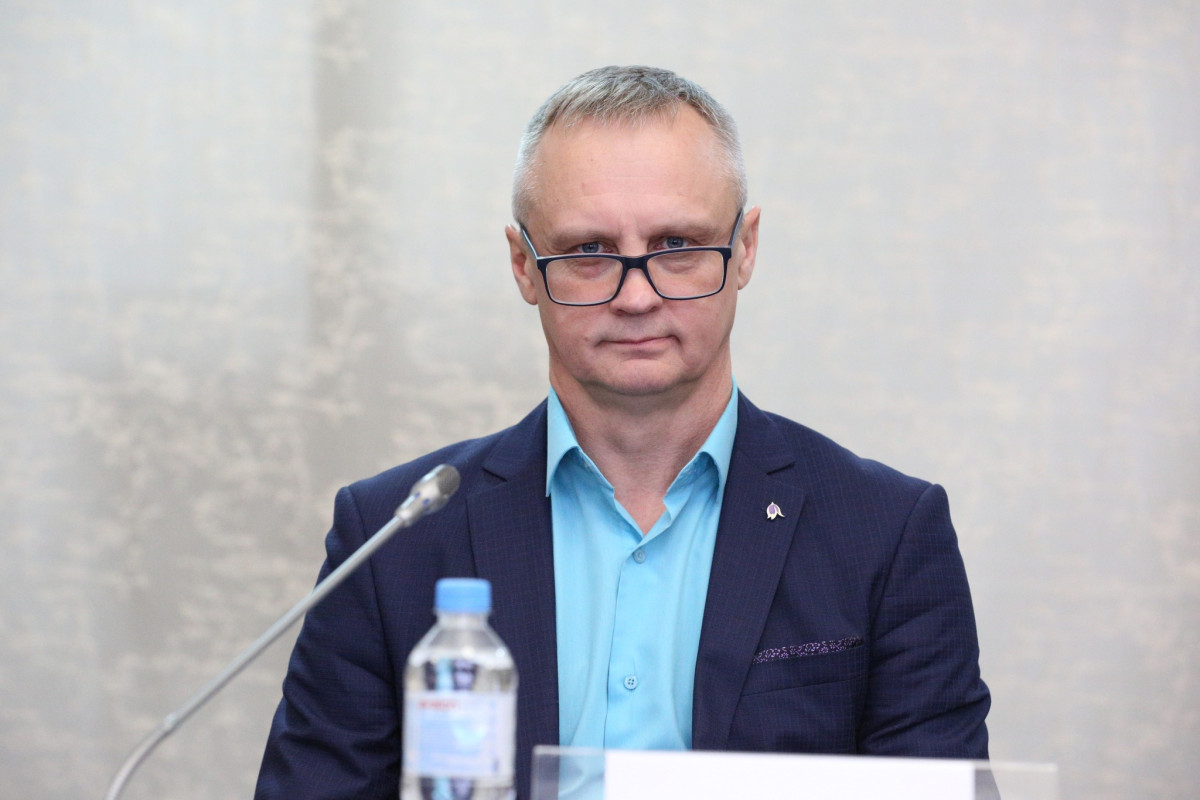
During Vitalii Koriahin’s interview, members of PCIE and HQCJ focused on several areas involving his assets, professional activity, and a civil matter in which questions were raised about his wife’s role as an attorney.
A substantial portion of the interview concerned how the candidate’s mother acquired an apartment. The issue was about a situation where the property was initially registered in Koriahin’s name and later transferred to his mother by a court decision. Koriahin said the apartment was in fact purchased with his mother’s funds, but she was ill at the time and could not appear before a notary, so she did not object to having the apartment registered in his name. He said the subsequent court dispute arose from a family conflict and deteriorating relations with his parents, and the court ultimately granted his mother’s claim.
The very fact of a lawsuit between close relatives prompted follow-up questions, including why the ownership right was initially registered in the candidate’s name. Koriahin again linked this to his mother’s health at the time the contract was signed. He also said that in court he acknowledged the apartment belonged to his mother and asked for the case to be considered without his participation. He explained that he made this request because he worked at that court.
Additional questions concerned his use of a garage. Koriahin said the garage had been built without permits in the late 1990s and that he had no formal legal basis for using it. However, he emphasized that he nevertheless reported the garage in his declarations.
A separate block of questions concerned criminal proceedings that later became the subject of European Court of Human Rights review due to excessive length. The candidate said his procedural involvement was limited in time and that key decisions on interim measures were made by other judges both before and after the case was assigned to him. He said the decision he made was well-reasoned and was not overturned on appeal.
PCIE and HQCJ also returned to the issue of a potential conflict of interest in a civil case in which one of the parties filed a complaint about him. In particular, the complainant alleged that Koriahin’s wife represented the opposing party. Koriahin said the allegation related to different proceedings: he considered one case in which his wife was not the claimant’s representative. Moreover, he said that by the time he heard that case, the contractual relationship between his wife and the participant had already ended because the other case had concluded.
A separate block of questions concerned criminal proceedings that later became the subject of European Court of Human Rights review due to excessive length. The candidate said his procedural involvement was limited in time and that key decisions on interim measures were made by other judges both before and after the case was assigned to him.
Oleksandr Ivasyn
Associate Professor, Department of International, Civil, and Commercial Law, State University of Trade and Economics
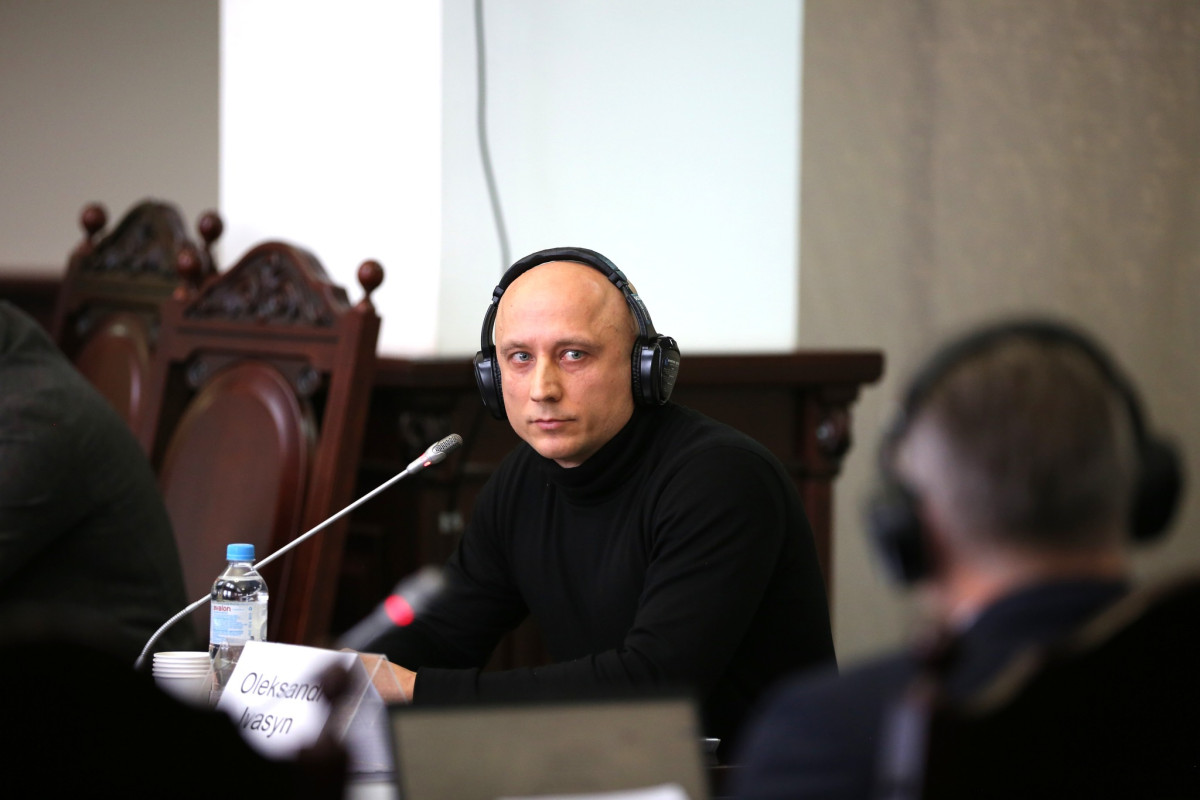
The interview began with a review of Ivasyn’s professional background. He said he combines legal practice with teaching. From 2011, he headed the university’s legal department and later moved into academia. He currently teaches civil and commercial procedure and also runs short courses for civil servants on how to complete asset declarations and prevent corruption.
In his legal practice, Ivasyn primarily specializes in commercial law, but said about 30% of his work involves criminal proceedings. He has participated in roughly 15 cases—at both the pretrial investigation and trial stages—involving abuse of office, misappropriation of property (Article 191 of the Criminal Code), official forgery, and receiving an improper benefit.
PCIE raised questions about CASE & PARTNERS INTERNATIONAL, a firm Ivasyn co-founded. Although the company has operated since 2016 and handled about 30 cases, the first officially reported profit in his declarations appeared only in 2021. Ivasyn said that in the early years all earnings were reinvested into developing the business—office rent, marketing, and launching training courses—and that he supported himself during that period through academic and teaching work.
The commission also referred to Ivasyn’s prior attempt to join HACC in 2018. At that time, PCIE and HQCJ found that he did not meet integrity criteria, citing numerous issues in his declarations. Ivasyn acknowledged that he had made mistakes in preparation and had not taken all necessary steps, but said he had drawn conclusions since then and was now fully ready to serve as a judge. He confirmed that he accepted HQCJ’s earlier criticisms regarding his savings as of 2015 and the declared values of a land plot and a Hyundai Getz. He also explained the purchase of a garden house and a land plot in 2025.
The commission questioned him in detail about how he accumulated savings given his ongoing expenses. Ivasyn said he currently spends about UAH 15,000–20,000 per month, not counting loan payments of UAH 18,000. He said his savings resulted from a long period of working as an individual entrepreneur and regularly setting money aside, which he said is reflected in his declarations since 2018.
A separate focus was a Facebook post published by the candidate titled, “How to declare cash you have always had but did not previously disclose.” PCIE noted that the post appeared a year after he had been found not to meet integrity criteria in the previous HACC competition. Ivasyn said that since 2016 he has lectured to civil servants, and that the post was an attempt to respond to frequent questions from participants who were afraid to declare cash because they feared criminals might steal it. He acknowledged that he chose an unfortunate wording and later deleted the post, insisting that he had never followed such recommendations himself.
When HQCJ noted that this advice about declaring cash coincided with his participation in the competition for the Kyiv Court of Appeal, Ivasyn could not provide a clear explanation. He called it an unfortunate mistake and again stressed that he was not proposing any mechanism to conceal real wealth, but was trying to be helpful to his audience.
During the interview, HQCJ posed a hypothetical: if, as a HACC judge, Ivasyn were considering a case against another judge for false asset declarations and the defendant claimed to have acted based on Ivasyn’s post, would he recuse himself? The candidate said no, stating he saw no grounds for recusal in that scenario.
The commission also referred to a 2021 article by Ivasyn in which he argued that individuals should have a chance to reform and that, after a certain period, it should be possible to be removed from the public register of corrupt officials. He said this was his academic position and that it now aligns with recent legislative changes adopted by Parliament and with NACP procedures.
During the interview, HQCJ posed a hypothetical: if, as a HACC judge, Ivasyn were considering a case against another judge for false asset declarations and the defendant claimed to have acted based on Ivasyn’s post, would he recuse himself? The candidate said no, stating he saw no grounds for recusal in that scenario.
Petro Romanenko
Deputy Head for Legal Affairs, District Territorial Recruitment and Social Support Center, Samar District
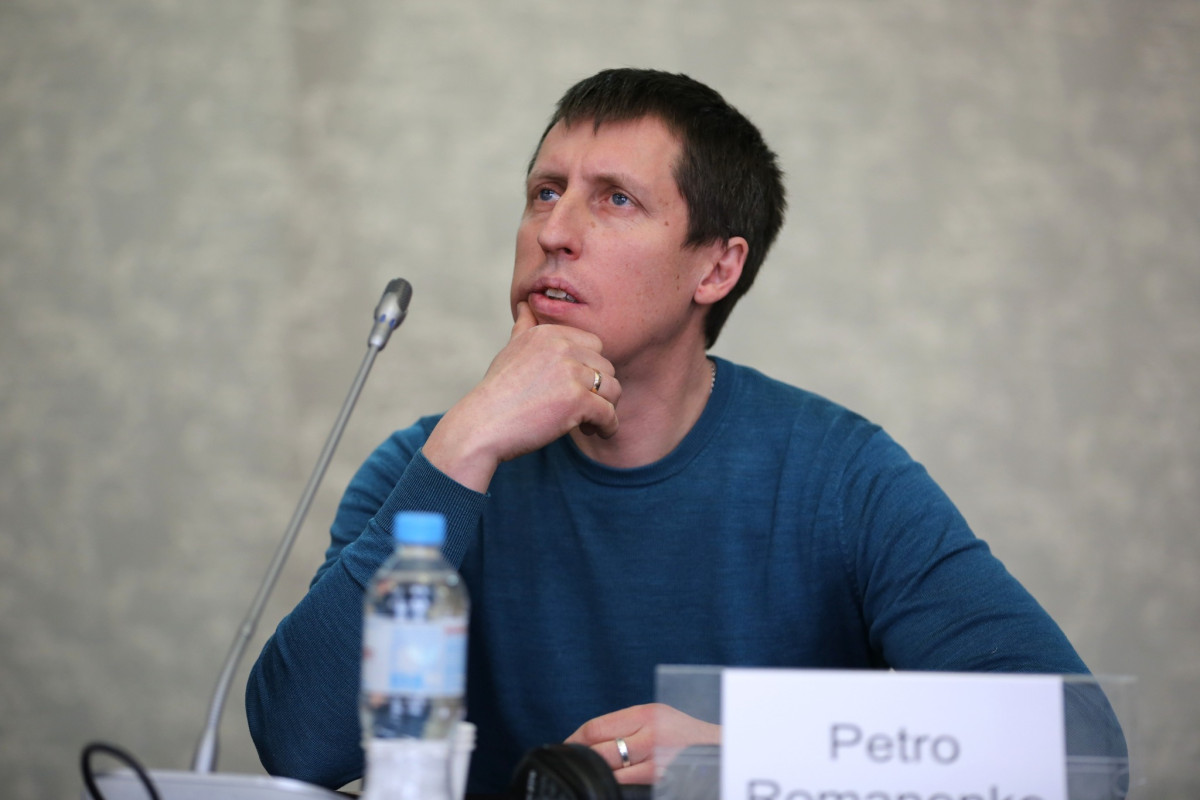
A central issue in the interview was whether Romanenko has sufficient experience to work at HACC. He said he had participated in only one case involving a corruption offense, which prompted follow-up questions given the court’s specialized jurisdiction.
The candidate was also asked about his participation in elections to the Novomoskovsk City Council. He said he was not a party member and agreed to run at the request of friends who wanted to influence the city’s development in a way that aligned with his values.
The interview also addressed his wife’s acquisition in 2012 of a house and land plot in Samar for a total declared value of UAH 129,000. Romanenko said the purchase was funded through their joint savings and emphasized that the house was in poor condition, adding that he has photographs to confirm this. PCIE members noted that the candidate reacted rather emotionally to questions about assets.
The panel also discussed a case in which Romanenko sued a local authority over amendments to a public square reconstruction project and sought compensation for moral damages. He said he filed the claim out of outrage at the local government’s actions and the destruction of a green area in the city. He added that the moral damages claim was not particularly important to him, but was included as a point he could concede during negotiations.
HQCJ asked a number of questions about his knowledge of anti-corruption legislation, and in several instances the candidate said he was not ready to answer.
HQCJ asked a number of questions about his knowledge of anti-corruption legislation, and in several instances the candidate said he was not ready to answer.
Yurii Bodnaruk
Judicial Assistant, HACC Appeals Chamber
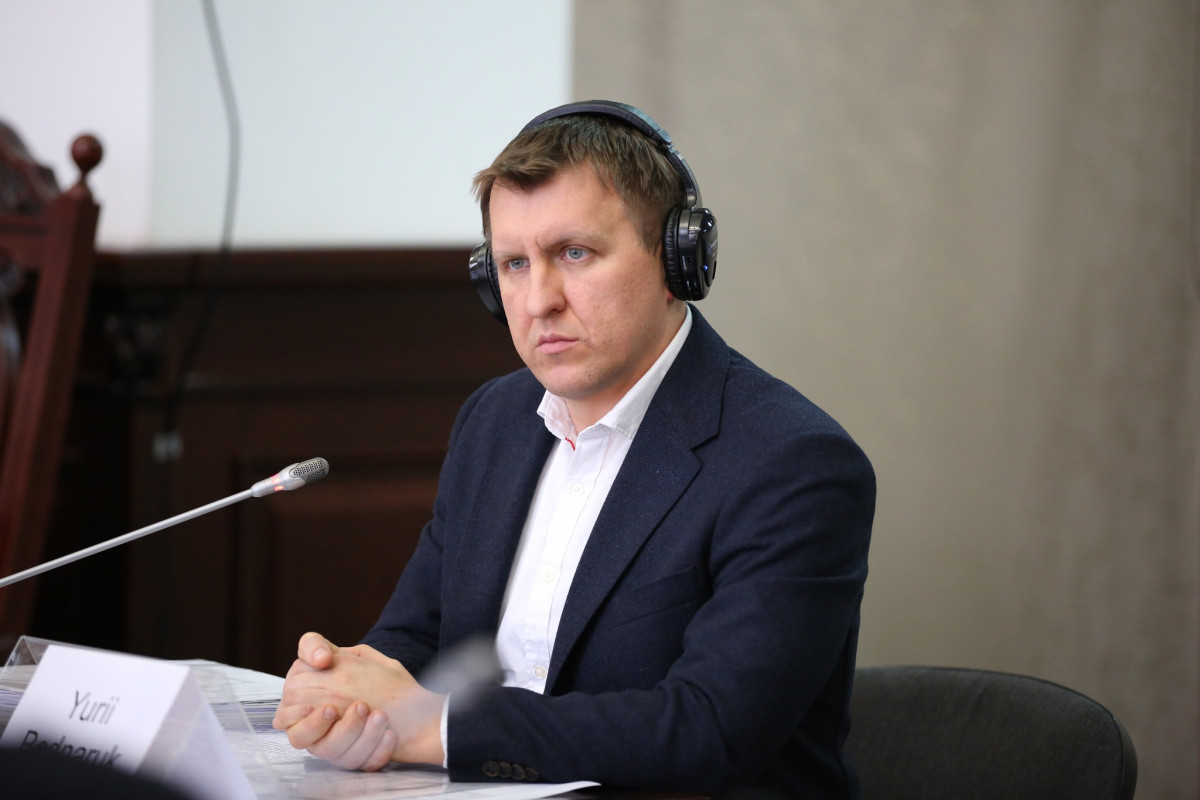
This is Bodnaruk’s second attempt to become a HACC judge. The first point PCIE members raised was that on February 26 the Supreme Court was scheduled to hear Bodnaruk’s case challenging the previous decision finding him unfit for a HACC judgeship.
For the experts, the central question was whether anything had changed since the last competition. Bodnaruk’s position was that PCIE’s earlier decision contained factual and methodological errors that, in his opinion, resulted in his income being calculated as lower than it actually was.
The previous decision concluded that for 13 years Bodnaruk lived on an unusually low income—about $150 per month. He argued that this calculation was wrong, saying he did not live on $150 per month but on $236, because under the Family Code his parents were obligated to support him for two of those 13 years while he was in postgraduate study. In addition, he said that different registries reflecting his official income showed inconsistent figures for 2008 and 2011, which, in his view, added another $600 to his total income for those years.
PCIE nonetheless questioned how the candidate could live in a large city like Odesa on $7.36 per day ($236/30 days). Bodnaruk responded that, taking into account savings, and assuming a subsistence minimum of $100, “I still had about 2.5 subsistence minimums left for expenses, given my modest lifestyle.”
A particularly notable point was that in May 2025 he signed a gift agreement documenting that his mother had given him $30,000 to purchase an apartment—an attempt to dispel doubts that he had sufficient funds to buy real estate in Odesa. HQCJ noted, however, that the gift itself allegedly took place in 2016, while the contract was executed in 2025, which is not permissible under civil law because the gift transaction had already been completed and the legal relationship had ended. Bodnaruk said he had previously provided explanations about the gift, but they were not mentioned in PCIE’s earlier decision, so he signed the agreement as additional confirmation.
The experts also asked about the candidate’s sale of a car. In his 2019 declaration, he reported income from the sale but did not declare the fact of entering into the sales transaction. Bodnaruk said the car was actually sold in 2019, but due to malfunctions at service centers it could not be formally processed at the time. As a result, he and the buyer drew up a power of attorney, and the vehicle was ultimately re-registered and sold in 2020.
In closing, Bodnaruk said he challenged PCIE’s earlier finding of unfitness because he had two conflicting assessments: a decision by the selection commission for HQCJ members finding him eligible to serve on HQCJ, and the opposite conclusion by PCIE regarding a HACC judgeship.
In closing, Bodnaruk said he challenged PCIE’s earlier finding of unfitness because he had two conflicting assessments: a decision by the selection commission for HQCJ members finding him eligible to serve on HQCJ, and the opposite conclusion by PCIE regarding a HACC judgeship.
Serhii Kovalchuk
Professor, Ivano-Frankivsk Educational and Research Law Institute, Odesa Law Academy
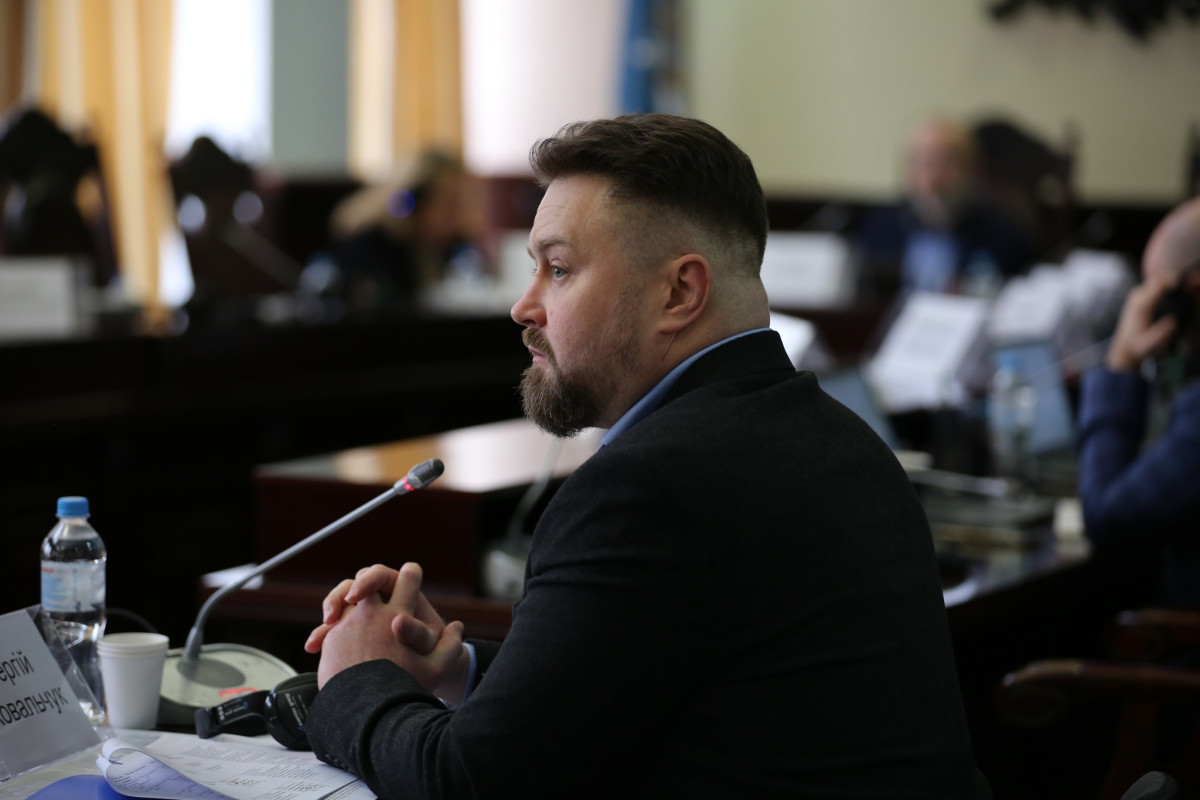
The interview opened with questions about Kovalchuk’s background. He said he has been an academic since 2002. He has defended a dissertation and argued that deep familiarity with case law, together with producing scholarly work, is sufficient preparation for judicial service.
Discussing his participation in prior competitions, Kovalchuk said he is seeking professional growth. He noted, however, that he previously did not score enough points to qualify for the Supreme Court, and in the competition for the High Council of Justice he received a negative opinion from the Ethics Council finding that he did not meet the standards of integrity and professional ethics—an assessment he disputes.
The commission asked about his cohabitation with his mother, given that she was not listed in his declarations. Kovalchuk said his mother spent a long period caring for his grandmother in another region, so he did not consider it necessary to include her, and he said he had no intent to conceal her income.
The greatest doubts concerned Kovalchuk’s reporting for 2018. With an official after-tax income of UAH 134,000, he reported saving UAH 54,000 in cash. He also said he spent about UAH 39,000 on support and had only about UAH 40,000 left for living expenses for the year (roughly UAH 3,000 per month). Kovalchuk acknowledged that this could raise questions, but said it was a single difficult year during which he lived at roughly the subsistence minimum.
PCIE found that in 2008 the price of a Toyota Corolla he purchased (UAH 117,500) exceeded his family’s total income (UAH 110,000). Kovalchuk explained this by saying his parents helped him financially and suggested registry data may be inaccurate. Additional questions were raised about his accumulation of $13,000 in savings between 2014 and 2019.
PCIE also paid special attention to his work at the Ivano-Frankivsk institute of the Odesa Law Academy. Asked about his relationship with the Academy’s president, Serhii Kivalov, Kovalchuk said they have known each other for 15 years but have strictly professional relations. He emphasized that he views Kivalov’s political links to the Russian Federation negatively, and said the Ivano-Frankivsk institute is a separate legal entity to which the founder’s politics do not extend.
The commission also asked about the candidate’s second degree—a master’s in psychology. Kovalchuk was unable to explain the difference between cognitive and psychological approaches. When asked to name prominent psychology scholars, he named three people, two of whom (Oleksii Chernovskyi and Viktor Koshchynets) hold doctorates in law rather than psychology. He was also unable to name any international experts in the field.
The commission also referred to Kovalchuk’s academic article on plea agreements. He said legislative amendments adopted in November 2024 took an approach diametrically opposed to the one he had advocated, because he supported HACC’s earlier practice of not entering into plea agreements in corruption cases. During a rapid-fire HQCJ “blitz” on the nuances of plea agreements, the candidate made an inaccuracy when answering a question about whether agreements can be concluded with an organizer.
The commission also asked about the candidate’s second degree—a master’s in psychology. Kovalchuk was unable to explain the difference between cognitive and psychological approaches. When asked to name prominent psychology scholars, he named three people, two of whom (Oleksii Chernovskyi and Viktor Koshchynets) hold doctorates in law rather than psychology.
Viktoriia Bazeliuk
Assistant Lecturer, Criminal Law Department, Yaroslav Mudryi National Law University
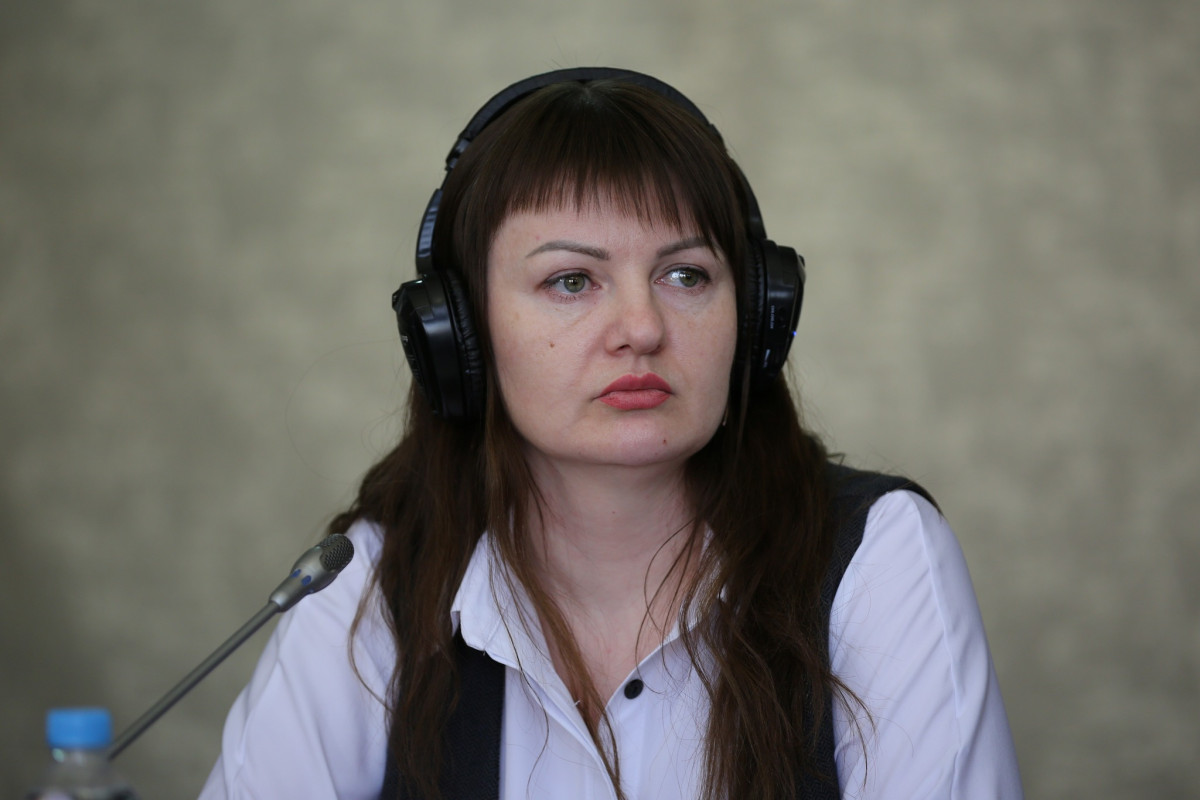
The candidate’s interview began with questions about her recent legal practice: Bazeliuk began working as an attorney in 2025 and has handled fewer than 10 cases so far.
She was asked many questions about apartments in the Poltava region and in Kharkiv. In 2009, her family sold an apartment in the Poltava region for about $14,000, of which she received a $4,500 share. The local Bureau of Technical Inventory valued the apartment at UAH 37,000–38,000, while the contract reflected the actual amount, which in dollar terms was $14,000. Bazeliuk said she accumulated those funds—together with savings from salaries, gifts, and fees—to purchase an apartment in Kharkiv.
However, the greatest number of questions concerned her relationship with, and events involving, her former live-in partner.
Bazeliuk acknowledged that she was formally listed as the owner of vehicles on two occasions. One involved a Hyundai SANTA FE purchased in 2016 by a close acquaintance who could not be present for re-registration and asked her to serve as the nominal owner for less than two months. She said she neither received nor paid any money and did not use the car even once.
The story with a Honda Civic drew even more attention. Bazeliuk said she had to register it in her name because otherwise she and her partner would not have been able to enter Belarus—she claimed that there was already a car with the same owner registered there.
It was also noted that in summer 2017, Bazeliuk and her partner, Yurii Milshyn, were involved in a traffic accident in that vehicle. Police drew up two reports against the candidate: one under Article 130 of the Code of Administrative Offenses (refusal to undergo a sobriety test) and one under Article 124 (the accident itself). During the court review, it was established that Bazeliuk was not the driver and that the vehicle was driven by her partner; the police had mistakenly issued the reports against her. Experts noted that she had lived with Milshyn since 2013, so it appeared odd that in her testimony she referred to him as “a man I barely knew.”
PCIE members asked whether Milshyn might have been intoxicated, since he had previously been held liable under Article 130, which could explain the accident and why he was detained when he allegedly tried to flee. Bazeliuk responded that the driver on their vacation did not drink alcohol, except possibly nonalcoholic beer.
The candidate acknowledged an error in not declaring her use, in her 2024 declaration, of a Chevrolet Volt belonging to her former partner. She said she believed that having a power of attorney for the car, without actually using it, did not create an obligation to declare it.
The interview also addressed the fact that around 2020, Bazeliuk asked to keep her registered address at a dormitory of Yaroslav Mudryi National Law University. She explained that in order to obtain a mortgage loan, she needed to have residence registration at the dormitory and to be placed on the housing waiting list.
It also emerged that before 2010, the candidate served as a representative at certain polling stations and received income that she did not report to the tax authorities.
Bazeliuk said she traveled to the Russian Federation multiple times before 2020 because her partner’s relatives lived there. Asked about the ethics of such travel, she said that at the time it was difficult for her to explain to her partner why she would refuse to visit his relatives.
Several questions concerned her academic work. In one of her papers, for example, she argued that the HACC is not a specialized court because it does not have a special procedural law. Asked whether every court must have its own procedural law, Bazeliuk said she had not fully worked through the issue. She also answered incorrectly when asked whether the legal conclusions she had drafted qualify as evidence under the Criminal Procedure Code of Ukraine.
Bazeliuk said she traveled to the Russian Federation multiple times before 2020 because her partner’s relatives lived there. Asked about the ethics of such travel, she said that at the time it was difficult for her to explain to her partner why she would refuse to visit his relatives.
Oleh Batiuk
Attorney
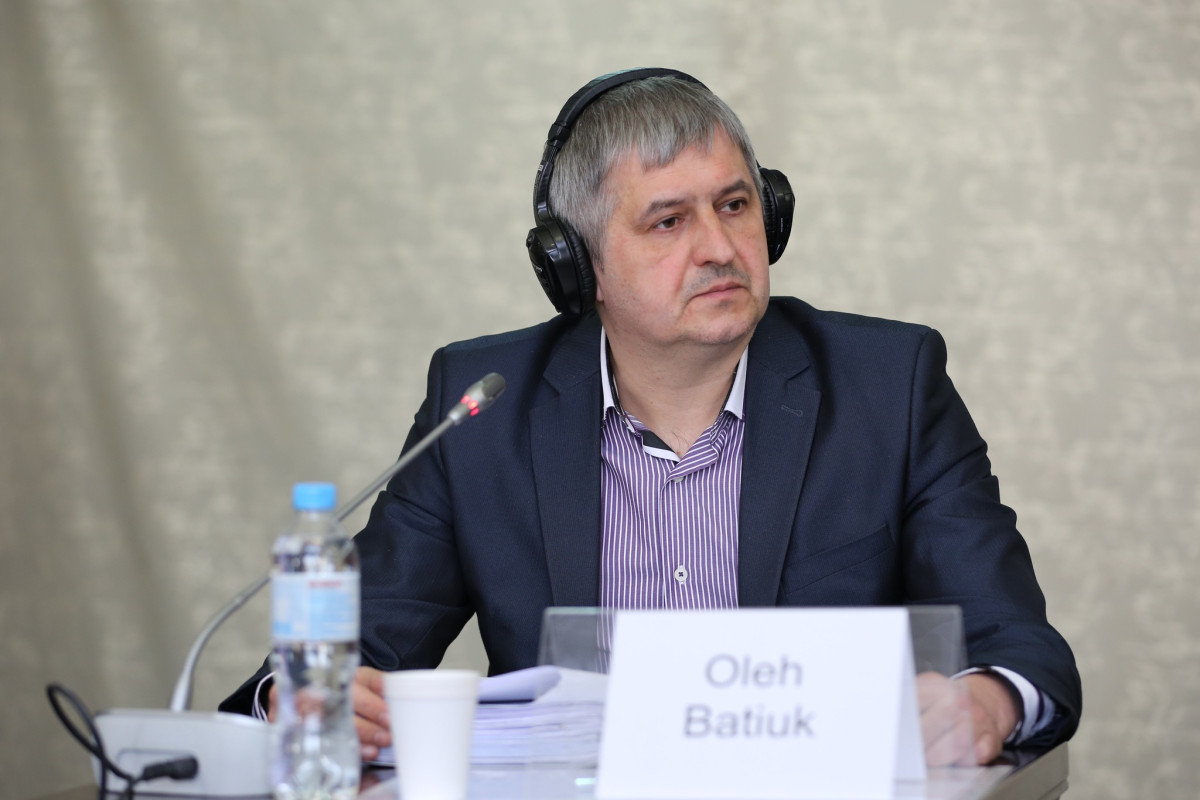
PCIE opened the interview by asking about the candidate’s motivation and professional development, including his completion of several anti-corruption courses. The greatest number of questions, however, concerned Batiuk’s ethics and integrity.
In 2019, the candidate declared total household income of UAH 33,000—an extremely low figure for a family with a child. Batiuk said the family’s annual spending was UAH 143,000, including UAH 100,000 in savings.
What concerned the experts more was that during the same period the candidate was practicing law, yet his declaration stated that his only income for 2019 was UAH 9,710, while the remaining UAH 24,000 consisted of his wife’s social benefits. However, it was established that Batiuk provided legal services in at least 15 cases, which would imply he earned less than UAH 1,000 per case. The candidate was unable to say what fee rates he charges for legal services.
Batiuk suggested that he may have had no income in 2019 because some matters could have been ongoing since 2016–2018 and clients might have paid retainers in advance. PCIE countered that in 2016–2018 he did not have cases that were at the trial stage.
Batiuk then acknowledged that on several occasions he received small “thank-you” payments of UAH 200–500 that he did not declare. He also did not declare income of UAH 10,000–11,000 from subleasing a land plot, which he likewise considered small.
PCIE also found that in 2018, under a decision of the Obolonskyi District Court, Batiuk was ordered to repay unemployment benefits he had received unlawfully. While working as an attorney, he applied to an employment center to receive unemployment payments. He said he believed that by paying social insurance contributions he would be protected from such situations, noting that shortly before applying he had been dismissed from his position as director of the Mariupol Legal Aid Center.
A separate block of questions concerned apartments purchased by the candidate’s mother—first in Mariupol, where the price doubled over 18 months, and later in Kyiv. The candidate attempted to explain the origin of funds for his mother, a pensioner, but provided no documentary support. Batiuk also said that the sale contract for the Mariupol apartment listed an understated price, and that the true amount was later transferred to his mother in cash.
Overall, during the interview the candidate often avoided giving direct, specific answers, and in some areas the experts did not receive clear explanations.
HQCJ noted that the candidate completed the HACC candidate questionnaire very carelessly and, as later became clear, copied it without changes from an appellate court questionnaire, resulting in numerous errors. For example, he stated that he had applied to the High Council of Justice as a judge regarding interference in his work, even though he was not a judge.
Batiuk also claimed he had not been held liable recently, but several automated speeding tickets were issued in his name. He said the violations were committed by his wife while driving his car and that he was unaware of the fines.
HQCJ also found that for a period from March 30 to October 2, 2022, the candidate was listed as being in unauthorized absence from his unit. According to his account, that information was later not confirmed by the military unit itself.
Batiuk was also asked professional questions. For example, he was asked what he would do if another judge at his court received a gift in violation of anti-corruption legislation. He said he would report it to the High Council of Justice and to anti-corruption agencies, but added that if he learned about something like that only from rumors, he “wouldn’t run to” the High Council of Justice and “that wouldn’t happen.”
Questions about how the candidate combined military service with legal practice were reviewed by HQCJ in closed session.
Batiuk then acknowledged that on several occasions he received small “thank-you” payments of UAH 200–500 that he did not declare. He also did not declare income of UAH 10,000–11,000 from subleasing a land plot, which he likewise considered small.


