




May 21, 2026 15:34
PR for Mayors or Promoting Social Services: Where the Most Is Spent on Advertising via Prozorro
While Ukrainians are closing fundraisers for drones, shelters, and vehicles for the front, some city councils continue spending budget millions on their own media promotion. Despite the war, budget deficits, and ongoing debates about whether such spending is justified, the approach to procuring advertising services has barely changed. In many cities, the same contractors, the same outlets, and the same promotion formats — television, radio, online media, and social networks — have remained in place for years.
The DOZORRO Transparency International Ukraine team has been analyzing advertising procurements on Prozorro since 2020. This time, we focused on city councils and their subordinate entities that signed the largest PR contracts in 2025. And we didn’t just count how much they contracted — we looked deeper: what exactly they order, where this content appears, and what it looks like. So, what are these budget millions going to — informing the public about the work of local self-government bodies, or PR for mayors? Read on to find out.
How we calculated
For this study, we took all procurements for 2025 — regardless of the procedure used — but counted only contracts with the status of “active” or “completed.” The sample also includes procurements announced last year for which contracts were signed in early 2026.
The core of the sample consists of procurements under classification 79340000-9, Advertising and marketing services. We also checked other common categories that PR work may fall under. To avoid missing relevant procurements that contracting authorities may have classified differently, we ran keyword searches — “coverage,” “placement,” and “promotion.”
Separately, we analyzed media mentions tied to these advertising contracts. To do this, we wrote Python scripts using the Claude AI assistant. The scripts collected 2025 materials from online media where the city councils under study had procured coverage of their activities. From these, the scripts filtered out items that contained mentions of the city councils (in various grammatical forms) and their mayors. We also verified the samples manually. We then compared the number of mentions against the KPIs set out in the corresponding 2025 advertising and information service contracts.
Which city councils order the most advertising
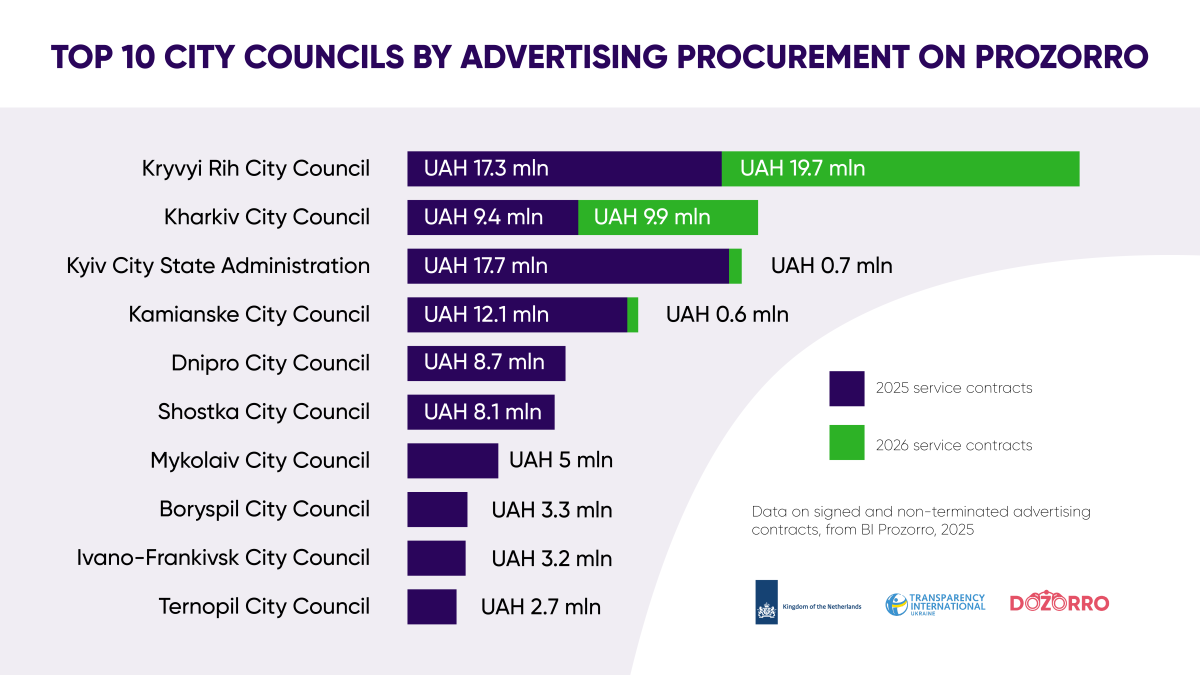
In 2025, city councils and their subordinate entities contracted nearly UAH 149 million for advertising. That is slightly less than in 2024, when the figure reached UAH 157 million. The top of the ranking has shifted somewhat this time. The largest sums on advertising services were directed in Kryvyi Rih, Kharkiv, Kyiv, and Kamianske. Dnipro, which had spent more on advertising than any other city in the country for years, sharply reduced its spending and dropped down the list.
Most often, city councils procured:
- social media advertising,
- outdoor advertising (billboards),
- radio and television,
- the design and implementation of comprehensive advertising campaigns.
Below — more detail on how cities spend these funds, who receives the orders, and what content is produced as a result.
Kryvyi Rih: recurring contractors and the Vilkuls in most publications
In 2025, Kryvyi Rih ranked among the leaders in advertising spending, with UAH 37 million in contracts. More than half of this sum, however, comes from contracts signed in early 2026 — though the procurements themselves were announced in 2025, which affected the overall annual figure. If we count only contracts actually signed during 2025, the city directed UAH 17.3 million to advertising.
The largest sum was contracted by Municipal Enterprise Kryvyi Rih City Development Institute. In February 2025, the enterprise signed a UAH 12 million contract with Media-System TV and Radio Company LLC for coverage of security, infrastructure, social programs, and the work of the authorities. The content aired on the radio stations Radio Piatnytsia, Megapolis, Radio Kryvbas, Perets FM, and Stilnoe, and on the TV channels Pershyi Miskyi and OTV. Media-System TV and Radio Company LLC is reportedly linked to the inner circle of Oleksandr Vilkul — head of the Kryvyi Rih Security Council and a former member of the Verkhovna Rada and the Dnipropetrovsk Regional Council. His father, Yurii Vilkul, has been acting mayor of Kryvyi Rih since 2021.
In early 2026, the same municipal enterprise signed another, effectively identical, contract worth UAH 13.7 million. This time the contractor was Nova TV and Radio Company LLC (the OTV channel). Its owners, Stanislav Basov and Oksana Nechai, also own Public Television OTV LLC. The same company provided similar services in 2024.
Separately, Municipal Enterprise Kryvyi Rih City Development Institute procures coverage in newspapers and online media. Last year, UAH 5.2 million was contracted for this purpose, with another UAH 6 million added in early 2026. The order went to Kryvbas Online Information Agency LLC, which had worked with the city before. The company is linked to Yaroslav Hyvel, an MP representing Vilkul’s Ukrainian Perspective party. The funds go toward placing materials on the websites Kryvbas Online, Puls, 1 Pershyi Miskyi.KR, and Informator, as well as in the newspapers Puls, Moia Hazeta Domashnia, Vechir, and Vik. Visnyk Kryvbasu. The list of outlets barely changes from year to year.
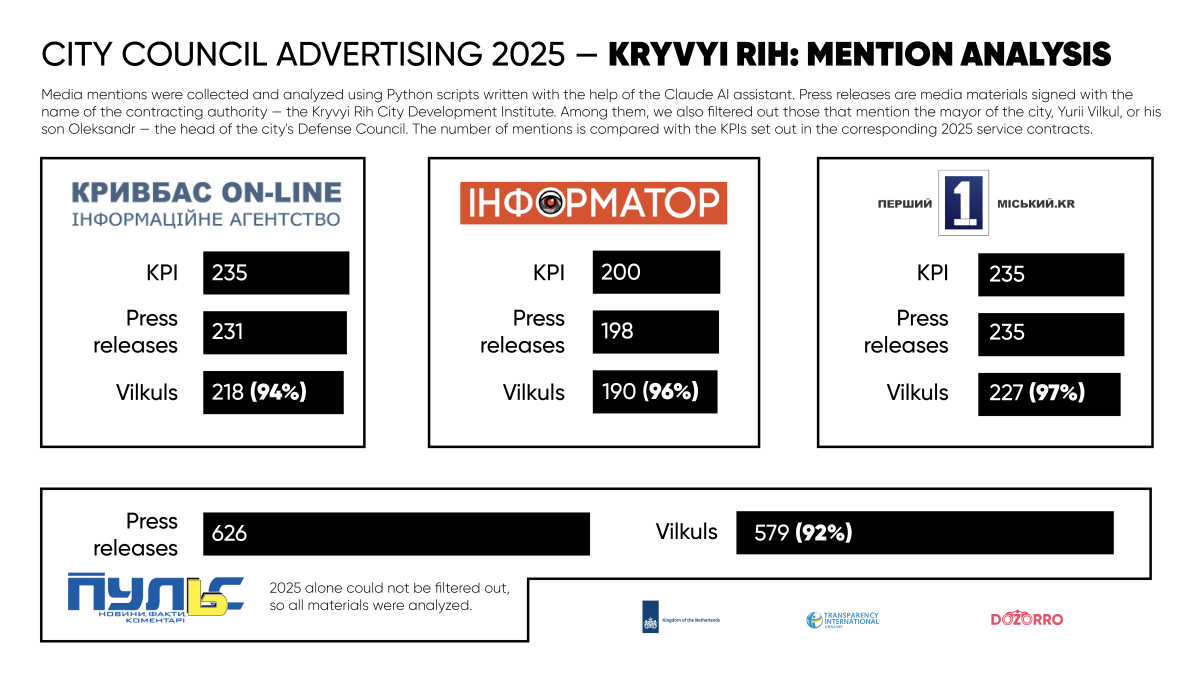
Spending, however, is only part of the story. Content analysis showed that press releases from the Kryvyi Rih City Development Institute are fairly easy to trace in local media — these materials are openly signed with the name of the municipal enterprise, and sometimes appear in dedicated sections. At the same time, more than 90% of such publications, depending on the outlet, consistently mention either Yurii or Oleksandr Vilkul. This shows that a significant share of the city’s official content is built around personalized coverage of local leaders. On top of that, in roughly half of all cases the press release headlines are direct quotes from one of the Vilkuls. For example: “O. Vilkul: We are gradually equipping kindergartens, schools, and gymnasiums with modern energy-efficient technologies — for the comfort of children and educators and to reduce energy costs.”
DOZORRO reached out to the Kryvyi Rih City Council to ask it to explain the high advertising expenses, their objectives, and how their effectiveness is assessed. The city council responded that the main budget spending units determine how funds are used within the approved budget on their own, and that all expenditures are made in accordance with the law.
Kharkiv: more about the city council’s activities
Second place goes to the Kharkiv City Council, with UAH 19.3 million. That is roughly the same as in 2024 (UAH 21 million). In Kharkiv, PR spending is consistent not only in scale but also in approach: city hall continues to work with the same contractors and bets on television, radio, and local online media.
Kharkiv City Council contracted nearly UAH 7 million to place news items and programs on television. The contract with Interkom-invest LLC was signed in late 2025 for services to be delivered in 2026. The city used the same practice the year before.
Another UAH 5.5 million-plus was directed toward placing materials about the city council, the mayor, and the executive committee on radio. One contract was signed in late 2025 for services to be delivered this year. As in 2024, the services are provided by individual entrepreneur Denys Okuniev.
A separate UAH 4.5 million went to coverage of the authorities’ work, infrastructure projects, security measures, and social programs in local outlets: Slobidskyi Krai, Dumka, Status Quo, and Obiektyv. The last of these belongs to city council official Oleksandr Davtian and his children.
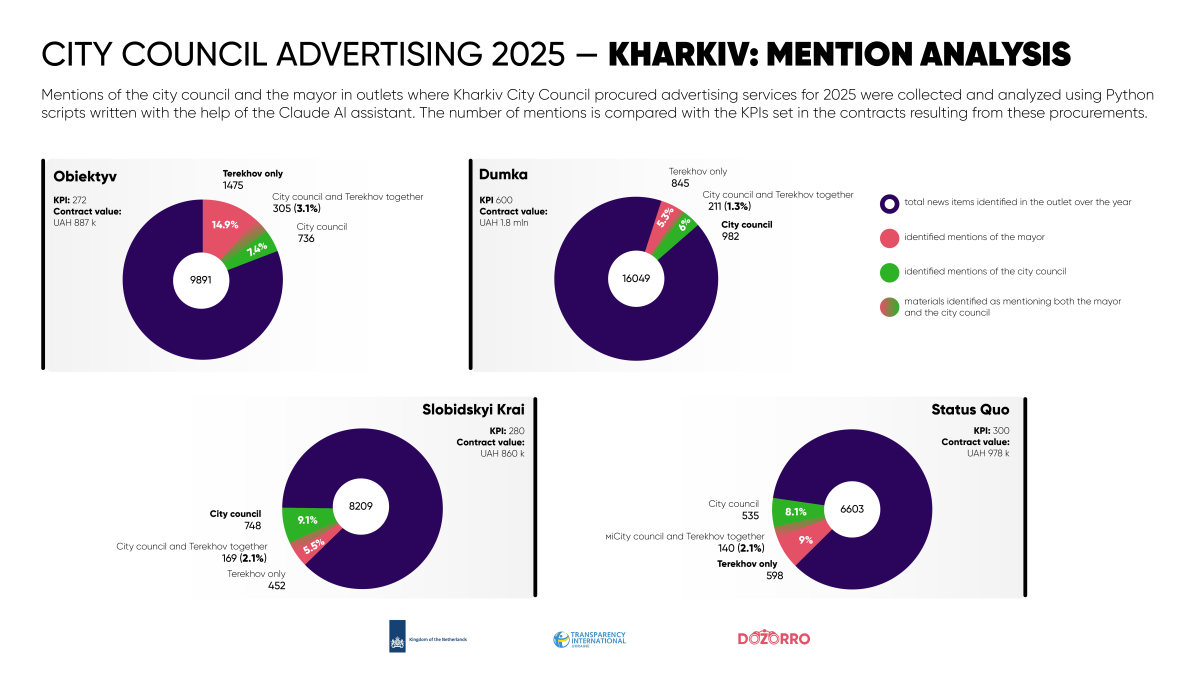
Spending alone, however, does not always show what such communication actually looks like. Content analysis showed that in Kharkiv it is less personalized around the mayor than in Kryvyi Rih. In Slobidskyi krai and Dumka, the city council was mentioned more often than Ihor Terekhov. Some outlets focus more heavily on the mayor himself. This is most evident on the Obiektyv website, where Terekhov was mentioned in nearly 15% of all 2025 news items — roughly twice as often as the city council. That said, a substantial portion of these mentions are quotes from official statements about the shelling of the city. The mayor’s name appears in news headlines far less often than in Kryvyi Rih.
Kyiv: social campaigns
Third place goes to Kyiv. Structures within the Kyiv City Council contracted UAH 18.4 million for information and communication campaigns — slightly less than in 2024 (UAH 20 million).
The capital’s main focus is on social projects: distribution of printed materials, promotion on social media, radio, and outdoor advertising. The largest sum was contracted by Municipal Enterprise Communication Center — UAH 7.4 million for more than 20 campaigns. These include:
- Information on Ukraine’s partnership with the EU — UAH 376,000
- Recruitment for the Rubizh National Guard brigade — UAH 389,000
- Vaccination campaigns — UAH 386,000
- Promotion of service in the Territorial Defense Forces of the Armed Forces of Ukraine — UAH 379,000
- The “KMAN — A Space of Opportunities, Development, and Victory” campaign — UAH 350,000
- The “Report Corruption!” campaign — UAH 315,000
- The “Space for Business in the Capital — Fast, Modern, Lawful!” campaign — UAH 338,000
- The “Metro for Everyone: Convenience, Safety, Operations” campaign — UAH 235,000
Materials and descriptions of these campaigns are available on the Communication Center’s website. To determine where exactly this advertising was placed, we filed a public information request. In response, the Communication Center provided a list of locations and distribution channels — from billboards, citylights, and metro to radio stations and social media.

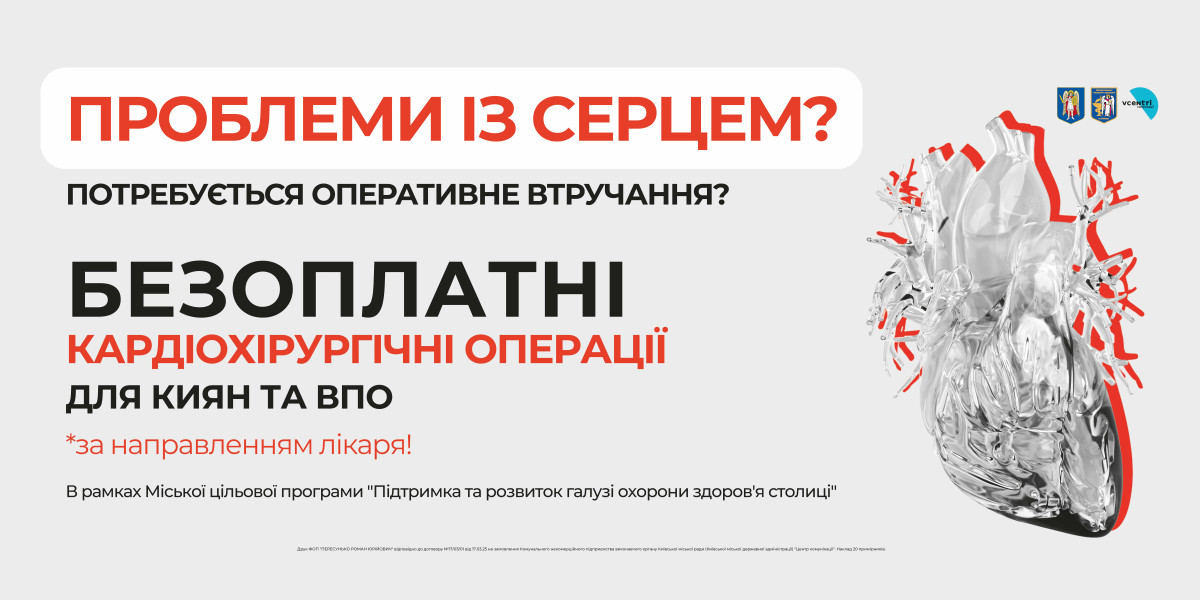
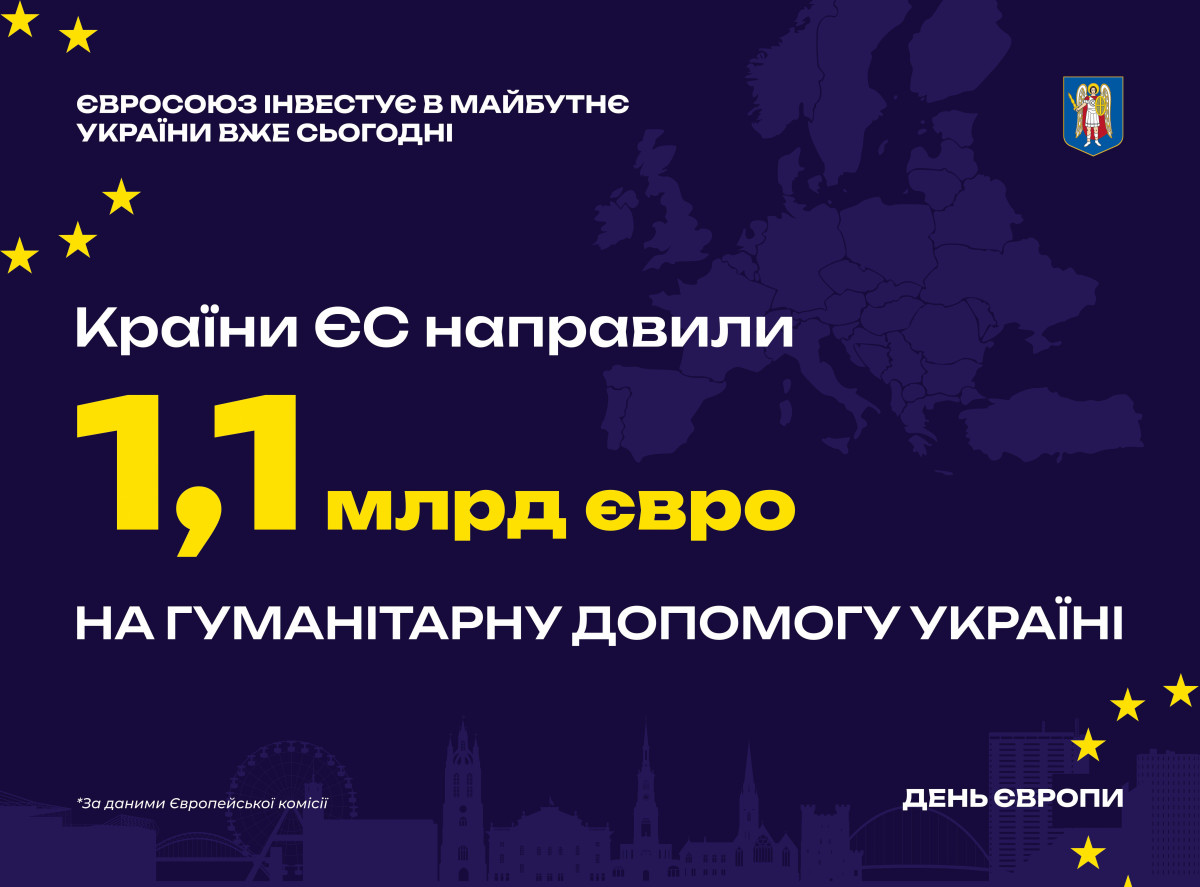


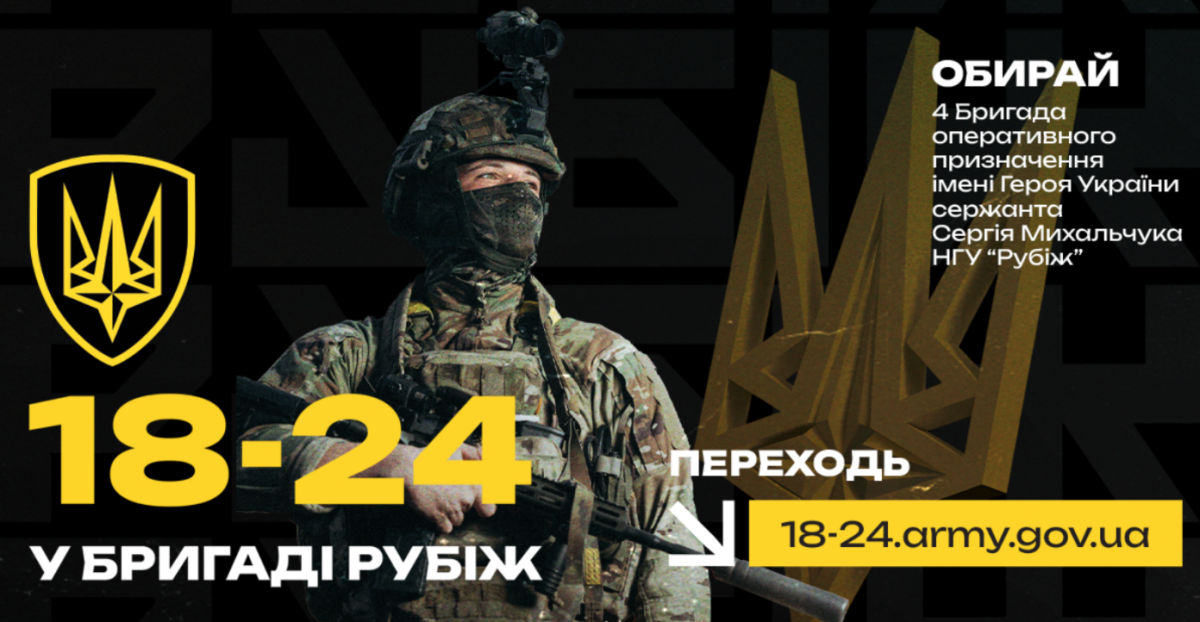
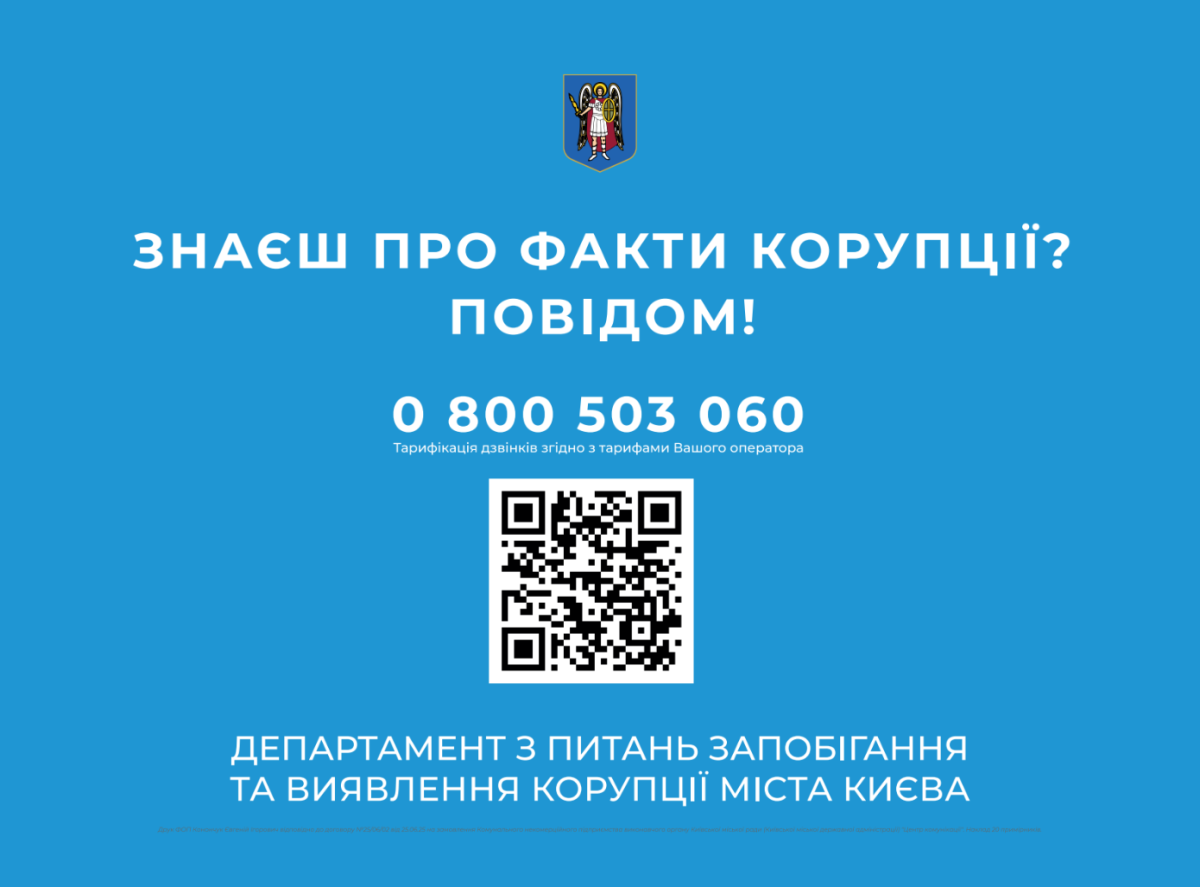
Another approximately UAH 6 million was spent by the Department of Public Communications of the Kyiv City State Administration. The funds went, among other things, to the following campaigns:
- Information about social benefits via the Defenders’ Portal — UAH 477,000
- Information on protocols of action for families of those who went missing or were captured during the war — UAH 463,000
- Public consultations and explanations regarding the renaming of place names — UAH 390,000
- Information about the MSEC reform and the assessment of people’s functioning — UAH 334,000
- The “Become Part of the Team. Choose Your Sport” campaign — UAH 335,000
According to the department, these campaigns were placed on billboards, citylights, in the metro, at transit stops, and in other busy locations. Audio versions were broadcast on radio, while video appeared on outdoor screens, in metro cars and on platforms, at Administrative Service Centers, and on social media. More detailed materials and descriptions of these campaigns are available on the department’s website.
Other Kyiv contracting authorities also spent money on advertising. For example, the Kyiv Zoo allocated UAH 1.8 million to advertising in the metro, while Municipal Enterprise Kyivinform spent UAH 700,000 promoting Vechirnii Kyiv news through Ukr.net.
Kamianske: social advertising and what the mayor did
Kamianske took fourth place with UAH 12.8 million. That is slightly less than in 2024 (UAH 15 million). The largest sum, UAH 3 million, was contracted by the city council’s advertising department. More than half of this sum — UAH 1.7 million — went to individual entrepreneur Dmytro Riabov for producing public service advertising and video stories. He had also worked with the department in 2024. The remaining UAH 1.3 million was directed toward coverage of the executive bodies’ work on the websites Naspravdi.net, Kamenskoe.net, Ukrtime.net, DneprNEWS, and DneprLife.
Separately, the Kamianske City Council itself spent UAH 2.9 million. These funds were allocated as follows:
- UAH 698,000 to S-Kolehiia LLC for online coverage of the city council’s work;
- UAH 600,000 to Sterkh TV and Radio Company for airing segments on television;
- UAH 599,000 to Municipal Enterprise Municipal Information Service for producing and broadcasting materials;
- UAH 596,000 to Skifiia TV and Radio Company for radio broadcasts;
- UAH 277,000 to Pylnyi pohliad! Information Agency LLC for publications on its website;
- UAH 97,600 to 05692 LLC for coverage of the city council’s work on its website.
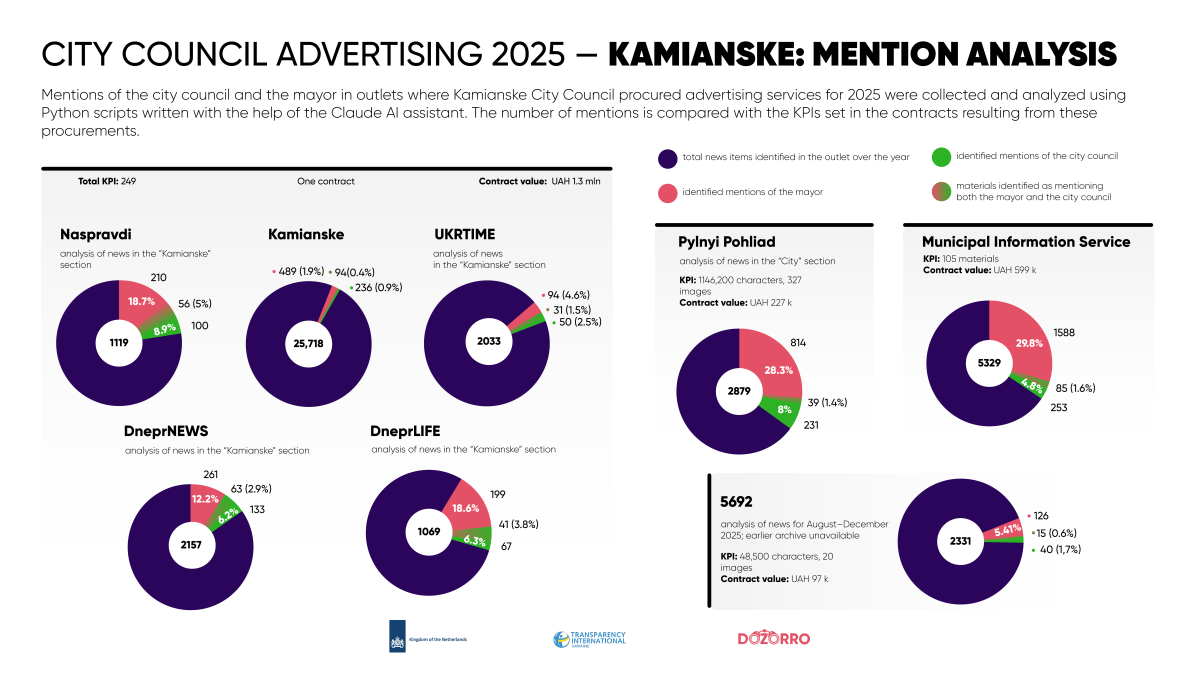
In Kamianske, nearly all of the analyzed outlets mention Mayor Andrii Bilousov significantly more often than the city council. This is most visible in the municipal outlet MIS, where the mayor’s name appears in nearly a third of all materials for the year. The overall trend shows that the city’s information communication is largely concentrated around the mayor. News headlines frequently use formulations along the lines of “the Mayor of Kamianske did such and such.” The share of such publications varies by outlet, but they appear everywhere. It should be noted, however, that a substantial portion of news items mentioning Bilousov still contain only his quotes, while the content itself describes social services, the work of city departments, and the city council itself
Dnipro: a sharp drop in spending
Next on the list is Dnipro, where PR spending has shrunk considerably. Last year, the city contracted UAH 8.7 million — roughly seven times less than in 2024, when Dnipro led the country with UAH 43 million.
This sharp decline came against the backdrop of a criminal investigation into past PR spending. In October 2024, the SBU and the National Police reported uncovering a scheme involving the embezzlement of at least UAH 34 million on advertising procurements in 2021–2023. In August 2025, the Office of the Prosecutor General announced charges against Andrii Kovalenko, the former director of Municipal Enterprise Organizational and Analytical Service. According to investigators, the money was transferred to individual entrepreneurs under his control, many of whom had no connection to advertising. The funds were then converted into cash. In total, UAH 95 million was allocated for these services in 2022–2023, of which, according to expert analysis, UAH 42 million may have been embezzled.
Even so, the city’s overall approach to communications has not disappeared — only the scale and the structures involved have changed. Following the scandals, the city council liquidated Municipal Enterprise Organizational and Analytical Service, through which most PR spending had previously flowed. In its place, a new Municipal Enterprise, Open Dnipro, was created, which from the outset contracted UAH 886,000 for outdoor advertising. This includes billboards featuring Mayor Borys Filatov, which may bear the hallmarks of political advertising.
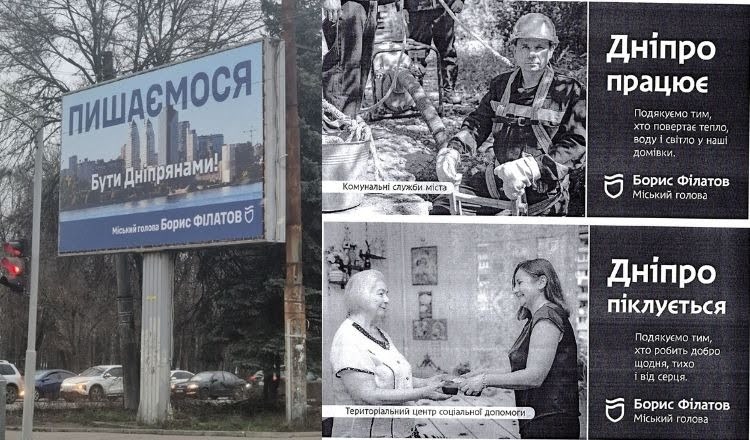
Photo: Municipal Enterprise Open Dnipro
Separately, the Department for Public Self-Organization spent UAH 1.1 million on producing and installing address signs.
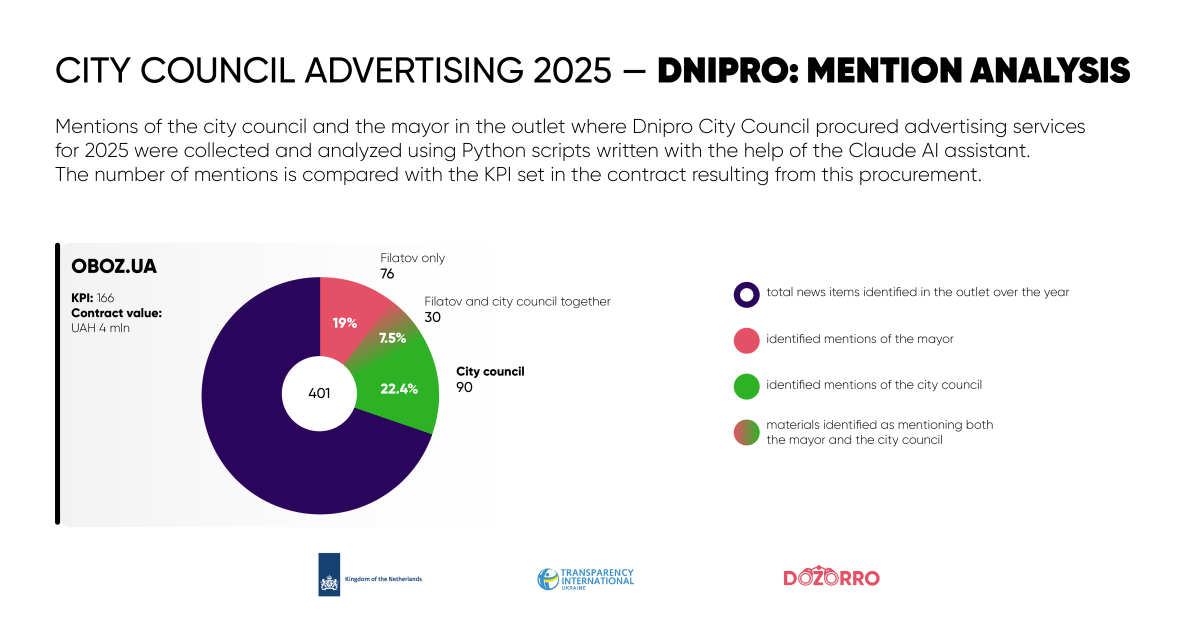
The largest contracting authority in 2025 was Municipal Enterprise Dnipro City Television Studio (DniproTV). The enterprise signed a UAH 4 million contract with Zolota Seredyna LLC for the placement of 166 publications on the Obozrevatel website. An additional UAH 2 million was directed toward developing a strategy and promoting the municipal TV channel on social media.
Who buys advertising on Prozorro besides city councils
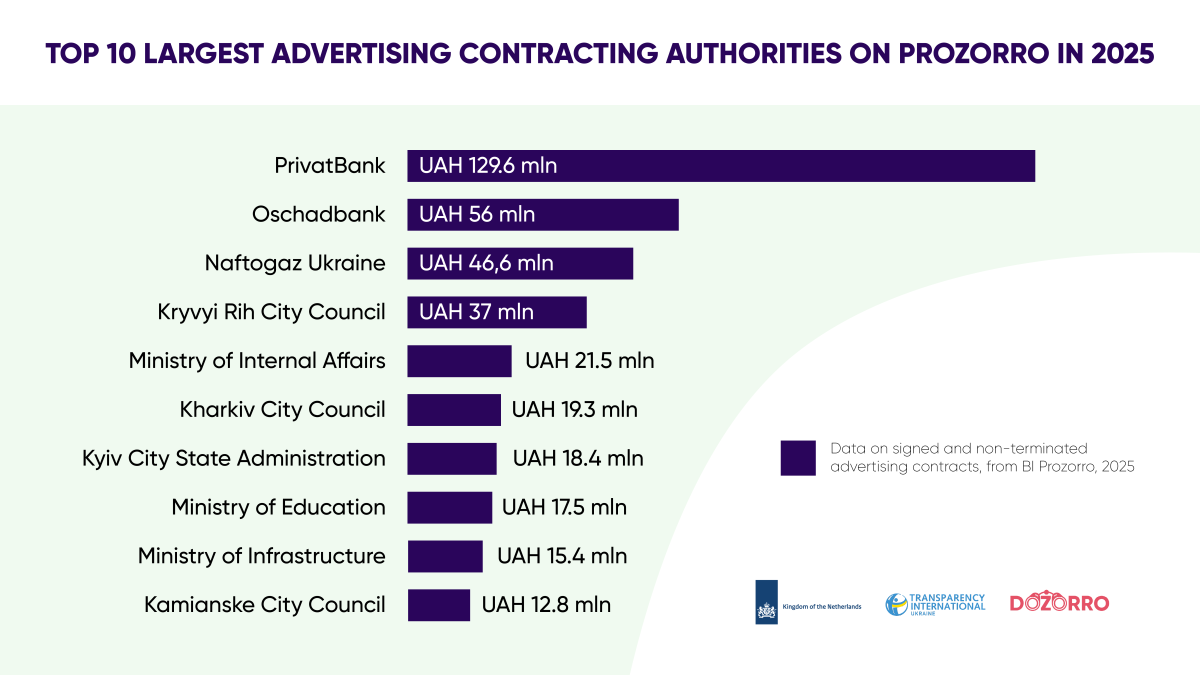
In total, nearly UAH 600 million was contracted for advertising through Prozorro in 2025. That is more than in 2024, when the figure exceeded UAH 520 million. The market’s growth, however, was driven mainly by the commercial sector. The largest advertisers again included PrivatBank, Oschadbank, Naftogaz Ukraine, the Ministry of Internal Affairs, and Ukrposhta. They finance advertising not from the state budget but from their own commercial activities. At the same time, the large contracting authorities also include those spending budget funds — notably, city councils and education sector entities.
Contracts by region
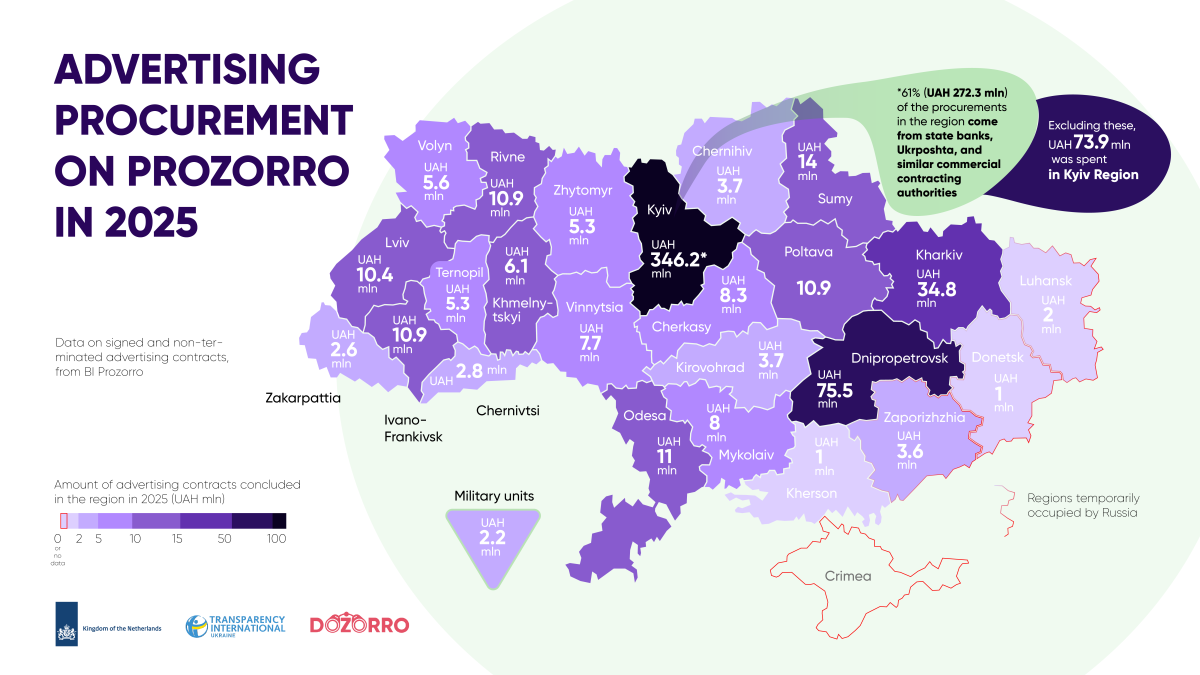
The regional picture broadly resembles that of the previous year. Over half of all advertising contracts are concentrated in Kyiv Region — UAH 346.2 million. However, a significant share of this sum comes from state banks, Ukrposhta, and major commercial companies registered in the capital. Excluding these, the volume of contracts in the region amounts to roughly UAH 73.9 million. Second place goes to Dnipropetrovsk Region, with UAH 75.5 million. The largest share here comes from Kryvyi Rih — UAH 37 million. Kharkiv Region also made the top three, at UAH 34.8 million.
Separately, six procurements worth UAH 2.2 million were not tied to any specific region and were therefore excluded from the regional analysis. These were recruitment campaign services ordered by military units and the Central TV and Radio Studio of the Ministry of Defense of Ukraine as part of the “Defending What Is Ours” information campaign.
Conclusions
Overall, the analysis shows that despite changes in spending volumes, the communications approach of most city councils has barely changed. Year after year, it is the same contractors, the same outlets, and the same formats — television, radio, online resources, and social media. Dnipro, after the criminal investigation, has become more of an exception: the city has significantly cut its advertising spending, but the communication model itself has not gone anywhere — it has merely shrunk in scale and partially shifted to new structures.
The issue is not only the size of the spending but also the content of such communication. Some information campaigns genuinely serve an important public function: they inform about security, the operation of critical infrastructure, social services, and support for military personnel and veterans. Such communication can be especially necessary during wartime.
In parallel, however, a significant share of the content looks like systematic promotion of local authorities’ work and image-building for officials. This is most evident in Kryvyi Rih and Kamianske, where the media content is largely personalized around the local leaders. Kharkiv looks more restrained, although some outlets there also place noticeable emphasis on the mayor.
As a result, the line between socially important information and political PR funded by the public budget remains blurred in many cases.
This material was made possible with the support of the MATRA program of the Embassy of the Kingdom of the Netherlands in Ukraine.
Source: glavcom.ua


