

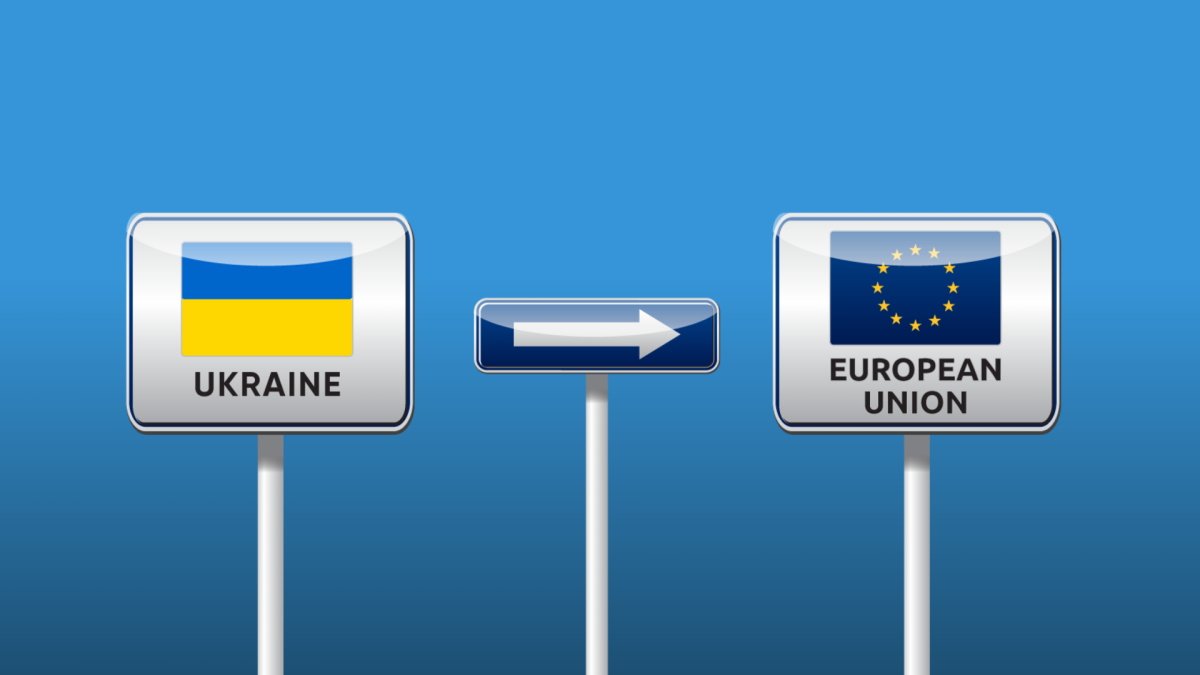

On June 15, in Luxembourg, Ukraine officially moved to a new stage of European integration: negotiations opened on the first and most important cluster, “Fundamentals of the accession process” (Fundamentals).
This is a historic event that changes the entire logic of our European integration. Anti-corruption reforms are now no longer just friendly recommendations from Brussels but firm negotiating conditions. And here, unfortunately, we still have a great deal of unfinished “homework.”
What’s inside Fundamentals?
This cluster consists of five key areas (chapters) against which the EU will examine Ukraine under a microscope:
- Chapter 23 (Judiciary and Fundamental Rights): Court reform, judicial independence, and a genuine fight against high-level corruption.
- Chapter 24 (Justice, Freedom and Security): An overhaul of law enforcement, combating organized crime, and order at customs and on the borders.
- Chapter 5 (Public Procurement): Moving all government and defense tenders onto strict European standards.
- Chapter 32 (Financial Control): Protecting European money and auditing the budget (the work of the Accounting Chamber and the State Audit Service).
- Chapter 18 (Statistics): Transparent and accurate data on the economy and the population, to Eurostat standards.
Andrii Borovyk, Executive Director of TI Ukraine: “The Fundamentals cluster is the first to open in the negotiations and the last to close. This means that in the course of our European integration, it will be impossible to defer anti-corruption reforms in favor of progress in technical areas. What is more, EU Commissioner Marta Kos has stressed that the pace of negotiations will now be set not by calendar dates but by the consistency of reform implementation — and the fight against corruption is an unquestionable priority.”
The Fundamentals cluster is the first to open in the negotiations and the last to close. This means that in the course of our European integration, it will be impossible to defer anti-corruption reforms in favor of progress in technical areas.
Andrii Borovyk
Where is Ukraine stalling on reforms?
We can identify five critical points in the fight against corruption that need to be fixed right now:
- Case-hearing timelines at the HACC. The hearing of cases at the High Anti-Corruption Court sometimes reaches a record 1,885 days (five years and two months). The reason: the Rada has still not passed a law that would stop lawyers and defendants from deliberately dragging out proceedings.
- NACP verification of asset declarations. The automated check launched in late 2023 has effectively exempted senior officials from thorough manual review. The IMF requires this to be fixed by the end of June 2026, but there has been no movement. In addition, the NACP does not publish its logical and arithmetic control (LAC) rules, and the mandatory external audit of the agency has not been carried out for more than four years.
- Limited autonomy of the SAPO. The head of the Specialized Anti-Corruption Prosecutor’s Office still cannot independently open cases against MPs or fully initiate extraditions — that is the exclusive prerogative of the Prosecutor General. The government even removed the first of these provisions from the draft Anti-Corruption Strategy.
- Crisis at the Accounting Chamber. The country’s principal audit body is operating at half capacity: 6 of its 11 positions are vacant. Parliament missed the deadline (April 2026) for forming the Advisory Group of Experts for the selection competition. As a result, Ukraine risks not receiving part of its tranches from the EU and the IMF this year.
- Procurement and public-private partnership. The law on public-private partnership (PPP) has still not been aligned with EU rules. And by the end of 2026, Ukraine must develop a concept for reforming defense procurement — EU funding also depends on this.
The authorities must eliminate all these risks as quickly as possible, because what is at stake is financial stability and the speed of our accession to the EU.
What comes next?
The authorities must eliminate all these risks as quickly as possible, because what is at stake is financial stability and the speed of our accession to the EU.
Andrii Borovyk, Executive Director of TI Ukraine: “We are already seeing that some commitments are being met late. And some — particularly those concerning the autonomy of the SAPO and the Accounting Chamber — show signs of systemic stalling rather than technical delays. By opening this cluster, our European partners are telling us: your EU membership is in your hands — take it.”
The European Commission will deliver its first official verdict on how Ukraine is handling the new conditions in late autumn 2026, in its annual Enlargement Report. Transparency International Ukraine continues to monitor the situation and will set out the results of this analysis in its third Shadow Report for the European Commission.
This publication has been produced with financial support from Norway. The contents of this publication are the sole responsibility of [grant recipient’s name] and can in no way be taken to reflect the views of the Government of Norway.
We are already seeing that some commitments are being met late. By opening this cluster, our European partners are telling us: your EU membership is in your hands — take it.
Andrii Borovyk


