



Ukrainian cities largely meet formal reporting requirements but fail to use accountability as a basis for genuine dialogue with residents. Only 4 of 11 mayors held open meetings to report to their communities on 2025. And only two cities, Zaporizhzhia and Kyiv, scored the maximum 12 points in the mystery shopping block, responding promptly in both written and oral communication. On average, the city councils studied meet 43.3% of accountability requirements.
These are the findings of a study by Transparency International Ukraine’s Transparent Cities program, conducted as part of the pilot European City Index (the Euroindex). The overall Index results have already been presented, but accountability issues deserve separate attention. This area revealed the widest gaps between cities and confirmed the authorities’ formalistic approach and unwillingness to explain their decisions and performance.
The study identified three systemic accountability problems in Ukrainian cities.
Mayors do too little reporting directly to residents. Only the mayors of Dnipro, Zaporizhzhia, Lviv, and Poltava held open meetings with their communities. Yet none of them met all three essential requirements: advance notice, publication of a written report at least seven days beforehand, and posting of a video recording of the meeting.
Published city council reports do not translate into clear communication with the community. Although all 11 cities published reports by their corruption prevention officers, and nine published budget execution reports, city councils say little about what these documents contain. Analysts found only 53 news items on annual reporting on official city websites and 44 social media posts. The websites of Odesa, Kharkiv, and Kropyvnytskyi carried no such news at all. Communication often amounts to announcing that a report was delivered, rather than explaining its results.
Access to public information, and the authorities’ accessibility to residents in general, remains uneven. Nine of 11 city councils answered written requests within the statutory five-day deadline. During the phone check, however, analysts reached the right unit in only six cities, and only Zaporizhzhia, Kyiv, and Lviv gave a substantive answer.
“Amid an all-out hybrid war, the absence of elections, and public demand for fairness and transparency, local authorities must find ways to maintain citizens’ trust. Simply posting a report somewhere in a corner of the website is not accountability. The authorities cannot communicate with the community in the language of documents alone. People need to understand how funds are spent, why certain decisions are made, and what the city has achieved,” said Olesia Koval, Transparent Cities Program Manager.
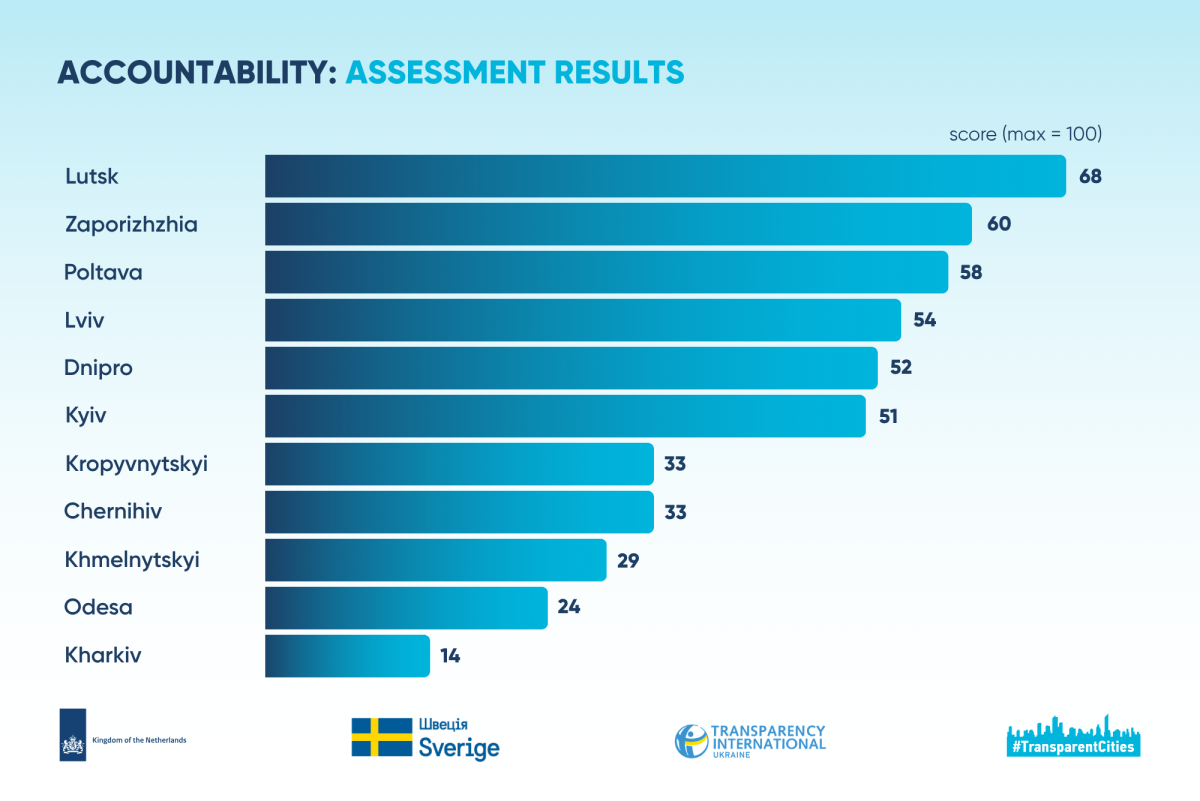
Analysts assessed 11 city councils against 40 indicators. The highest accountability scores went to Lutsk (68 out of 100), Zaporizhzhia (60), and Poltava (58); the lowest to Kharkiv (14), Odesa (24), and Khmelnytskyi (29). The 54-point gap between the best and worst performers is the widest across all six Euroindex areas, which points to the lack of a consistent, systemic approach to accountability at the local level.
Based on the findings, the Transparent Cities program has prepared individual recommendations for the 11 city councils and a self-assessment tool for other communities. These will help cities move from formal reporting to regularly explaining their decisions and performance.
As we pointed earlier, Kyiv Mayor Vitalii Klychko last reported to the community in December 2021. A petition calling for the mayor of the capital to resume regular public reporting gathered the required 6,000 signatures. However, as of late October, the Kyiv authorities have still not announced any preparations for a report. Discussions are ongoing; in September, for example, a meeting took place with the petition’s author, TI Ukraine Executive Director Andrii Borovyk.
This research is made possible with the support of the MATRA Programme of the Embassy of the Kingdom of the Netherlands in Ukraine, and with the financial support of Sweden within the framework of the program on institutional development of Transparency International Ukraine. The contents of this material are the sole responsibility of the authors and do not necessarily reflect the official position of the donors.
Amid an all-out hybrid war, the absence of elections, and public demand for fairness and transparency, local authorities must find ways to maintain citizens’ trust. Simply posting a report somewhere in a corner of the website is not accountability. The authorities cannot communicate with the community in the language of documents alone. People need to understand how funds are spent, why certain decisions are made, and what the city has achieved
Olesia Koval


