

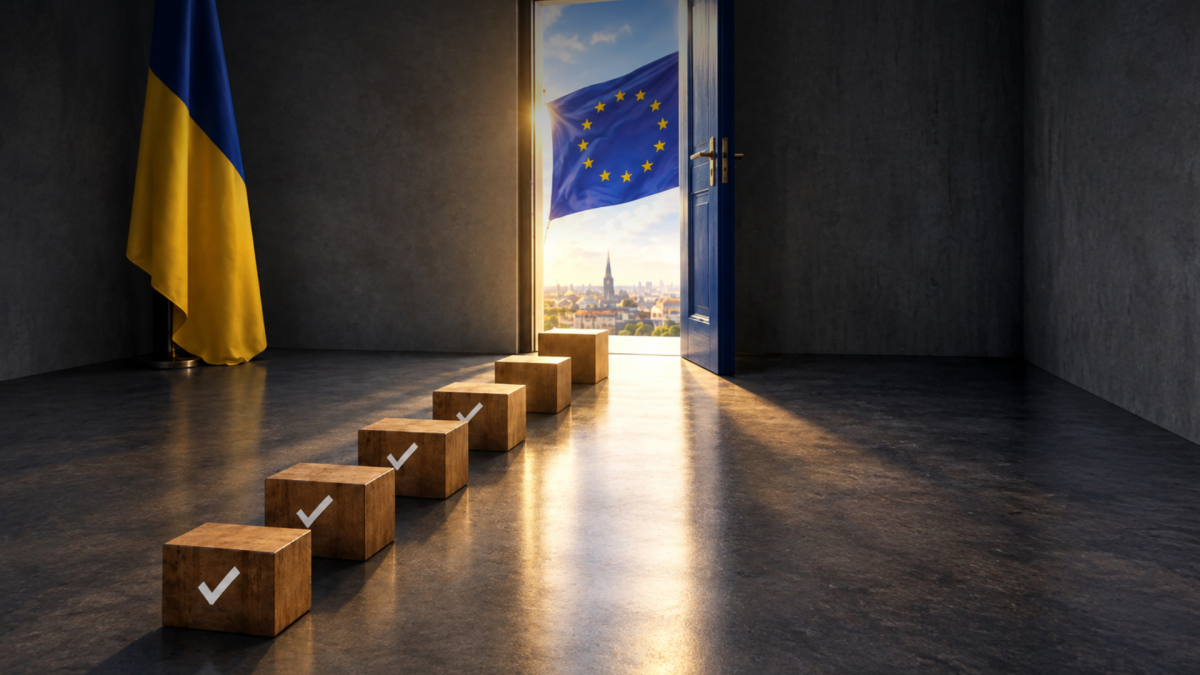

On October 13, the EU officially opened Cluster 2, Internal Market, and Cluster 3, Competitiveness and Inclusive Growth, for Ukraine. Ukraine now has four of the six thematic blocks of accession talks open, following Cluster 1 Fundamentals in June and Cluster 6, External Relations, in July.
The decision became possible only after the Verkhovna Rada passed the required amendments to the law on education in both readings and as a whole on October 12 — a demand made by Hungary.
Opening two more negotiating clusters is an important step for Ukraine’s European integration, but the process is still lagging behind the plans announced in June. At a briefing in Kyiv back then, EU Commissioner for Enlargement Marta Kos said the EU wanted to open the remaining clusters just a month after opening the first one, Fundamentals. Four months on, Clusters 4 and 5 are still waiting their turn.
“Today’s decision is the result of joint work by Ukraine and our European partners. With four of the six clusters open, there is no point in waiting for the last two: the reform work has to start now. Cluster 1, which covers the rule of law and the fight against corruption, among other areas, still offers the most room for rapid progress. Much of the reform agenda in the Roadmap is still ahead, and this is a chance to show Europe that Ukraine can deliver on its commitments. Yesterday’s vote on the law on the educational rights of national minorities showed that when there is political will, the Rada can pass the necessary decision at first reading and as a whole in a single sitting,” said Andrii Borovyk, Executive Director of Transparency International Ukraine.
Notably, the Fundamentals cluster, which was opened first and includes commitments on anti-corruption reforms, is set to be closed last. This means anti-corruption reforms cannot be put off in favor of progress in technical areas as Ukraine moves toward EU membership. The fight against corruption therefore remains an undisputed priority for Ukraine.
A coalition of civil society organizations will soon present its third Shadow Report on Ukraine’s progress to the European Commission. In it, Transparency International Ukraine will analyze how EU recommendations on fighting corruption and organized crime are being implemented, and will offer recommendations for improving the situation. These findings will form the basis for the EU’s 2026 Enlargement Report on Ukraine.
This material is funded by Norway. Its content is the sole responsibility of Transparency International Ukraine and does not necessarily reflect the views of the Norwegian Government.
With four of the six clusters open, there is no point in waiting for the last two: the reform work has to start now. Cluster 1, which covers the rule of law and the fight against corruption, among other areas, still offers the most room for rapid progress. Much of the reform agenda in the Roadmap is still ahead, and this is a chance to show Europe that Ukraine can deliver on its commitments.
Andrii Borovyk


