



March 16, 2026 17:45
Interview Notes from HACC Judge Candidate Interviews — Week Four and Five
TI Ukraine continues to monitor final interviews in the competition for positions at the High Anti-Corruption Court.
- Ihor Chaikin
- Olena Roik
- Tetiana Kryklyva
- Ivan Kravchenko
- Snizhana Kolesnyk
- Olha Pevna
- Oleksandr Zavhorodnii
- Oleksandr Prokhorov
- Oleksandr Leonov
- Kateryna Sikora
- Oleh Marchuk
- Yana Kinakh
- Anton Baida
- Iryna Tokarska
- Nataliia Movchan
- Vadym Khodko
- Inna Smal
- Mykhailo Hrabynskyi
- Vitalii Kryklyvyi
- Oleh Kostiuk
- Denys Kovalenko.
This piece collected key points from interviews held March 9–17.
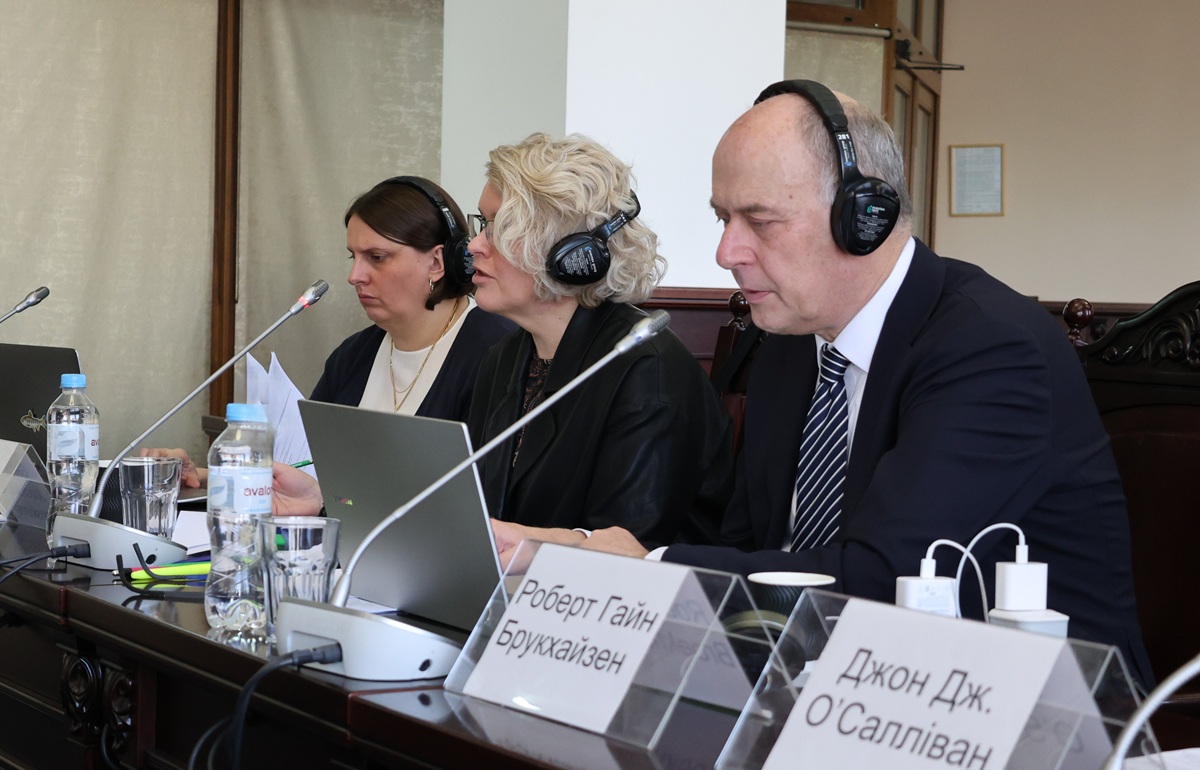
All photos—HQCJ.
Ihor Chaikin
Judge, Pokrovskyi District Court of Kryvyi Rih
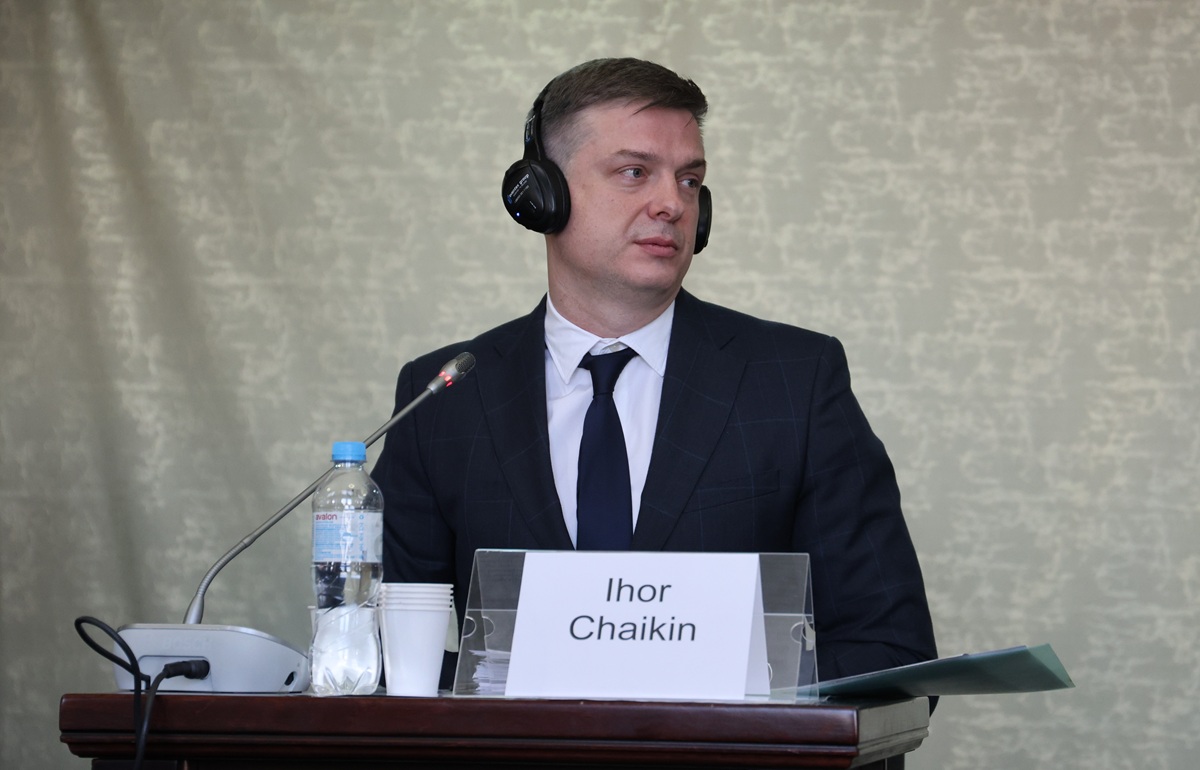
During the interview, many questions concerned Chaikin’s use of full access to the Unified State Register of Court Decisions, his assets, and his financial transactions.
A PCIE member noted that over the past 10 years, more than 100 full-access searches had been recorded concerning the candidate himself and his close associates. The searches began in 2014–2015 and were conducted regularly. Chaikin said he did these searches while preparing documents to participate in competitions, to check information about himself—such as possible criminal proceedings or court summonses. He also suggested that some searches could have related to a namesake whose cases created interesting practice to analyze.
Chaikin said some searches related to what he described as a provocation in a corruption-related administrative offense case, in connection with which he applied to the High Council of Justice and was recognized as an injured party in criminal proceedings. He also explained searches related to his assistant by pointing to a high-profile publication about her and information requests received by the court. One HQCJ member noted that searches were also conducted using a phone number, which did not fit neatly with this explanation. Chaikin said he checked information after he accidentally saw mention of his own number in materials from a criminal case unrelated to him.
The interview also addressed property issues. A PCIE member asked about the basis on which Chaikin rented an apartment owned by another person. Chaikin said the apartment was in poor condition, so the parties initially agreed he would live there while covering operating costs and improving the property; a lease agreement was signed later. He said the apartment’s owner is a colleague of his wife, which facilitated that arrangement.
PCIE also pointed to a period in which the candidate’s savings decreased significantly. Chaikin explained this by the costs of supporting his child, who was abroad with grandparents after the start of the full-scale invasion. A PCIE member noted that some transfers were made over a short period in amounts below the declaration threshold and asked whether this was done to avoid declaration. Chaikin denied this and emphasized that all payments were non-cash transfers from his salary card and that his income was declared and taxed.
Olena Roik
Attorney
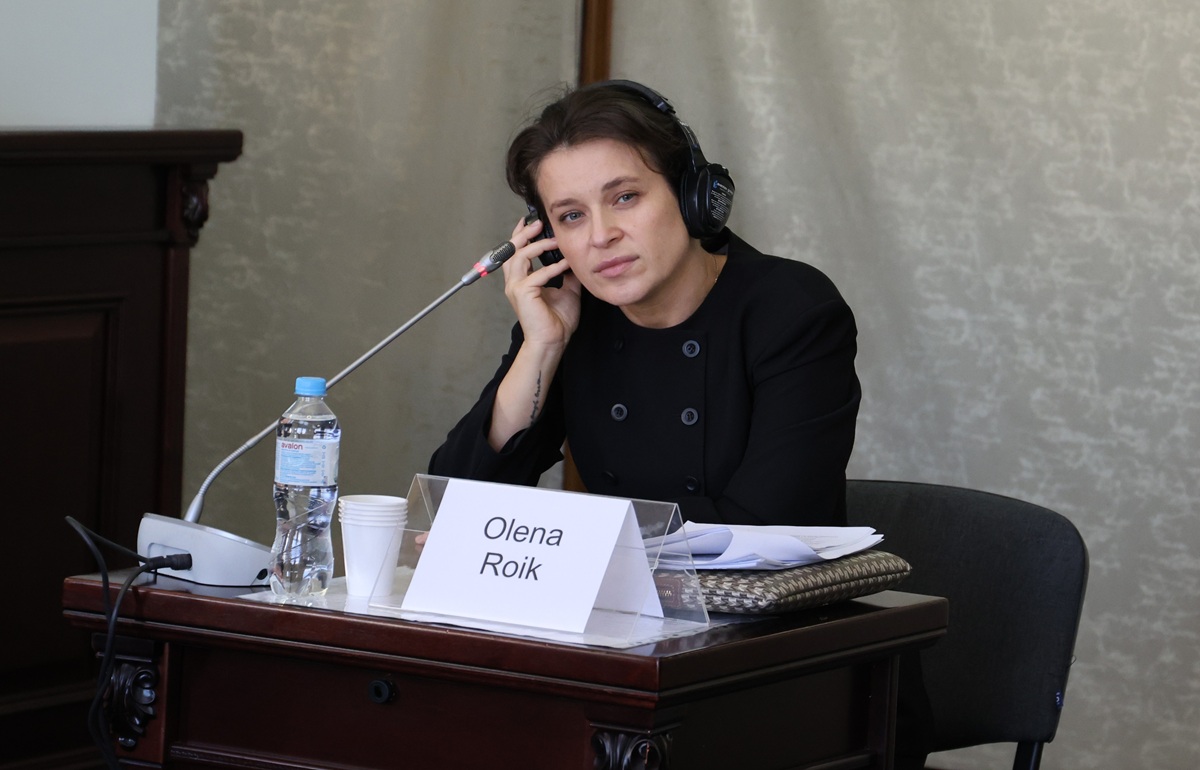
At the start of the interview, Roik said her decision to apply for a HACC judgeship was spontaneous and arose in March 2021. She described her experience as sufficient, citing seven years of legal practice, including work directly at the HACC since 2023.
The commission raised questions about Roik’s purchase of cryptocurrency. In 2019, she bought two bitcoins for cash in U.S. dollars through a crypto exchange, and in September 2021, she sold them for $155,000. She said she could not document the purchase because she lost access to her email. Tax issues were also raised: Roik did not report the transaction to the tax authorities, explaining this by the start of the war and legal uncertainty. She said she would pay taxes once the mechanism is clearly defined by law.
Immediately after selling the bitcoins, Roik issued an interest-free loan of $111,600 to a friend, Liudmyla Marchenko. When repayment was delayed, Roik went to court, though the debt was ultimately repaid voluntarily.
The most significant doubts concerned her purchase in May 2025 of an Aston Martin for UAH 14 million—seven to eight times her annual salary. Roik said she used all of her savings and borrowed $100,000 from an acquaintance. She explained her choice as a specific way of “saving funds,” citing the lack of security at her home and distrust of banks, and said she therefore decided to invest cash in a vehicle.
The commission noted that her overall spending (UAH 16 million) was roughly double her total official income over time (UAH 8 million). Roik also disputed the NACP finding of inaccurate information in the amount of UAH 14 million, saying she had been building savings since 2006, received help from her parents, and inherited money from her grandmother.
Asked about the ethical aspect of purchasing a luxury vehicle one month before a judicial competition, Roik said she is restrained in all aspects of life, is “not ashamed” of her declaration, and is ready to take responsibility. The interview also addressed a 2022 search of her residence in a case involving the father of her child, Mr. Hontarenko, who is accused of organizing gambling. Roik confirmed she is his attorney, but denied that Hontarenko financed any of her assets.
HQCJ also pointed to Roik’s repeated administrative liability. She referred to five or six instances, while police recorded 19 over two years. In addition, she did not declare her mother’s vehicles (a Mercedes and a Range Rover), which she reportedly used systematically. Police data showed these cars were recorded 24 and 60 times, respectively. Roik explained that she used them infrequently.
At the end, the panel discussed the candidate’s practical assignment, where she made critical errors. She found a person guilty of a more serious offense than the one charged and imposed a sanction not provided for by the relevant article. Roik said she was in shock during the exam and admitted that afterward she herself “had questions about herself.”
Tetiana Kryklyva
HACC Judge
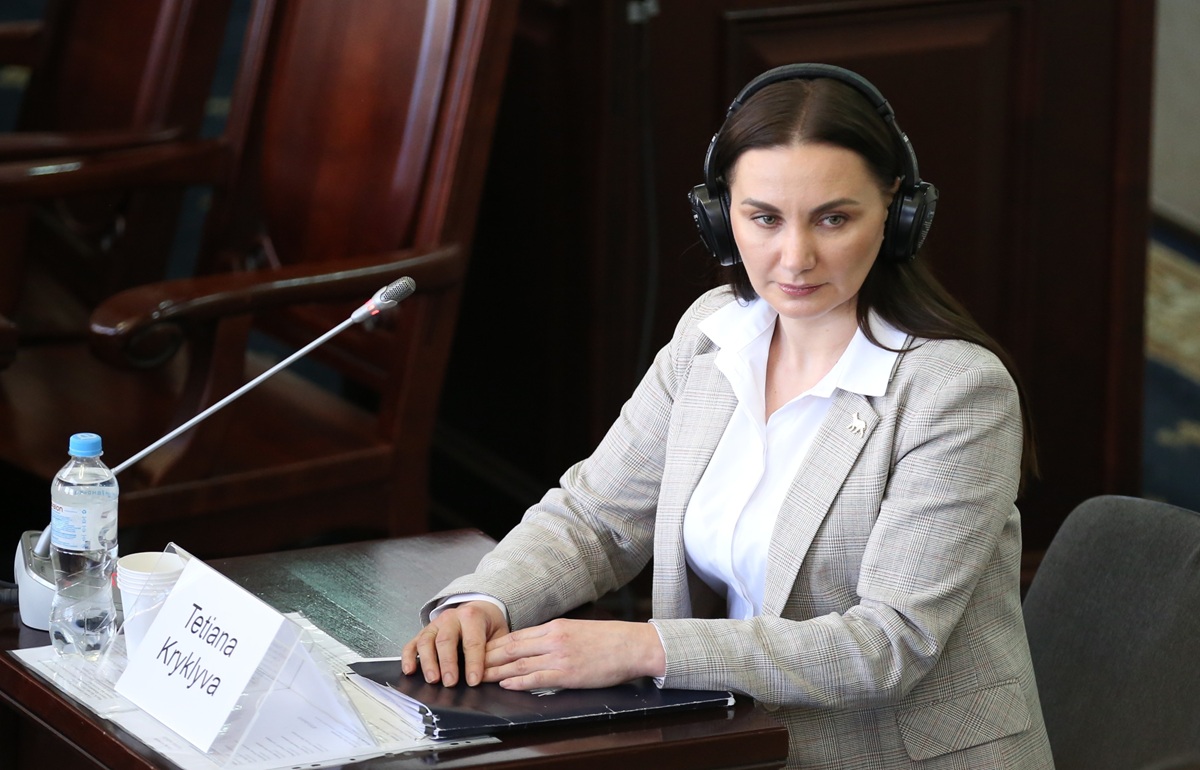
At the beginning, the sitting HACC judge was asked about her and her husband Vitalii Kryklyvyi’s recent purchase of a residential house in the village of Danylivtsi near Kyiv for UAH 4 million. Kryklyva said they decided to buy the house because after the start of the full-scale invasion they were looking for a safer place to live than their apartment in Kyiv.
According to the candidate, part of the funds came as a loan from her husband’s cousin, who earns income from leasing commercial real estate. The loans were interest-free, she said, because the family has close relations. She also said she received part of the funds from her parents, who sold an apartment in Poltava. Half of the purchase price was covered by a mortgage loan. Kryklyva added that her husband used judicial remuneration that he received in 2025 after winning a case against HACC to repay the debt to his cousin; the family is now paying only the mortgage.
Many questions concerned a high-profile situation involving the allocation of official housing—first to her future husband and later to her as well. An HQCJ member proposed discussing the issue in closed session, but Kryklyva said she wanted to address it publicly.
Kryklyva explained that she and Kryklyvyi (at that time not yet married) initially both applied for official housing. After he received a four-room apartment for her and her two daughters (four people total), she withdrew her own application. Later, after their relationship deteriorated and they stopped living together, Kryklyvyi declined the official housing. Kryklyva noted that the apartments were selected by the judges themselves and then purchased by the HACC—what she described as an “atypical, but generally lawful procedure.”
A few months later, Kryklyva applied for official housing on her own, but this time listed herself, her daughter, and her parents as family members (again, four people total). As a result, she received the same apartment her future husband had declined. Kryklyva also said she did not vote on any decisions of HACC’s housing and living conditions commission (of which she was a member) when the issue concerned allocating apartments to her or to Kryklyvyi.
The commission asked why her parents were included as family members for housing purposes and whether they lived with her. Kryklyva said her parents had been helping care for her young child since 2019, so they either lived with her at times or visited regularly. Summarizing her explanations about the official apartments, Kryklyva said: “It’s complicated (to explain – ed.), but we tried to act with integrity.”
PCIE also asked why she, as a HACC judge, used full sealing rather than partial redaction of certain decisions—for example, a plea agreement verdict issued in January 2025. Kryklyva responded that the case was still at the pretrial investigation stage and the person had agreed to testify against other participants. She candidly acknowledged that she had believed such decisions would later be unsealed, like decisions of an investigating judge. Partial redaction is possible, she said, but technically difficult to implement.
Another block of discussion concerned “relations with the defense in a certain case,” but HQCJ and PCIE addressed that issue in closed session.
Finally, an HQCJ member referenced a case Kryklyva heard as part of a panel chaired by Judge Dubas (also a sitting HACC judge and a candidate for the HACC Appeals Chamber). Two separate opinions were attached to the decision, one authored by Kryklyva. She explained that she and another panel member disagreed with part of Judge Dubas’s reasoning, yet later still found that reasoning reflected in the text of the judgment.
Ivan Kravchenko
Professor, Department of Administrative and Information Law, Sumy National Agrarian University
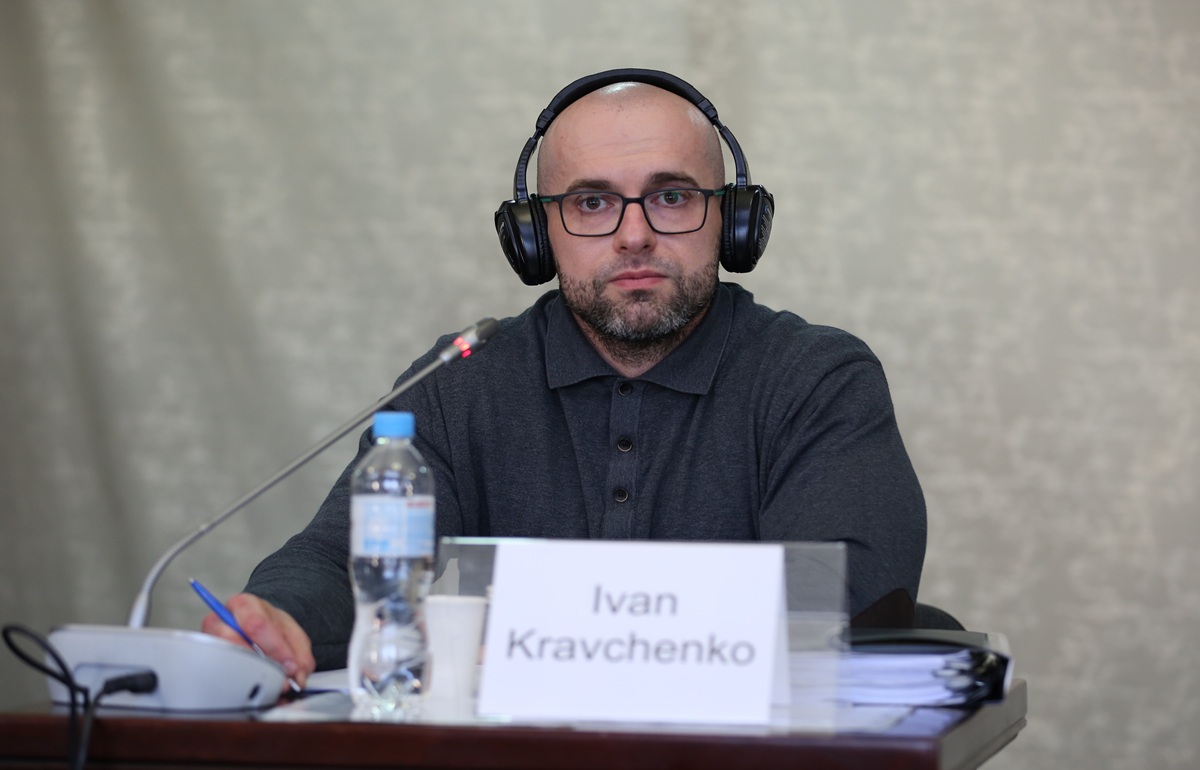
The interview began with a discussion of the candidate’s professional background. Although administrative law has long been his primary field, Kravchenko said that since 2018 he has taken an active interest in criminal justice.
PCIE paid particular attention to his legal practice. Kravchenko said that his work with two law offices was an additional activity and explained the absence of income from client representation by saying he worked exclusively pro bono, assisting a war veteran and representatives of civil society organizations.
In the asset-related part of the interview, the commission focused on the origin of property and financial support from relatives. Kravchenko said the purchase of an apartment and a car in 2014 was fully funded by his parents, who are dentists. When PCIE noted that there was no income data for his parents before 2013, he said records for the period before 2009 had been destroyed.
Questions were also raised about his low official income in 2018 (only UAH 75,000 for the year). Kravchenko said that amount was sufficient for his family: “We lived as we could at the time,” because his parents covered utility expenses. He also explained foreign travel during that period: a trip to the Czech Republic was covered by a grant program, and vacation in Italy was paid for by his mother-in-law, who works abroad. Kravchenko acknowledged an error in failing to declare his wife’s bank account with UAH 55,000, saying he mistakenly believed the amount was below the declaration threshold.
HQCJ focused separately on his use of his parents’ cars (a Honda and a Subaru). Although police documents listed Kravchenko as the owner or as the person who filed reports about vehicle damage in 2020 and 2025, he insisted he used the cars only rarely. He said he identified himself to police as the owner to simplify communication with law enforcement at his father’s request.
The interview also addressed police information suggesting he had allegedly evaded appearing at the Territorial Recruitment Center. Kravchenko said he was surprised and stated that he regularly appeared at the military office (including in November 2025) and has a lawful deferment as a university instructor.
In addition, in his 2018 and 2024 declarations Kravchenko did not list any real estate, explaining that he lived with his parents rent-free. He acknowledged this was a mistake and said he corrected it for 2025.
HQCJ also questioned how Kravchenko could be listed as a partner and beneficial owner of a law firm while not actually participating in cases or receiving income. Kravchenko said that legal practice was optional for him, and that he is applying to the competition primarily as an academic with limited practical experience.
HQCJ also asked about his liability under Article 130 of the Code of Ukraine on Administrative Offenses. Kravchenko said a reading of about 0.21‰ resulted from using a medicated spray that contained alcohol. He added that due to limited legal experience at the time, he did not handle communication with police well and did not appeal the court decision. The commission noted that he successfully appealed other decisions in court.
Regarding the practical assignment, HQCJ pointed to deficiencies in the reasoning of his draft decision. In particular, in a false declaration case, he did not analyze defense arguments on the temporal application of criminal law. Kravchenko said this was due to nervousness and acknowledged the mistake.
Oleksandr Zavhorodnii
Attorney
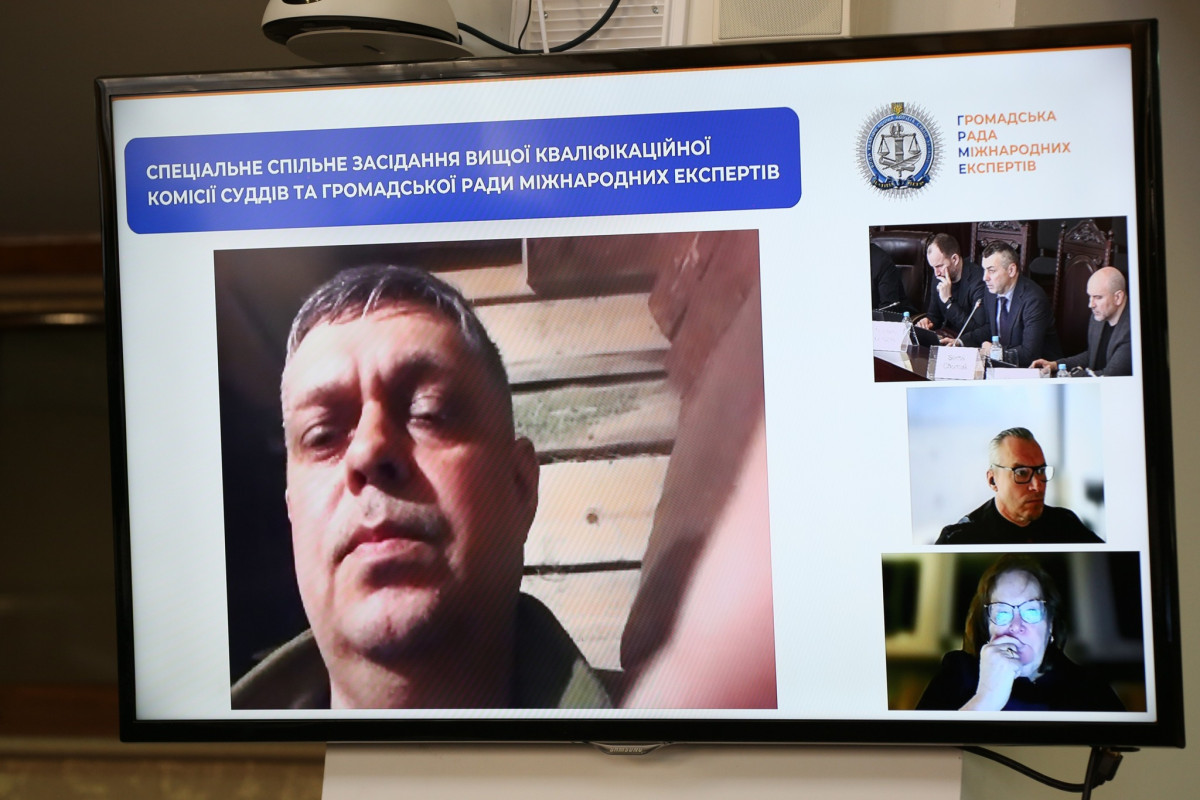
The most pressing questions from PCIE and HQCJ concerned the candidate’s lack of official income over extended periods (2015–2017 and 2020–2021). Zavhorodnii said that in 2015–2017 he had no income because after relocating from occupied territories he did not work for a long time.
HQCJ asked about court decisions provided by the candidate for that period, as well as registry decisions showing his participation as an attorney, for which there was no evidence of tax payment. Zavhorodnii said he represented clients free of charge to help acquaintances.
As for 2020–2021, the candidate said he registered a law office (an “Attorney Bureau”) in 2019, where he works without salary (as stated in the charter), while the legal entity itself—owned by him—receives income. He added that the bureau’s office is nominal: acquaintances allowed him to list the address, but he does not actually work there and does not rent the premises, preferring to work “on the road.”
Zavhorodnii said his family’s real estate remained in occupied territory and that he has no information about its current condition.
PCIE also asked about his vehicles, including purchase prices and the origin of funds. Zavhorodnii said the cars were bought at auctions in the United States, which kept prices low—$1,000–$2,000 plus customs clearance—while repairs cost another $2,000–$3,000 per vehicle.
The interview also addressed a drunk driving case involving a Daewoo in which the driver’s full name matches the candidate’s. Zavhorodnii denied that it was him, suggesting it was likely a namesake, because the court decision barred that person from driving, and he has never been barred. He also said he effectively sold his Daewoo under a power of attorney, but the buyer remained in occupied territory and never re-registered the vehicle.
PCIE pointed to his parents’ visits to the Russian Federation in 2018–2020. Zavhorodnii said the 2018–2019 trips were to visit an ill grandmother, and that he had no information about border crossings in 2020. Questions were also raised about his wife: a person with the same name and address was listed as a member of a commission for “DNR elections.” Zavhorodnii categorically denied that his wife participated in political life in the occupied territories, noting that the same site previously described a person with that name as a teacher, while his wife has never been a teacher. He suggested the website’s data may have been altered by unknown persons and that his wife has no connection to it.
The candidate did not respond to 12 written questions sent by PCIE several weeks before the interview. He explained this by saying he had been drafted into military service and did not have access to devices or the internet during that period.
Olha Pevna
Judge, Troitske District Court, Luhansk Region
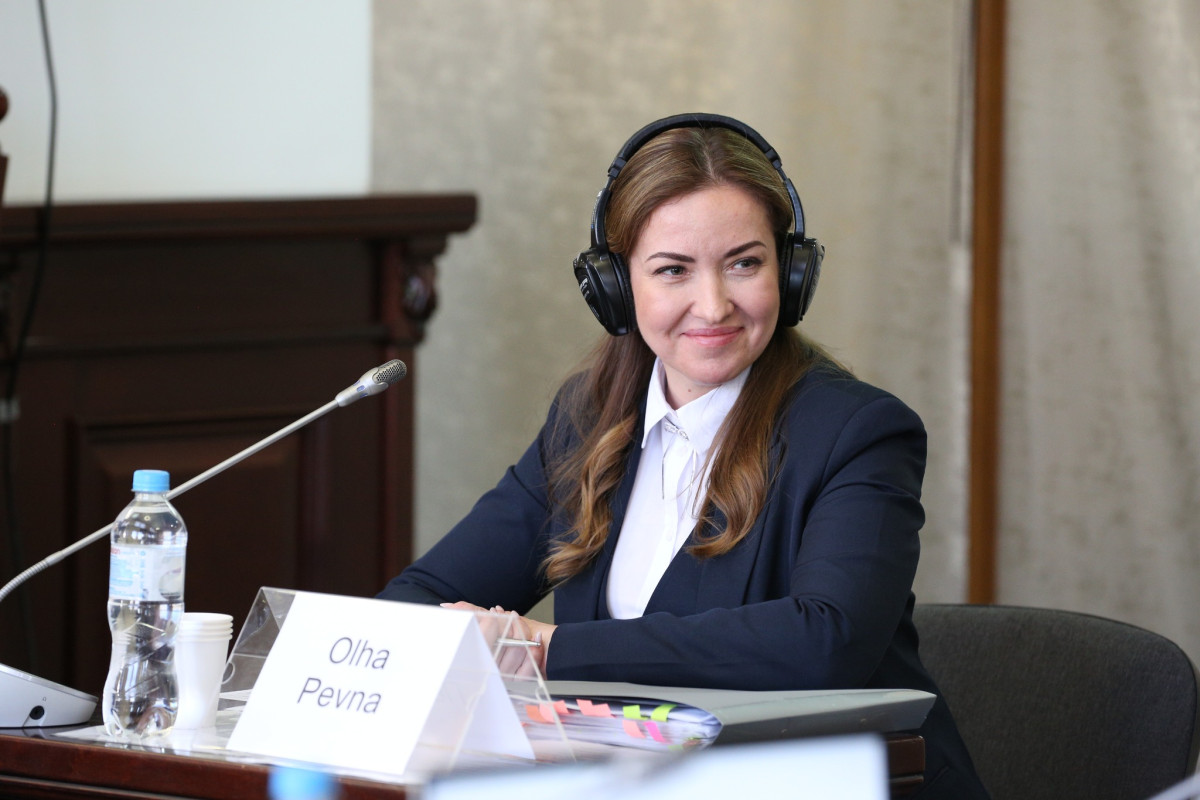
At the start of Olha Pevna’s interview, PCIE asked about how she declared her place of residence. PCIE noted that in 2016–2022 she declared housing in a different locality than where she actually worked. Pevna said she listed only her registered address in her declarations, relying on NACP guidance. She said that during those years she actually lived in various places, including the settlement of Troitske, and changed housing frequently. She also said she did not use any single dwelling for more than 183 consecutive days.
PCIE also asked about utility arrears reflected in court decisions concerning an apartment in Pisochyn. Pevna said she has a long-standing dispute with the heat supply company due to poor-quality services. She said she drew up deficiency reports documenting the lack of proper service and requested recalculations, but the company did not adjust the charges and instead accrued a debt. She said the dispute is currently in court.
PCIE highlighted another aspect of this dispute: in a claim seeking to overturn a debt collection decision, the candidate stated that she does not live in Pisochyn. Pevna said she did not personally phrase it that way; in her view, the court generalized information she provided about working in Troitske and misinterpreted it.
The interview also addressed her financial situation in 2019. PCIE noted that she declared income of about UAH 95,000, had two small children, and still increased her savings by roughly UAH 12,000–13,000. By PCIE’s calculations, this would have left her with about UAH 290 per month to live on. Pevna said that during this period she was on childcare leave for a child born in 2018. She said she lived at her registered address, did not commute to work, and that the children’s father covered a significant portion of expenses—buying clothes and shoes and paying for certain services and entertainment.
PCIE noted that such assistance could be treated as income in the form of a gift that should be declared. Pevna responded that these were voluntary expenditures by the father to support the children, not court-ordered child support. In her opinion, the law requires the declaration of alimony awarded by a court, not voluntary support.
HQCJ asked about the deadline for filing her 2019 declaration. Asked for the final deadline, Pevna said it was May 31. HQCJ members noted that declarations are typically due by April 1, and that she first logged into the electronic declarant’s account only on May 25. Pevna said she had a small child and expected to be able to file within an extended deadline.
HQCJ also questioned her relationship with her ex-husband. The commission noted that after the marriage was dissolved in 2015, the couple had another child in 2020, her ex-husband used her car, and they traveled abroad together. In HQCJ’s view, this could indicate ongoing shared property relations that were not reflected in her declarations.
Pevna said their contact is primarily related to co-parenting. She said her ex-husband sometimes used the car when he stayed with the children, but only for short periods, and she did not believe such use had to be declared. She added that their financial relations are complicated and that communication is mostly about the children.
The interview also discussed information in her declarations showing cash assets equal to the amount of a vehicle purchase transaction. Pevna said that in 2022 she took advantage of an opportunity to import a vehicle from abroad with zero customs duty. She bought the vehicle at a car market in Prague, but later it developed technical issues. According to Pevna, repairs turned out to be too expensive, so she terminated the purchase contract and the Czech company refunded the money.
She said she sought guidance from NACP on how to properly reflect these transactions in her declaration. According to her, she was advised to keep declaring the car for as long as it remained formally registered in her name. HQCJ noted, however, that in her 2023 declaration she listed cash assets as funds held by the Czech company, even though the money had in fact already been returned. Pevna said that was how she understood NACP’s explanation, but agreed it may have been a mistake.
HQCJ also asked about a criminal case involving a traffic accident with her ex-husband. She said it involved a collision with pedestrians that caused severe injuries, but no deaths. She could not recall the details of the injured parties’ claims.
The commission also referenced a submission suggesting the divorce may have been connected to an attempt to avoid possible confiscation of property in that case. Pevna denied this and said she had already provided written explanations. She added that the case against her ex-husband is still pending, so it is premature to speak about possible confiscation.
Toward the end, HQCJ also raised questions about her judicial practice. In particular, members said they could not find any verdicts issued by her in the register. Pevna said verdicts existed in her practice, but she could not explain why they were not in the register. During discussion of the first practical task, she also acknowledged an error and said she completed the task while running a fever.
Oleksandr Prokhorov
Attorney
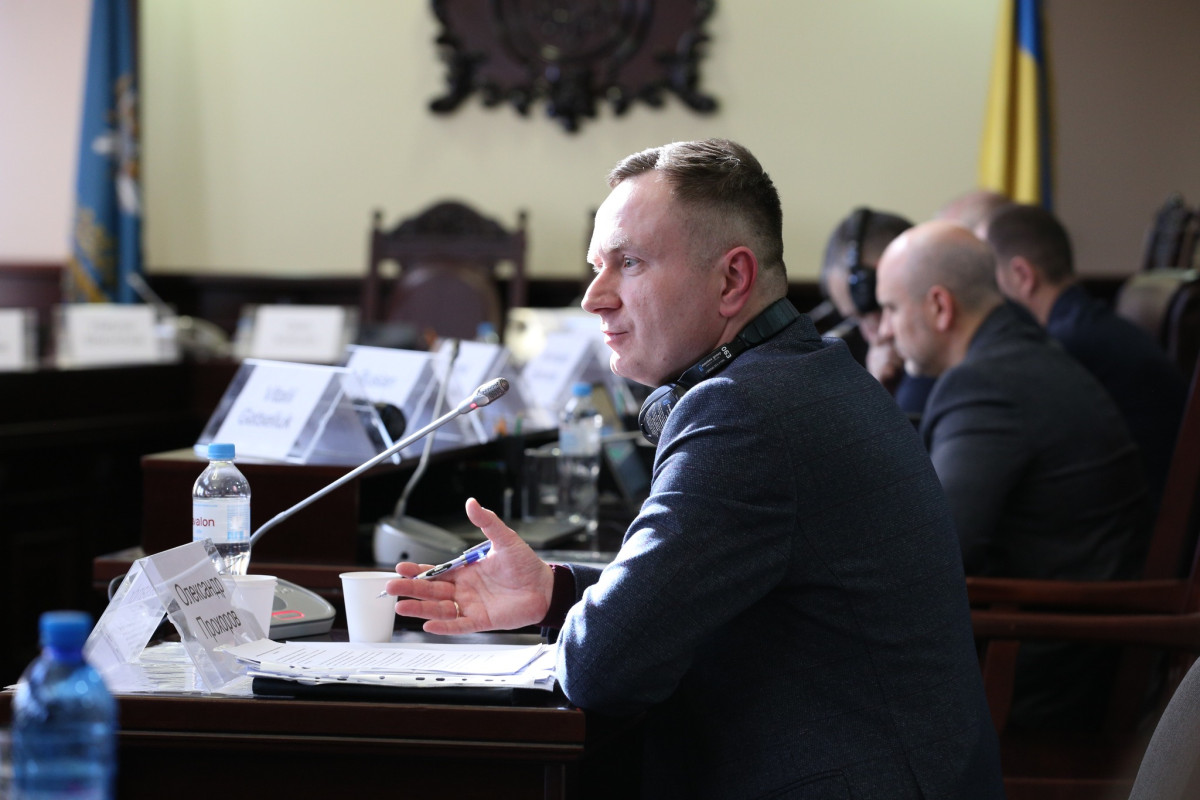
Motivation was the first topic the panel raised, because before the HACC competition the candidate had repeatedly applied for other selections, including local courts, appellate courts, the State Bureau of Investigation, the NABU, and the SAPO. Experts sought specificity and, after discussion, summarized that his motivation to become a HACC judge relates to the court’s specialization and the social importance of its work. Prokhorov rejected the idea that participating in many competitions shows a lack of persistence, saying it instead demonstrates determination.
The greatest number of questions concerned the candidate’s integrity, because in 2016–2018 he declared income below the subsistence minimum for those years. For example, he declared income of about UAH 2,000 per month for 2016 and UAH 6,000 per month for 2017.
Despite lengthy discussion, Prokhorov insisted those amounts were accurate, but he could not clearly explain how it would have been possible to live in Kryvyi Rih on that income. Experts openly questioned whether he failed to declare income or whether he in fact lacked sufficient professional experience for HACC, noting that an attorney handling such matters would be expected to earn more.
Prokhorov said that after registering his Attorney Bureau, funds flowed through the entity and were then returned to him as dividends, while the declared amounts were indeed what he reported. He said that until 2017 he lived with his parents, and in 2017–2018 he lived rent-free in housing owned by his parents’ friends; he said there was enough money for food.
During the interview, the candidate acknowledged errors in the declared value of a vehicle and of a land plot with a house, and said he would correct them.
The candidate is subject to military service and was found fit for service in support units. It also emerged that in August 2025 the Kryvyi Rih police were searching for him for alleged violations of mobilization legislation. Prokhorov said he learned about this only recently and that he had previously visited police departments without any complaints.
In this context, the panel asked about his PhD studies, which he began in 2025 at Kryvyi Rih National University in management. He said his motivation to pursue an academic degree was largely that one of his clients—an associate professor at that university—suggested he apply for admission. He said he was unable to enroll in 2024 due to high demand, but in 2025 the situation changed: “There wasn’t that rush anymore, so they were looking for people and encouraging participation—he suggested I apply.”
Asked why he had not shown academic interest earlier (for example, in 2019–2020), he said simply that he did not have such an interest at the time.
The panel decided to test his knowledge of the subjects he studies. An HQCJ member asked whether he could recall anything from a course titled “Organization and Implementation of a PhD Candidate’s Research,” and his response was: “Poorly…”
It also became clear that he is studying in a full-time format officially described as “with a break from work.” That would mean he could not work while studying, yet during the interview Prokhorov acknowledged frequent conflicts between classes and court hearings and said he did not attend some classes.
Snizhana Kolesnyk
Retired Judge
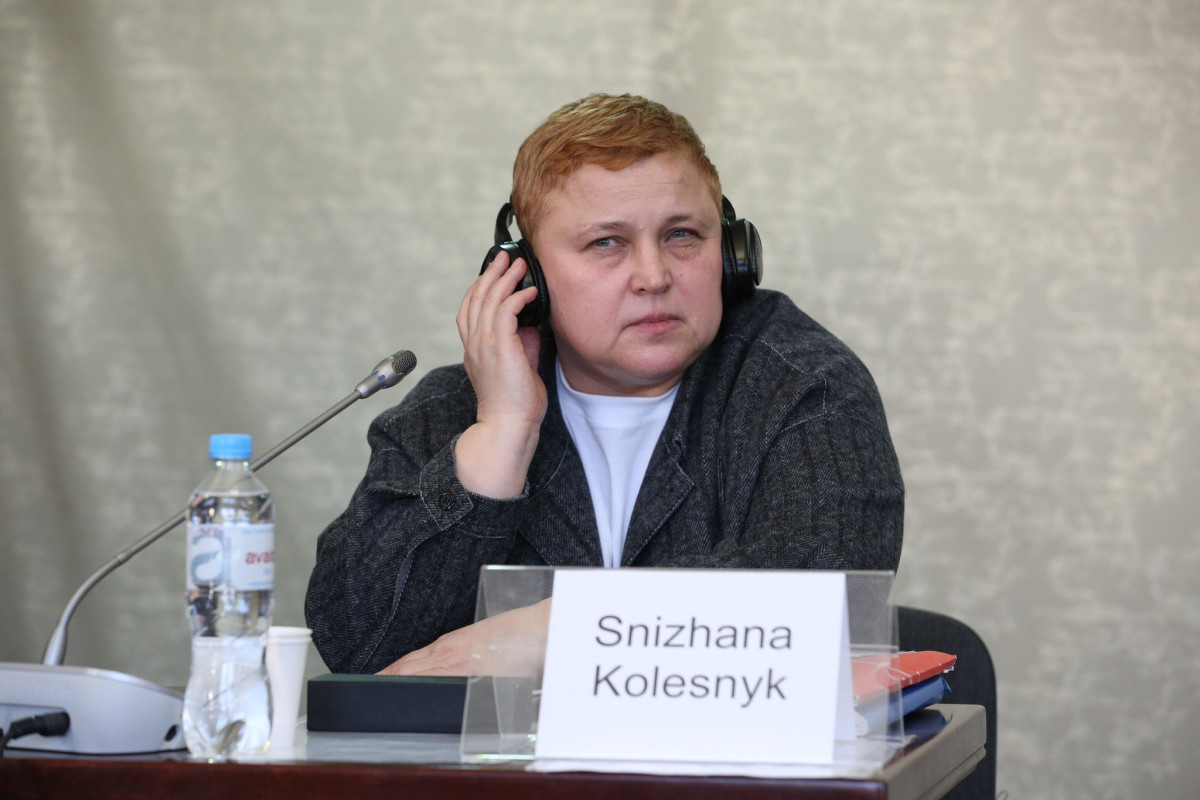
The interview opened with questions about Kolesnyk’s earlier resignation from the bench. PCIE members asked whether there was a risk that, if appointed to HACC, she might decide to leave again. Kolesnyk said she plans to work and noted that she still has time before reaching the mandatory retirement age of 65.
PCIE also asked how she maintained her professional knowledge after retirement. Kolesnyk said she reads legal literature and follows legislative changes. She added that she often discusses legal issues with her husband, who works in the prosecution service. She also said she follows case law, including decisions of HACC and the Supreme Court, although she was unable to cite a recent example of case law in corruption-related criminal cases.
In her motivation letter, the candidate wrote that she is ready to issue decisions that may be unpopular with political elites. Asked about relevant experience, she said she had not handled corruption cases, but recalled a case from the Maidan period. She said she selected an interim measure for a protest participant—whom she described as an opposition leader—and ordered house arrest rather than detention. According to her, the case was covered in the news at the time. She said the decision was appealed, but the appellate court upheld it, and the proceedings were later closed for lack of an offense.
PCIE also asked about Kolesnyk’s trip to the Russian Federation in 2019. She said her seriously ill aunt lives there—her only close relative after her parents’ deaths. Kolesnyk said she spent about four and a half days there to visit the relative and provide financial assistance. PCIE noted that her husband’s parents also visited Russia in 2018–2019, but this was not reflected in her family ties declaration. Kolesnyk said that when completing the declaration she relied on the Family Code and considered only her husband and children to be “close persons.”
PCIE also asked about her husband’s prosecutor’s pension, which he began receiving in 2022. Kolesnyk said it was a length-of-service pension after more than 25 years of service and was not related to disability.
The interview also addressed errors in the candidate’s declarations. According to PCIE members, about eight inaccuracies were found across her integrity declaration, family ties declaration, and asset declarations—including items related to administrative liability, professional experience, property, her husband’s loan, and membership in professional organizations. Kolesnyk said she completed the documents in Zaporizhzhia under difficult security conditions, with electricity and internet outages and constant shelling. She said she rushed to submit the documents and may have made mistakes.
PCIE also pointed to information about a house in Zaporizhzhia owned by her husband. According to the state register, the house is situated on a land plot, but the declarations did not include information about the land. Kolesnyk said they purchased only the house and that the land plot lies near high-voltage power lines and cannot be sold or leased. She said the previous owners built the house in the 1990s, but there were no ownership rights or land agreements for the plot.
Questions were also raised about the house’s value: her 2015–2020 declarations listed UAH 59,000, while declarations starting in 2022 listed UAH 225,000. Kolesnyk said the house was purchased under the contract for about $45,000, but she had not prepared a detailed explanation for the change in figures.
HQCJ asked about discrepancies in the value of a vehicle in her declaration versus the state register: the register listed UAH 30,000, while her declaration listed UAH 300,000. Kolesnyk said they found the car through a sales website and, after agreeing with the seller, paid about UAH 300,000. She said the paperwork was rushed due to an air raid alert and was processed through a commission shop, while registration was handled by the previous owner—circumstances that, in her view, could have led to an error in the documentation.
The commission also asked about a land plot for which, in 2015, a citizen named Bilyi issued a power of attorney in favor of the candidate and her brother. Kolesnyk said the family used the plot to grow vegetables. She said a purchase agreement was later executed, and that her nephew, acting under a power of attorney, handled the paperwork on behalf of the owner.
HQCJ also noted that after retirement she did not, in practice, engage in legal work or attend professional training. Kolesnyk said she continued to study legislation on her own and believes she could catch up on practical skills if appointed.
Oleksandr Leonov
Judge, Khadzhybeiskyi District Court of Odesa
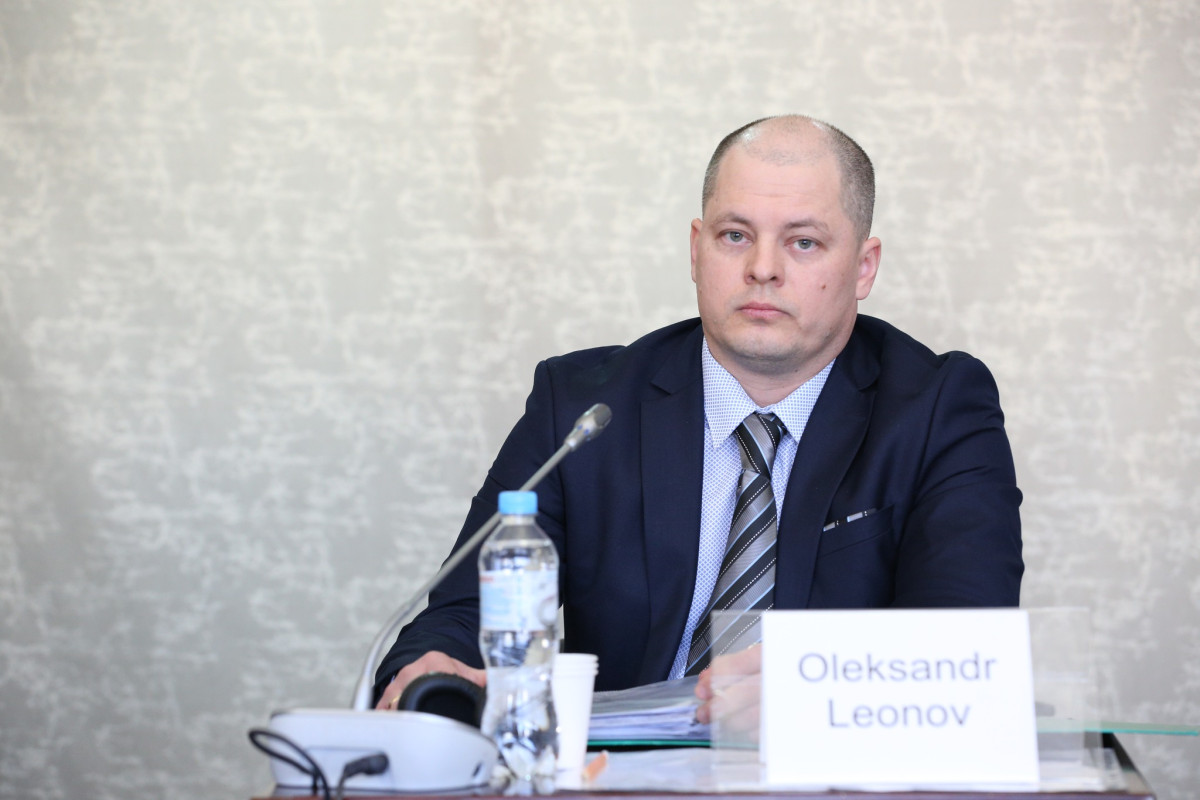
Leonov said he is ready to work at HACC based on 14 years of judicial experience, compliance with the law, and respect for citizens’ rights. He said he has already handled about 80 corruption-related cases and serves as an investigating judge. He also said he follows HACC case law and pointed in particular to recent changes in procedures for plea agreements.
The interview discussed Leonov’s use of full access to the court decisions register. He said there had been unauthorized access to his profile, through which unknown persons made about 1,000 queries; this triggered an internal review and a report to law enforcement.
Leonov acknowledged that he personally searched the register for information about relatives. He said he checked records related to his wife and mother to avoid conflicts of interest, and reviewed a case involving his brother (Article 368 of the Criminal Code; closed) to determine whether it could be pressure on him. He denied searching for two other third parties, saying he does not know them.
Leonov confirmed that he prepared responses to PCIE’s requests himself, but used Google Gemini to run calculations. When the commission raised concerns about inconsistencies in his explanations and about the permissibility of AI under the Code of Judicial Ethics, Leonov said the law does not prohibit it. He emphasized that he uses AI to check spelling and numbers.
Regarding an unfinished apartment in Odesa (valued at $81,000), the candidate said he made an initial 10% down payment and paid an additional roughly $42,000 over 2019–2022 (30 payments). He denied PCIE information suggesting he had paid the full price.
The interview also addressed a family residential complex. The house is registered in his mother’s name, although he said it was built with his brother’s funds and the joint labor of the whole family over five years. Leonov said his own financial contribution was about $5,000–$6,000 (including wiring costs). He said the property was registered to his mother because she contributed proceeds from the sale of inherited property toward the land plot and foundation, and the sons then helped finish the construction.
Questions were also raised about a Kia Sportage and another apartment that Leonov’s brother purchased and registered in the mother’s name. Leonov said his brother lives abroad, and that in 2021 the brother gave him the car as compensation for caring for their parents.
The commission examined inconsistencies regarding the income of Leonov’s wife, who is an attorney. Leonov said she earns very little and that he pays her professional dues. HQCJ noted, however, that a credit agreement listed her income as UAH 30,000 per month, and that her 2020 declaration reflected UAH 58,000 received from Leonov’s mother for court representation. The interview also discussed the birth of their child in Canada in 2023. Leonov said medical insurance was covered through a Canadian government support program, housing was provided by his brother, and Leonov covered only airfare.
HQCJ reminded the candidate about a 2018 disciplinary sanction for failing to notify a claimant of a hearing; Leonov said it was a lesson and that he drew conclusions from it. The interview also covered a 2022 separate ruling noting his failure to consider a motion to stay proceedings; Leonov said he acted to prevent abuse of process.
PCIE asked about the brother’s resale of vehicles—four cars imported from Korea were sold within a month. Leonov denied personally using the cars, saying his brother, a sailor, handled them and their father repaired them. Despite earlier explanations about using those vehicles, during the interview Leonov insisted he had no connection to them and said the cars were over 10 years old.
Kateryna Sikora
HACC Judge
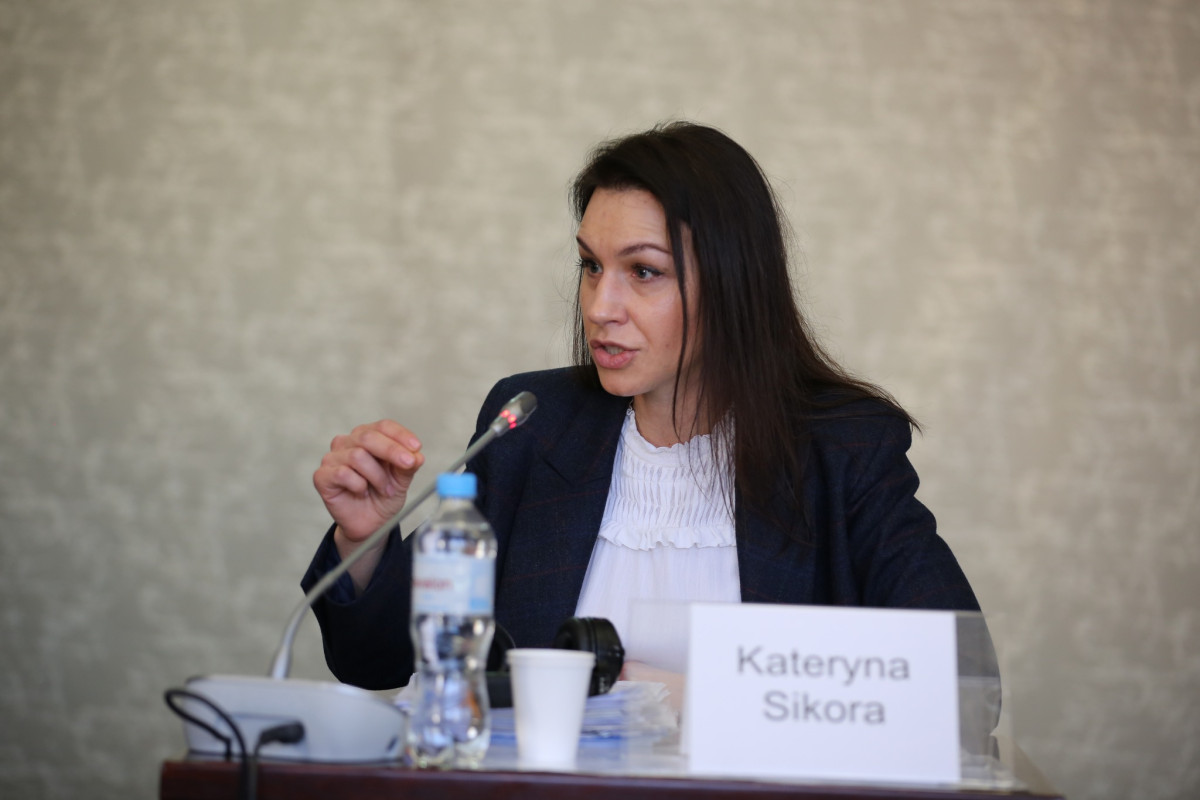
PCIE’s main questions concerned Sikora’s 2020 declaration. In it, she listed her husband’s assets but did not report their value.
Sikora said some of the property had been acquired by her former husband before their marriage, while other assets were purchased by him independently. She said she was not present when the transactions were executed and only provided spousal consent for the purchases. Sikora emphasized that she and her husband were financially independent. After their relationship deteriorated, he refused to provide documents, and she said notaries allegedly refused to provide documents showing the purchase prices because she was not a party to the transactions. Following an audit of her declaration, NACP initiated proceedings for false asset declarations; the case was later closed for lack of an offense. Sikora said her husband provided information about the asset values only after the case was opened.
HQCJ also asked about the candidate’s divorce, noting that the court decision stated the child remained living with the father in Dnipro. HQCJ members asked whether the divorce might have been a way for the husband to obtain a deferment from mobilization (as a parent raising a child). Sikora denied this, saying they raise the child together and that her ex-husband therefore has no grounds for a deferment as a person single-handedly raising a child.
Sikora has a number of speeding tickets, most of them issued in 2022. She explained this by frequent travel between Kyiv and Dnipro at the beginning of the full-scale invasion, when road signs were sometimes covered with film or otherwise obscured due to martial law. She also mentioned air raid alerts while she was on the road and her desire to reach a safer location more quickly. Sikora said she drives very cautiously in cities and exceeded the speed limit only on open stretches of road, adding that in recent times she has had almost no such tickets.
Oleh Marchuk
Judge, Vasylkiv City-District Court, Kyiv Region
At the start of the interview, Marchuk said that as a first-instance judge he had relatively few cases involving corruption offenses, but believes he has sufficient knowledge in criminal law.
PCIE raised issues related to where he lived during the period he worked at the court. In declarations over several years, Marchuk said he lived on Kyiv’s Left Bank, even though he worked in Vasylkiv and at that time did not have a car. He said he traveled roughly 45 kilometers to work each day, spending between an hour and a half and nearly two hours commuting. He said he mostly used public transportation or rode with colleagues.
PCIE also pointed to inconsistencies in residence information across different questionnaires. His 2018 documents indicated residence in Kyiv, while his 2024 questionnaire listed Vasylkiv. Marchuk said he lived in Vasylkiv only briefly, but because he had no written lease agreement, declaring the housing was difficult. He suggested the discrepancy could be due to an error in identifying the relevant period of residence.
A separate question concerned social benefits his wife received in Vasylkiv after the children were born. Marchuk said he believed the benefits were processed in Kyiv and associated the Vasylkiv reference with the possibility that his wife may have obtained internally displaced person status there in 2015.
PCIE also raised the large number of Article 130 administrative cases (driving under the influence) that were closed due to expiration of the time limit for imposing a penalty. Marchuk said he had 118 such cases, and another 24 were closed for lack of an offense. He explained that the main reason was difficulty properly notifying defendants: addresses or phone numbers were sometimes fictitious, and summonses were returned to the court. He also said some defendants and their attorneys deliberately delayed proceedings. He noted that in one year his caseload included roughly 200 cases under this article.
PCIE also noted that after August 2013, Marchuk continued for some time to issue court decisions in Russian despite legislative changes. Marchuk acknowledged that saying he did not know about the changes is not very persuasive for a judge. He said he relied on court staff to inform him about legislative updates, but once he learned of the new rules, he began issuing decisions in Ukrainian.
The interview also addressed financial questions, including a loan from OTP Bank of about UAH 100,000 that Marchuk took out in 2014. He said it was needed to organize a wedding. According to him, part of the debt was repaid from current income and savings, and the remainder was paid off after the wedding using cash gifts.
PCIE also asked about his wife’s activity on Instagram, where she presents herself as a nutrition specialist. Marchuk said she was only testing the possibility of such work and has not yet provided paid consultations. He said most reviews on the page were left by friends or relatives whom she helped for free. He added that if she begins providing paid services, she plans to register as an individual entrepreneur.
The commission also noted the candidate’s large number of traffic-related administrative offenses. Marchuk said there were more than 20 incidents; he acknowledges about 15 as his own, while some may have been committed by his wife, who also used the car.
HQCJ asked about an episode in which, in a court order, Marchuk stated that another judge—Kravchenko—was abusing the right to seek recusal. Marchuk acknowledged that this assessment was too harsh and effectively exceeded his authority, because determining disciplinary violations by judges is the competence of judicial governance bodies. He said he later apologized to the colleague.
HQCJ also noted instances where Marchuk recused himself from cases due to parties’ negative attitudes or criticism of his actions. He acknowledged that, from today’s perspective, his reaction was overly emotional and not always justified. He said that with experience he has learned to respond differently.
The interview also referenced a defamation case Marchuk filed over a social media comment stating, “A corrupt person reinstated a corrupt person.” He said he chose to respond legally at the time, but now sees it more as a lesson and said he does not plan to sue over similar comments in the future.
In the end, the commission pointed to inaccuracies in his explanations about certain cases, including the length of time a case was considered by one judge and what happened to the proceedings afterward. Marchuk said he may have mixed up the cases and apologized for any error in his explanations.
Yana Kinakh
Attorney
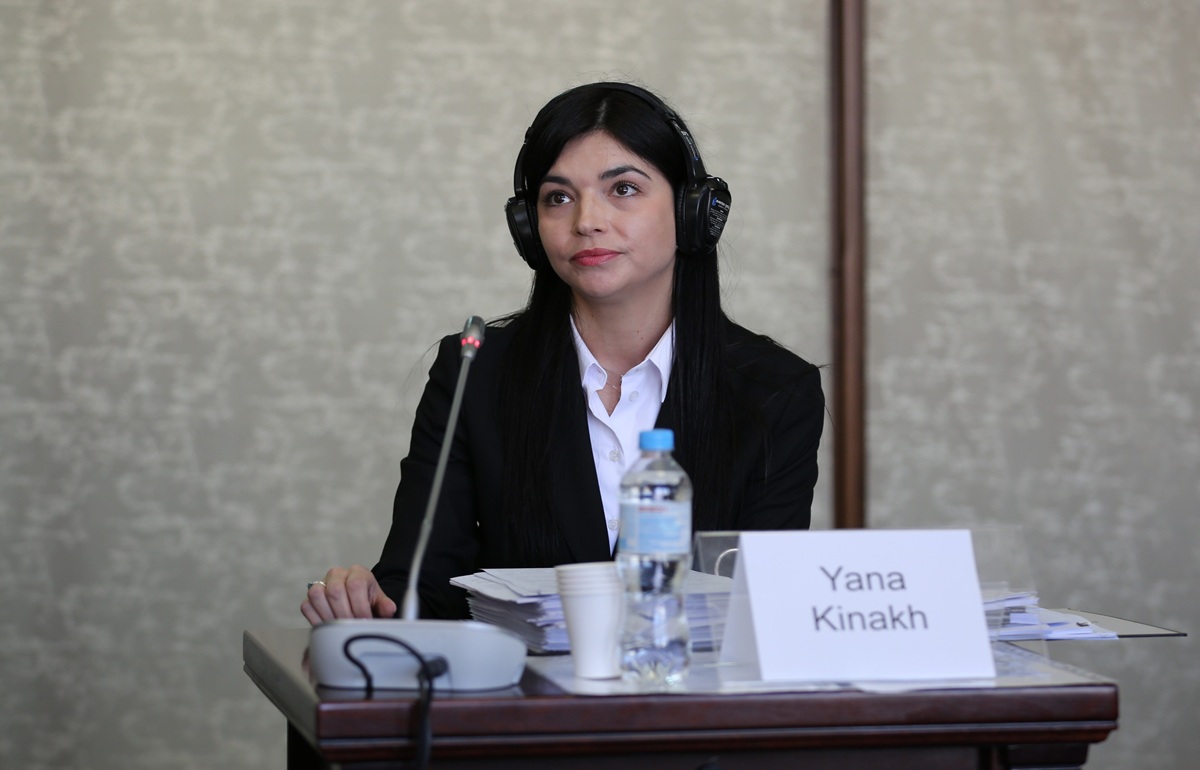
At the start of the interview, Kinakh said she has been in private legal practice for 16 years and that roughly half of her cases involved criminal law. She also said she has worked on matters connected to NABU, SAPO, and HACC, including representing individuals who served as witnesses in HACC proceedings. She added that in courts of general jurisdiction she also handled cases involving corruption-related offenses.
PCIE drew attention to the large number of administrative penalties for traffic violations. According to PCIE, 18 such violations were recorded over two years. Kinakh said not all of them were committed by her personally because her husband also used two cars; in her estimate, about half of the violations could have been hers.
A separate set of questions concerned an Audi Q5 connected to multiple violations in 2024–2025. Kinakh said she sold the vehicle in November 2023, but the new owner continued using it for about a month and a half under a power of attorney while the re-registration process was underway. She said this could explain why fines continued to come in her name. She also said she often paid the fines even when she was not sure she had been the driver, in order not to burden the court system.
PCIE noted that she did not list the vehicle in her 2023 declaration. Kinakh said that when she completed that declaration, she no longer considered herself the owner, but later corrected the information in her 2024 declaration.
The central issue was her savings. In 2023, the candidate declared $40,000 in cash, and the following year $60,000—an increase of $20,000—while her official income for 2023 was about $8,000. Kinakh said the increase was due to money left after her father’s death in 2024. She described it as family cash savings that were not formally part of the estate and therefore were not declared as an inheritance.
PCIE asked about the origin of those funds. Kinakh said her father worked for many years in the internal affairs bodies and had a relatively high salary and pension, which allowed the family to save the money.
PCIE also asked about a case in which the injured party was her former husband. During that case, information emerged about his possible involvement in cigarette smuggling to Europe. Kinakh said she was unaware of such activity at the time and could neither confirm nor refute it because there are no court decisions establishing those facts.
The interview also addressed Kinakh’s travel abroad. She confirmed that she left Ukraine in November 2024 and said she often travels for professional purposes. She described one trip in particular: she traveled in a car belonging to the mayor of Irpin as part of a group of lawyers visiting Ireland to study its legal system.
HQCJ also asked about her right to reside in Canada. Kinakh said she used that status after the start of the full-scale war but has no intention of living abroad permanently.
In the financial discussion, the commission noted a discrepancy between her reported income and her savings based on tax authority data. Kinakh said part of the funds she saved could also have come from work on election commissions, prosecutors’ attestation commissions, as well as mediation work and grant-funded activities—although this information was not reflected in the tax data.
The interview also mentioned two enforcement proceedings against her related to improper parking fines. Kinakh said she has already paid those fines.
Toward the end, HQCJ returned to the origin of the $20,000 she linked to her father’s savings, noting that the funds were not included in the estate and had no documentary confirmation. Kinakh said her mother handled the inheritance process, while she and her brother waived their inheritance rights. She said that when she filed the declaration, no decision had been made on whether to include these funds as inherited property, but she stated that she intends to correct the situation in the future.
Anton Baida
Associate Professor, Yaroslav Mudryi National Law University
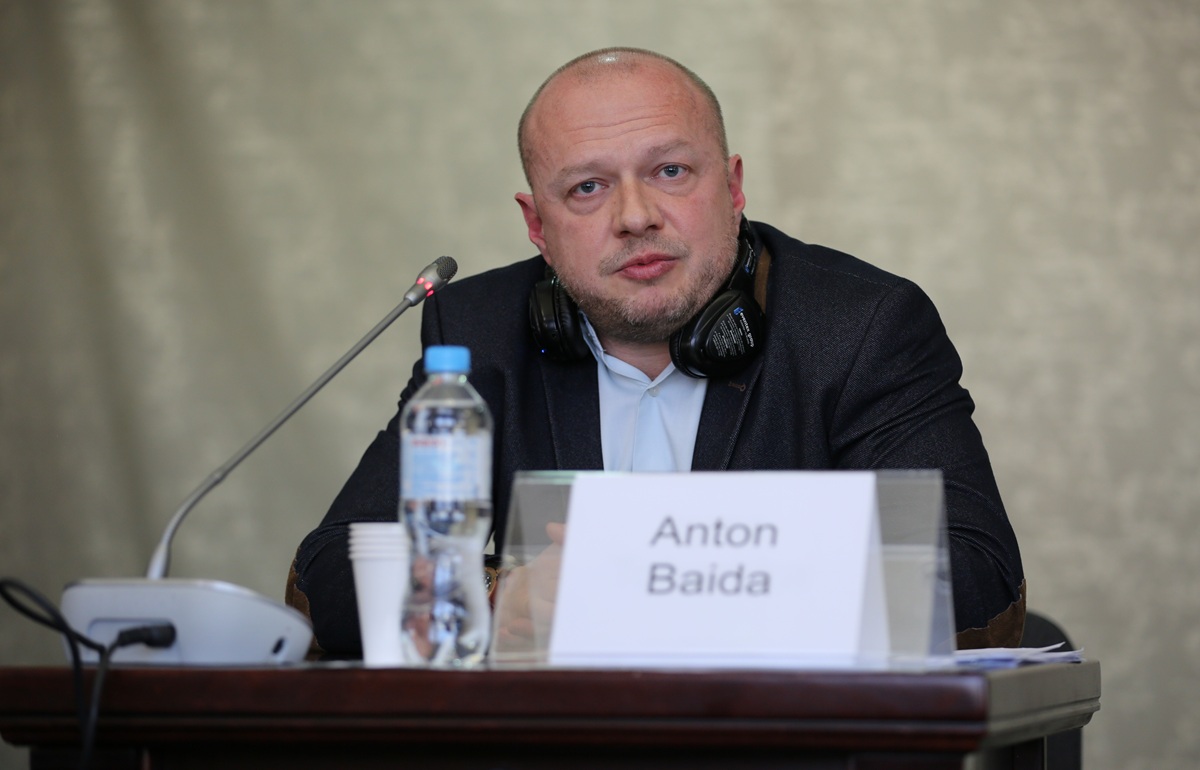
PCIE’s main concern was the candidate’s approach to completing his declaration. He did not list his mother’s income or savings, saying this was for ethical reasons.
Baida said he did not feel he had the moral right to ask his mother how much money she had when she fled occupation or to inquire about her income generally. He cited her poor health and difficult emotional condition. The commission noted that such an approach calls into question the principle of transparency in declarations and asked how, as a judge, he would handle cases involving declarations. He answered that he would act in accordance with the current law.
A separate block of questions concerned BMW 135. In 2020, Baida was involved in an accident while “test-driving” the vehicle (after which, he said, he changed his mind about buying it). In 2022, police stopped him in the same car, and it turned out the documents did not match the vehicle. Baida said these were isolated episodes and claimed that in 2022 he was again considering purchasing the car because he was offered a below-market price ($9,000) and even paid a $4,000 deposit. The commission expressed skepticism that two incidents two years apart involving the same car looked like mere coincidence.
There were also questions about his mother’s purchase of a BMW X5. She bought the car without having a driver’s license. Baida confirmed she had never had a license, said he drove the car, and stated that he disclosed this in his declaration.
HQCJ asked about the source of funds for his mother’s purchase of real estate in 2018. Baida said the property, costing more than UAH 1.5 million, was funded by an aunt who wanted to protect assets from division during her divorce.
Baida said he gifted his apartment in Berdiansk to his mother during his own divorce. He said he did so at his mother’s request so that his wife would not claim it after the divorce, because he had inherited the apartment from his grandmother.
HQCJ also asked about where he lived starting in 2022 and about his receipt of IDP payments in Poltava that continued through 2023 and 2024.
Despite holding an attorney license, Baida said he handled almost all cases free of charge for acquaintances, explaining that he wanted to test his theoretical knowledge in practice. He also said he did not have funds for mandatory continuing legal education.
Iryna Tokarska
Judge, Manevychi District Court, Volyn Region
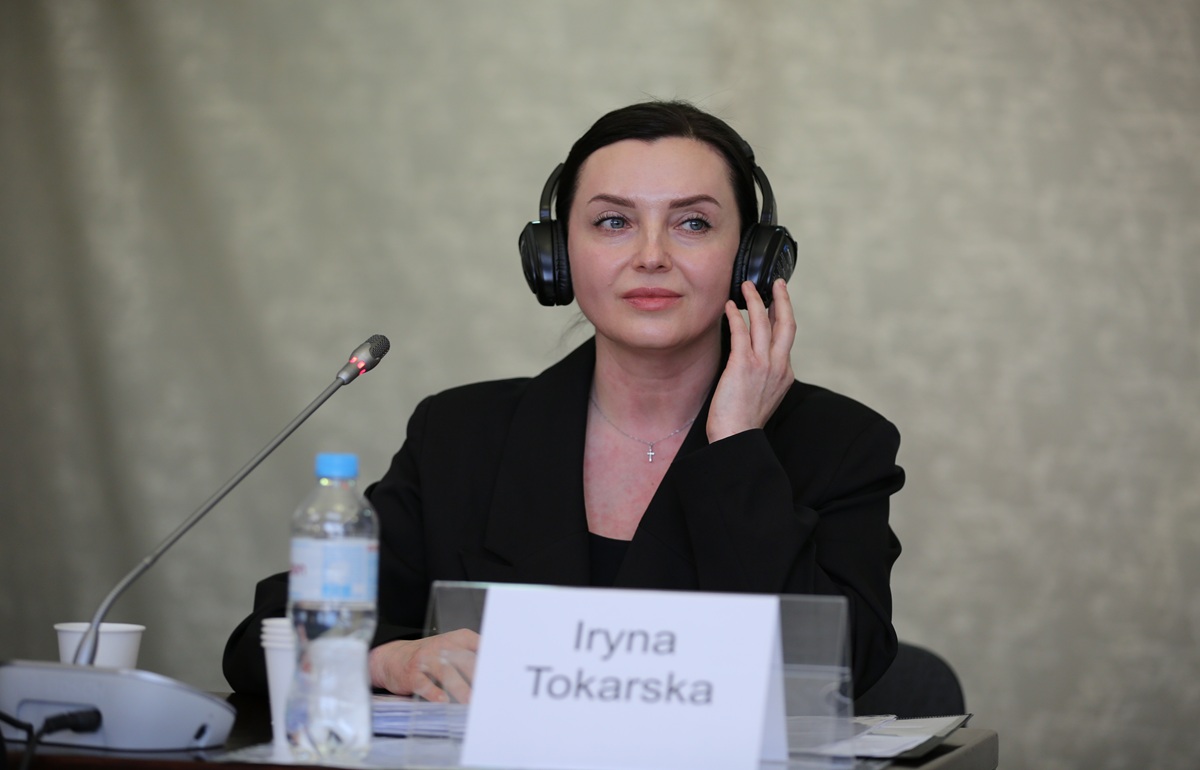
At the start of the interview, Tokarska said she has served as a judge since 2002, handles corruption-related cases, and follows HACC practice through livestreamed hearings to more effectively prevent procedural abuse.
Explaining the absence of real estate in her 2012–2015 declarations, Tokarska said she rented housing under an oral agreement. She said she initially paid rent, and later only covered utility costs and repairs.
Questions were also raised about the value of three vehicles whose prices she did not report. She said the first car was a gift from her parents and she did not ask its price, while her husband handled the second car’s purchase entirely. The interview also addressed a BMW with Lithuanian registration that her husband used under a power of attorney starting in 2018. Tokarska said they argued repeatedly about the foreign registration and that she stopped declaring the car in 2022 because her husband died.
In 2024, the candidate’s daughter acquired an apartment in Lutsk for $42,000 (UAH 1.6 million). PCIE noted that listings showed a price $6,000 higher. Tokarska said the difference was due to the absence of a realtor commission (they reached the owners directly) and the apartment’s condition, which required repairs. She said the main source of funding was payments her daughter received after her father’s death.
Tokarska said she currently lives with her daughter. She clarified that since June 2025 her daughter has been studying in Lutsk and stays in the school’s boarding facility Monday through Friday. No one is yet living in the new apartment because renovations are ongoing. HQCJ pointed to a discrepancy in the daughter’s income: UAH 1.8 million in the declaration versus UAH 1.6 million in tax data. Tokarska said this was because there were two different accounts (a pension and special survivor payments), as well as additional compensation payments for electricity, which she said is confirmed by certificates.
PCIE and HQCJ devoted the most attention to a Public Integrity Council conclusion finding the candidate lacked integrity, based on her handling of Article 130 DUI cases that she frequently closed due to expiration of time limits. The panel also referenced media publications accusing her of mass-closure of such cases. Tokarska said she had established communication with the media, but PCIE noted journalists themselves dispute that claim. Tokarska insisted that even after the Public Integrity Council conclusion, the closures (about 25 decisions) were justified because many of the defendants were servicemembers who were difficult to summon to hearings.
Separate questions concerned about 90 cases in which Tokarska imposed a fine but did not revoke driving licenses. She said that if a person does not have a driver’s license, there is nothing to revoke, though she later acknowledged that she changed her practice after 2023. In one case, she imposed a second fine for repeat drunk driving on a motorbike without revoking the right to drive. She explained this by saying the motorbike could have belonged to someone else, or the person could have saved up for it for a lifetime.
On the doctrine of “minor significance,” Tokarska said she is categorically opposed to applying it in administrative corruption-related cases, but HQCJ identified four such instances in her practice (in declaration-related cases). Tokarska could not explain them. In addition, she closed a case involving a servicemember who was intoxicated, explaining that he had returned from Bakhmut and that it was simply a moment of weakness.
Nataliia Movchan
HACC Judge
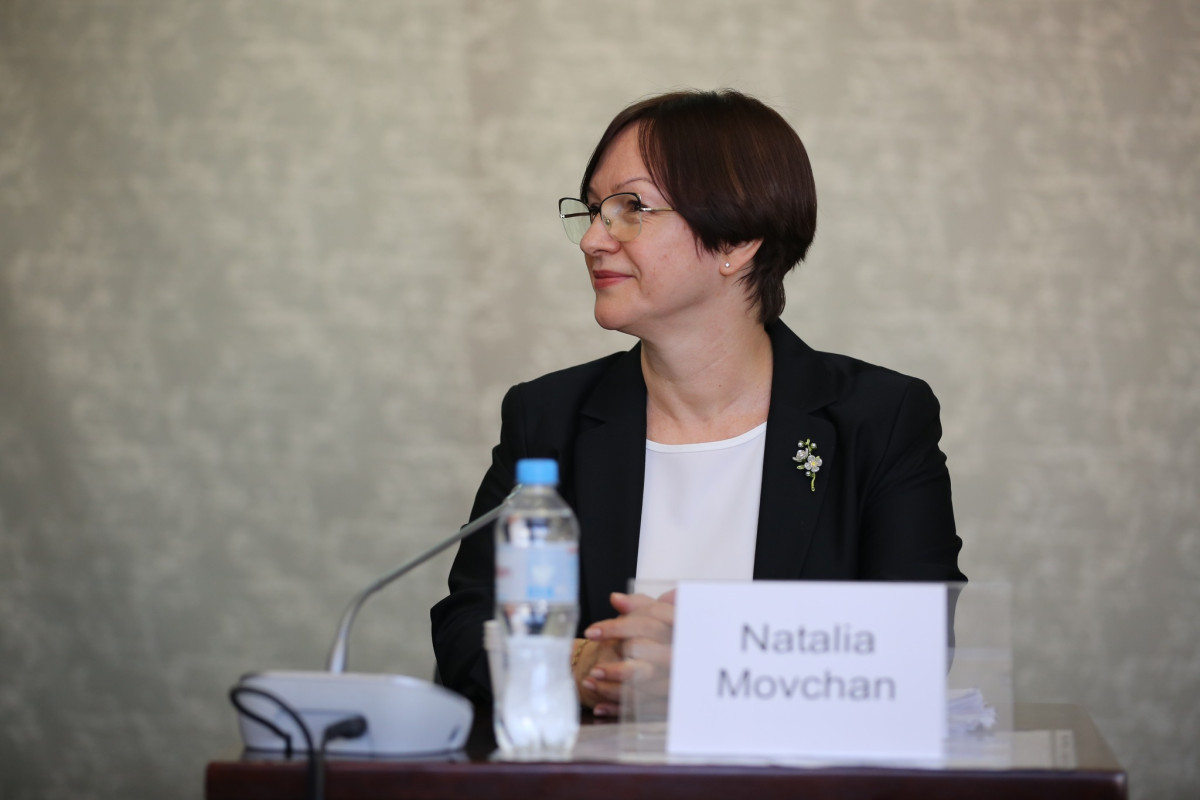
The interview opened with questions about an investigation by Slidstvo.Info alleging that Movchan drafted decision templates for a fellow judge. Movchan categorically denied this, saying file metadata that lists her as the author can be easily falsified. She described the situation as an attempt to discredit her to remove her from a case and said she reported interference to the High Council of Justice.
A significant part of the interview focused on trips by the candidate’s close relatives to Russia after 2015. PCIE pointed to an inconsistency in her integrity declaration, where Movchan stated that she was not aware of family members visiting Russia.
Movchan explained this as a formal application of the law: her adult son, parents, and brother do not live with her, so they are not “family members” under the relevant NACP guidance, and she therefore did not believe she needed to report their travel. She described the trips as purely family-related, saying she and her relatives visited her nephew and his wife, who—after becoming pregnant—moved closer to her own parents in Russia.
The commission also noted that Movchan issued decisions on days when she was officially attending training, and even during periods of sick leave or vacation. Movchan said that on a training day, as an investigating judge, she could review a motion to seize assets very quickly (in about 15 minutes), even after 5:00 p.m. As for sick leave, she said she could still be at work and then arrange the medical documentation after the workday ended.
HQCJ also asked about an episode in which a panel that included Movchan denied a defense attorney access to case materials on the grounds that another attorney from the same law office already had access. The defense then sought her recusal, which was granted. Movchan declined to evaluate her colleagues’ decision to grant the recusal.
Mykhailo Hrabynskyi
Associate Professor, Ivan Franko National University of Lviv
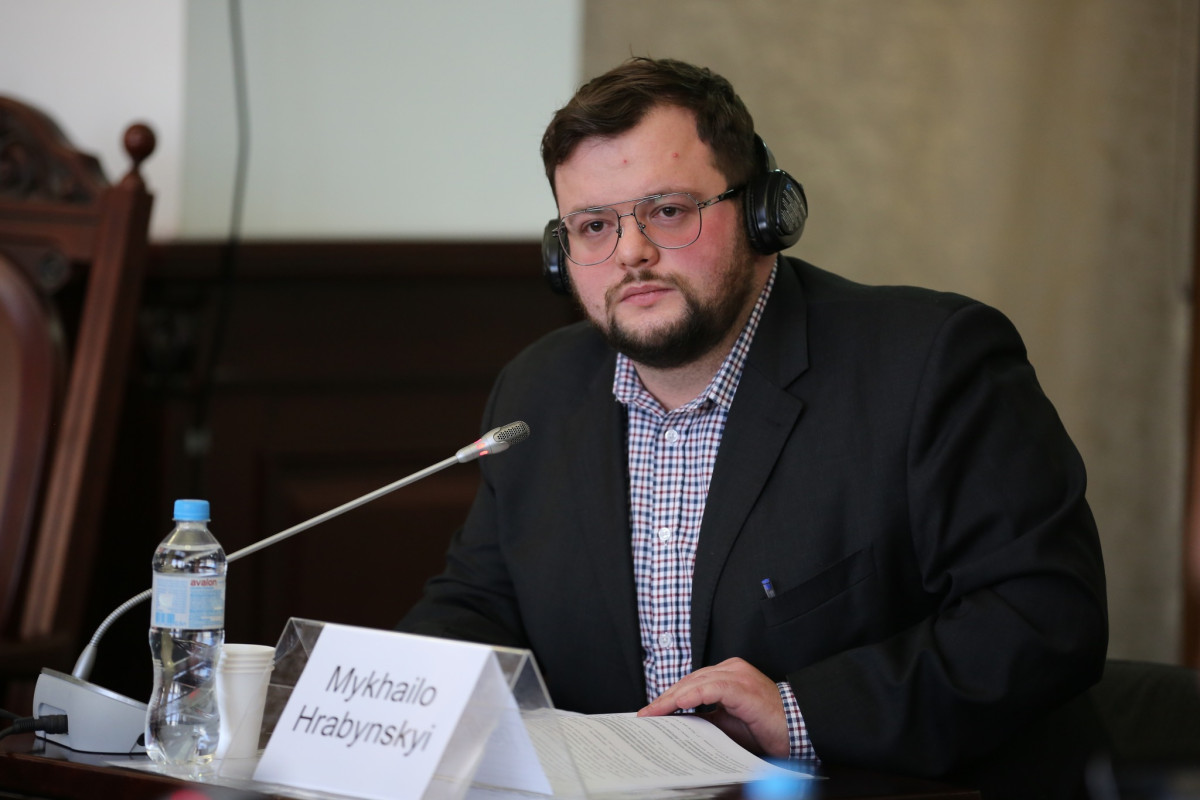
PCIE’s main questions concerned why the candidate, while serving as the in-house head of the legal department of a state-owned enterprise, also entered into agreements with the same enterprise as outside counsel and whether he saw this as a conflict of interest. Hrabynskyi said the enterprise’s charter allowed representation in court only by the enterprise head, and that the authority of an in-house counsel was insufficient. To address this, the enterprise entered into a separate agreement to hire its own employee who is also an attorney to represent it in court. Hrabynskyi said he took unpaid leave in order to appear in hearings as an attorney. He denied any conflict of interest, even though, in practice, he oversaw the enterprise’s legal work both as an in-house manager and as outside counsel.
PCIE members expressed surprise at what they described as the candidate’s ascetic lifestyle from 2015 to 2020. His reported spending totaled about UAH 65,000 over five years (roughly UAH 1,000 per month). He said his parents fully supported him and that he devoted his time to studying and writing his dissertation. Even after receiving an apartment as a gift from his father in 2018, he said he spent only UAH 1,000 on it over several years.
In 2020, the candidate declared 57 bank accounts. He explained this by saying he used many banks and opened numerous virtual cards for different purposes.
He also reported savings of more than UAH 500,000 by December 2020—more than his total official earnings over that period. He said the difference came from gifts from his parents and money from the sale of his grandmother’s car.
Inna Smal
Judge, Sosnytsia District Court, Chernihiv Region
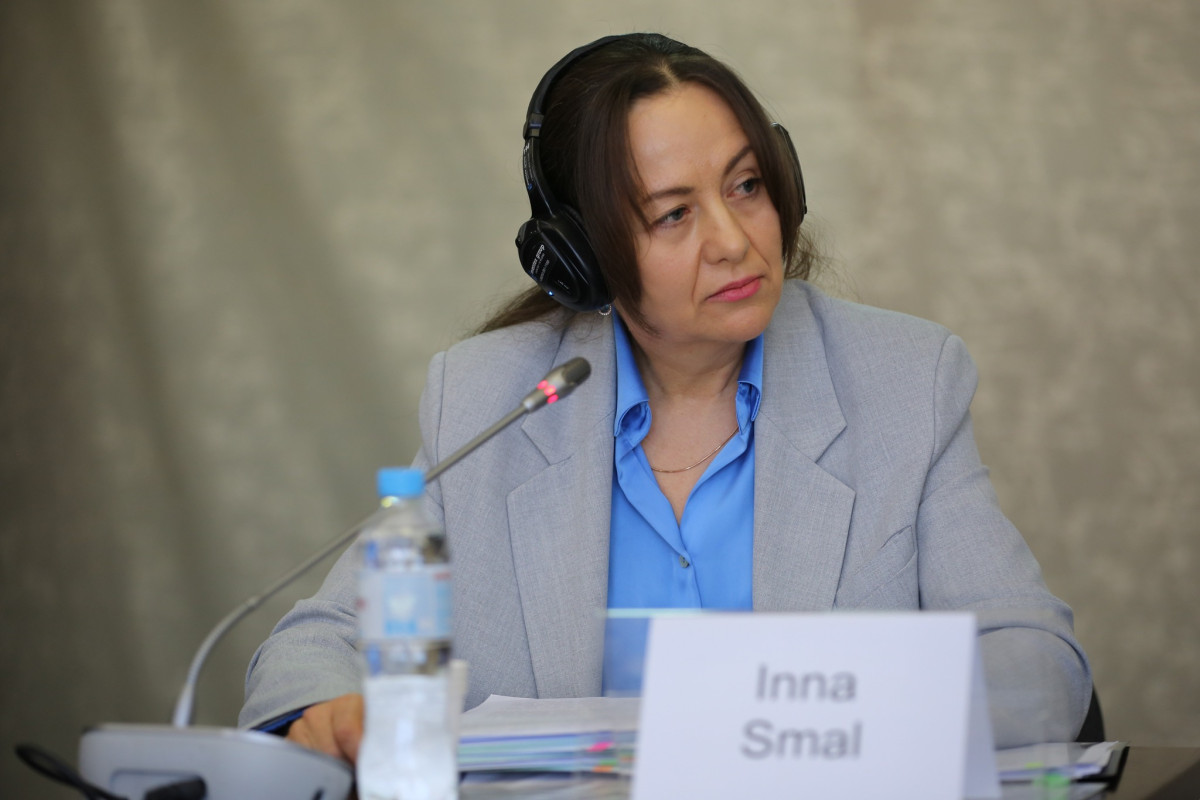
Explaining her motivation to participate in the competition, Smal said she has 24 years of judicial experience and has been eligible for retirement for about eight years, but decided to continue her professional work. She considers work at HACC as an opportunity for further professional development.
Smal said that as a judge in a court of general jurisdiction she has handled various categories of cases, including corruption-related matters—specifically under Articles 191, 368, and 369 of the Criminal Code of Ukraine. Some of these proceedings are substantial in scope; one case she is currently hearing reportedly includes about 25 volumes of materials.
A separate block of questions concerned her extended tenure as court chair—from 2007 to 2020. PCIE members noted this meant 13 consecutive years in an administrative position. Smal explained that she was initially appointed by a decision of the Council of Judges and later re-elected multiple times under legislation that changed repeatedly. She also noted that for a period she was the only judge at the Sosnytsia District Court. When junior colleagues appeared, they did not want to nominate their candidacies for the post of court chair for a long time.
After her term as chair ended, a dispute arose over office space, prompting her to file a complaint with the High Council of Justice. Smal said that after a new chair was elected, the judges’ assembly assigned her a new office that was already used by the head of the court administration and a court consultant. She said she asked colleagues to reconsider because other offices were available. At the same time, she said she does not consider it appropriate to comment in detail on the new chair’s actions, because the conflict has since been resolved and working relations have improved.
The interview also addressed Article 130 administrative cases (driving under the influence). Smal said that over her career she had 403 such cases, of which 16 were closed due to expiration of the limitation period. She said she tried to take all possible steps to ensure proper notification of defendants—sometimes returning police reports for correction to clarify addresses—and scheduled hearings without significant delay. She said she was guided by European Convention on Human Rights standards on proper notice.
PCIE also asked about her academic work. Smal said she worked on her dissertation from 2020 to 2025 while continuing her judicial duties. She said she wanted new professional challenges, chose a complex research topic, and spent five years completing it.
HQCJ members positively assessed her research, noting that she analyzed case law, including about 120 of her own decisions, and relied on the results of an electronic survey of legal professionals, which she organized by sending requests to courts and other institutions.
Some questions concerned her personal declarations. PCIE noted that in her 2012 declaration she listed her ex husband as her husband, even though the marriage was officially dissolved in 2004. Smal said that after the divorce, they continued living together for a time and maintained a de facto marital relationship, and that the divorce certificate was obtained only in 2013.
During the part of the interview with HQCJ, Smal explained her participation in various selections within the justice sector. In 2021, she applied to a competition for SAPO. She said that at the time she expected the HACC competition would take place sooner, and she treated the SAPO competition as preparation for the HACC selection.
The commission also noted that her declarations do not show any major asset purchases. Smal explained that she has not made any major acquisitions in recent years. Smal added that the decline in her savings was driven by expenses for a treatment-and-recovery trip for her son to Cyprus in 2024, as well as by early repayment of a car loan during a preferential repayment period.
Vadym Khodko
Judge, Kamianske District Court, Zaporizhzhia Region
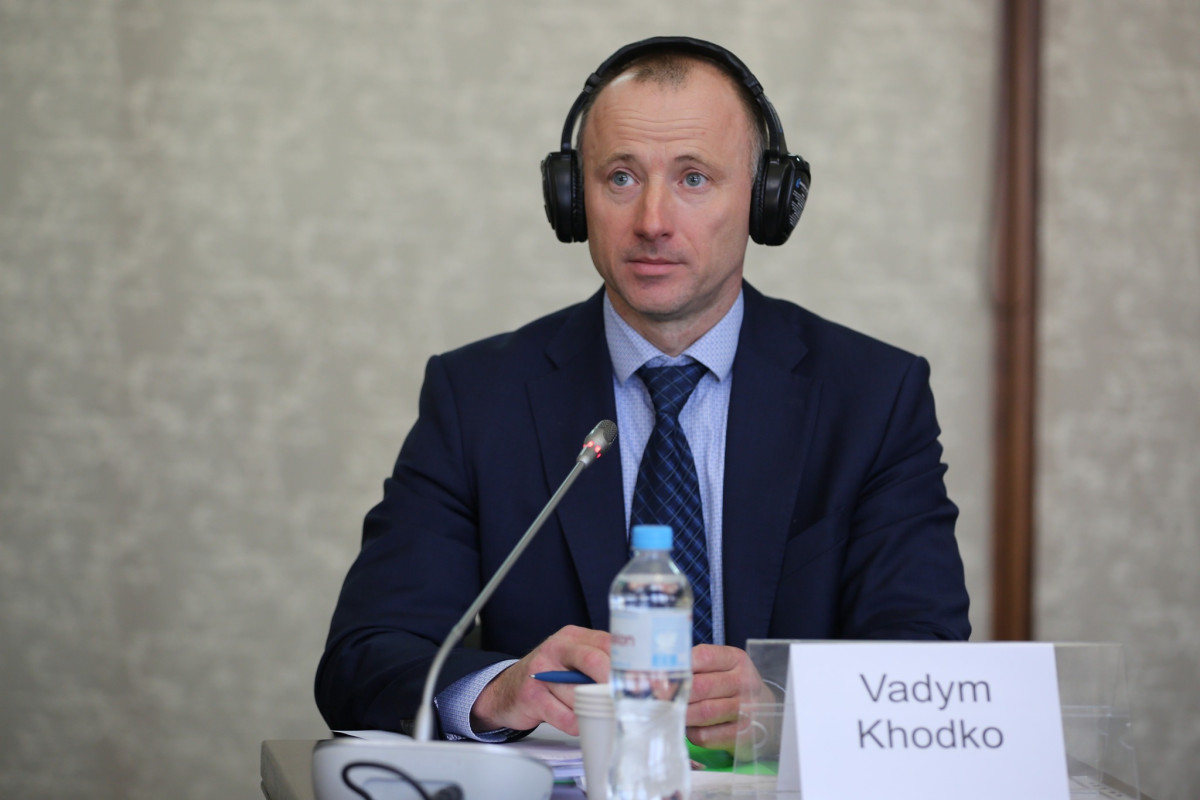
At the start of the interview, PCIE noted that Khodko submitted essentially the same motivation for both an appellate court competition and the HACC competition. Khodko said he wants to work at HACC because he aims to focus on complex categories of cases and is drawn to the institution’s mission. He added that criminal cases make up about half of his current workload, including corruption offenses.
PCIE noted that while living in Zaporizhzhia, Khodko worked 150 km away in Kuibyshevskyi District. He said he traveled either in his own car or with colleagues, and sometimes stayed overnight at his parents’ home—something he said did not need to be reflected in reporting under the rules in force at the time. The interview also addressed an apartment where his wife has been registered since 2008 but which he reported only in 2024; Khodko said this was in response to changes in NACP guidance.
PCIE also raised questions about IDP payments that the candidate’s wife received in 2023–2024. PCIE members asked how she could receive assistance while, in practice, living with her husband in Zaporizhzhia since 2014. Khodko insisted the payments were lawful because his wife remained registered in occupied territory in Donetsk Region, which he said met the requirements of a Cabinet of Ministers resolution. He stressed that state bodies conducted checks and found no violations, although she no longer receives these payments.
PCIE drew attention to a sharp increase in the candidate’s assets: in 2017 he declared no savings, but in 2018 more than UAH 230,000 appeared in his bank accounts. Given an annual salary slightly above UAH 300,000, the panel asked how the family covered everyday expenses. Khodko said that under the law, amounts below 50 subsistence minimums were not subject to mandatory declaration, so he had not reported them earlier. He said that over 2018 he managed to save an additional roughly UAH 75,000.
The interview also addressed large sums received by the candidate’s stepson. In 2022, the stepson declared UAH 76,098 received from Dmytro Slupov; Khodko said this was a transfer from the child’s grandmother (his mother-in-law), sent through her friend because she could not transfer the funds directly for technical reasons. In 2023, the boy received another UAH 189,000 from five different people. Khodko said these were gifts from godparents who are relatives and are in no way connected to employees of the court where he serves.
PCIE also asked about trips by the wife’s relatives to the temporarily occupied territory and possible contacts with the occupation authorities. Khodko said that in 2021, his wife had to travel there to retrieve a child who had stayed with the grandmother for the summer and could not return due to COVID-related restrictions. He said there was no cooperation with Russian authorities and that the relatives are simply trying to survive under those conditions.
HQCJ also referenced information from civil society organizations suggesting the candidate’s father-in-law holds a Russian passport. Khodko said he does not have close contact with his wife’s parents and has lost contact with them entirely since 2022, so he cannot confirm that fact. He added that his father-in-law is elderly and that people in temporarily occupied territories are often pressured to obtain passports.
In the end of the interview, the commission discussed the candidate’s motivation letter, which opened with a quote from philosopher Wilhelm von Humboldt. Asked who Humboldt was, Khodko was unable to give a substantive answer, saying he simply liked the quote about finding one’s own path.
Vitalii Kryklyvyi
HACC Judge
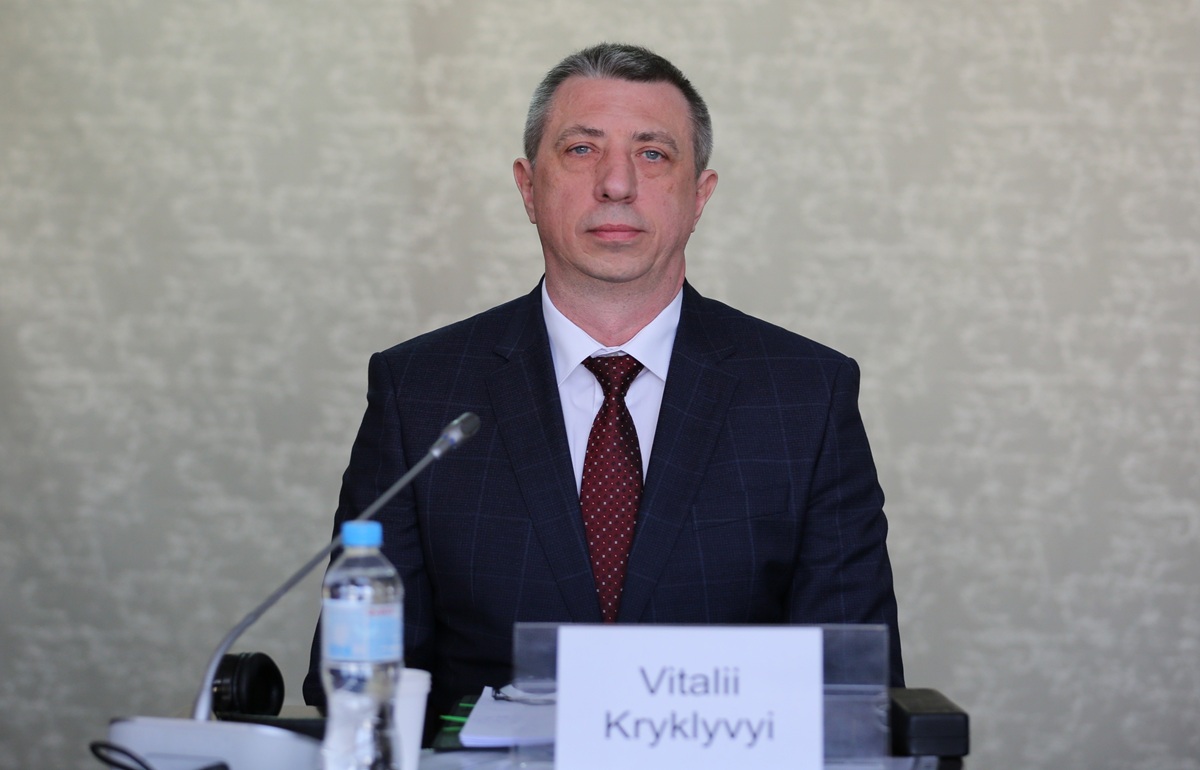
PCIE asked about the circumstances under which the candidate received official housing. In 2019, he and his wife who at the time chaired HACC’s housing commission submitted an application. According to Kryklyvyi, his wife filed a statement declining separate allocation of housing because they were living together as one family. As a result, one apartment was allocated for four people. In 2020, their relationship deteriorated and they lived separately for a time; the candidate filed a statement renouncing the right to use the allocated housing, after which his wife remained in the apartment. Later, their relationship improved and they resumed living together. Kryklyvyi acknowledged the situation may appear questionable but said it was driven by personal circumstances. Asked about his wife’s role in the allocation process, he said she did not participate in the decision-making.
The interview also addressed a case in which the 72-hour deadline for reviewing a complaint against a notice of suspicion was missed. Kryklyvyi attributed this to parties’ nonappearance, adjournment motions, and late receipt of case materials. He acknowledged the deadline was breached but said, in his opinion, it did not result in a violation of the suspect’s rights.
PCIE also asked about loans the candidate and his family received from a relative. Kryklyvyi said the lender is his cousin, who runs a real estate business. He said they are close relatives but have no joint business activity.
A separate focus was the candidate’s long tenure as chair of the Komsomolsk (now Horishni Plavni) City Court in Poltava Region—about 13 years. PCIE asked how this aligned with the two-consecutive-term limitation. Kryklyvyi said that in different periods appointments were made by different actors (the President, the Council of Judges, and judges’ assemblies), and that other judges were not willing to take the position. Responding to concerns about concentration of informal influence, he said risks can be reduced through proper court management.
The interview also covered his rental of an apartment in Horishni Plavni from a person whose case he had considered about seven years earlier. Kryklyvyi said he did not remember that connection due to a heavy caseload, and that the apartment was found through a realtor and rented on a paid basis. As for the earlier case, he said he did not manage to complete it within the statutory period due to time constraints and the need to ensure the person’s participation.
PCIE asked about his trips to the Russian Federation in 2015–2016. Kryklyvyi said there was no prohibition on travel at the time and acknowledged he did not fully assess the risks. He said one trip was tourism, and the other involved accompanying someone close to his mother to handle pension paperwork.
The interview also addressed child support, including a lawsuit filed by Kryklyvyi’s former wife. He said he has not evaded his obligations and makes payments in line with a court decision. He added that there was a period when the child lived with him because the mother was abroad, but overall child support is paid regularly, and he also covers additional expenses for the child’s treatment and other needs.
Oleh Kostiuk
Attorney
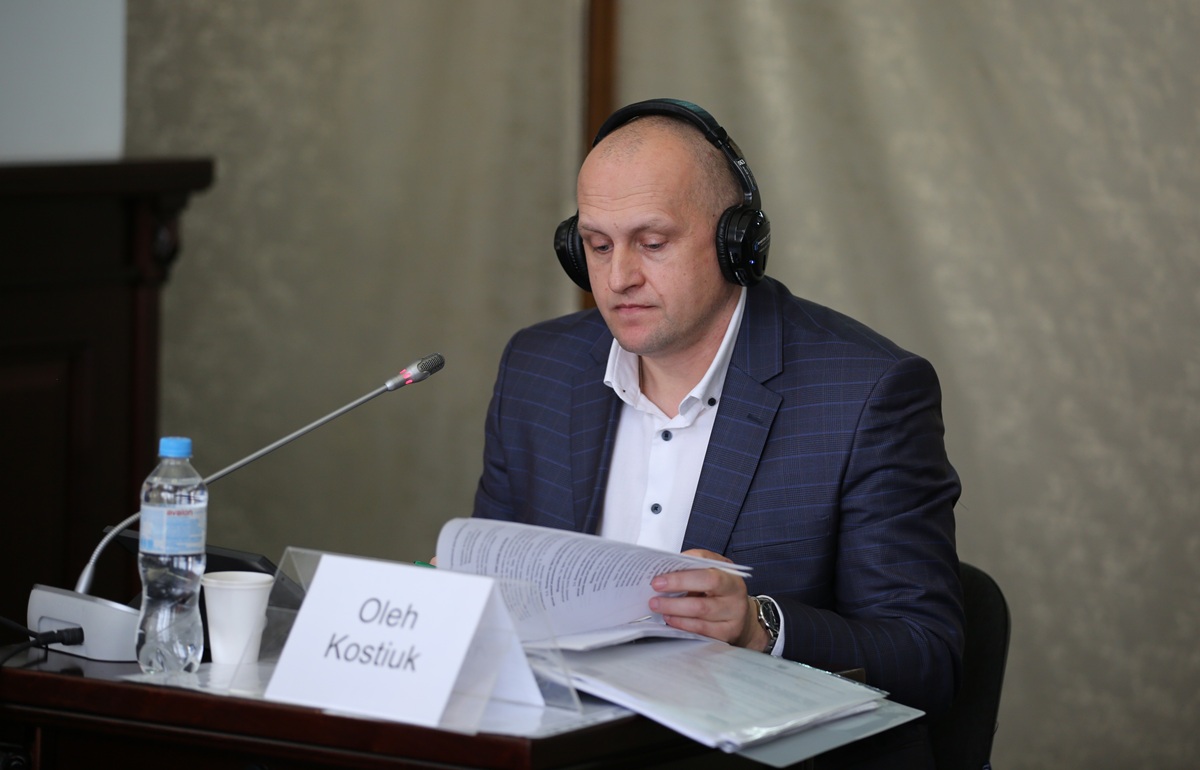
The candidate’s financial history prompted many questions from PCIE due to large amounts of cash assistance from relatives. According to the discussion, Kostiuk’s mother regularly supported him from 2006 to 2021—€4,000 per year—and in 2011–2013 provided €25,000. Kostiuk said the higher sums were intended to help with building a house.
The candidate also said his mother-in-law provided significant support, giving his wife amounts equal to roughly one-third of her income. At the same time, she provided funds to her son and was reportedly able to accumulate savings to buy an apartment in Chernihiv for more than UAH 300,000.
Asked whether he had documents confirming these transactions, Kostiuk said everything was provided in cash, so the transfers cannot be documented. He also described work experience in the United Kingdom, saying he worked 12-hour days to save $14,000 for his first home.
In May 2025, Kostiuk purchased a Lexus, saying the funds came from selling a previous car, savings, and income from legal practice.
Asked about investments in securities, the candidate said the information did not relate to him and that he invests only in real estate.
The interview also mentioned a complaint by an injured party in a criminal case alleging unethical conduct by Kostiuk as an attorney. Kostiuk said he acted ethically and was not held liable.
Denys Kovalenko
Judge, Rubizhne City Court, Luhansk Region
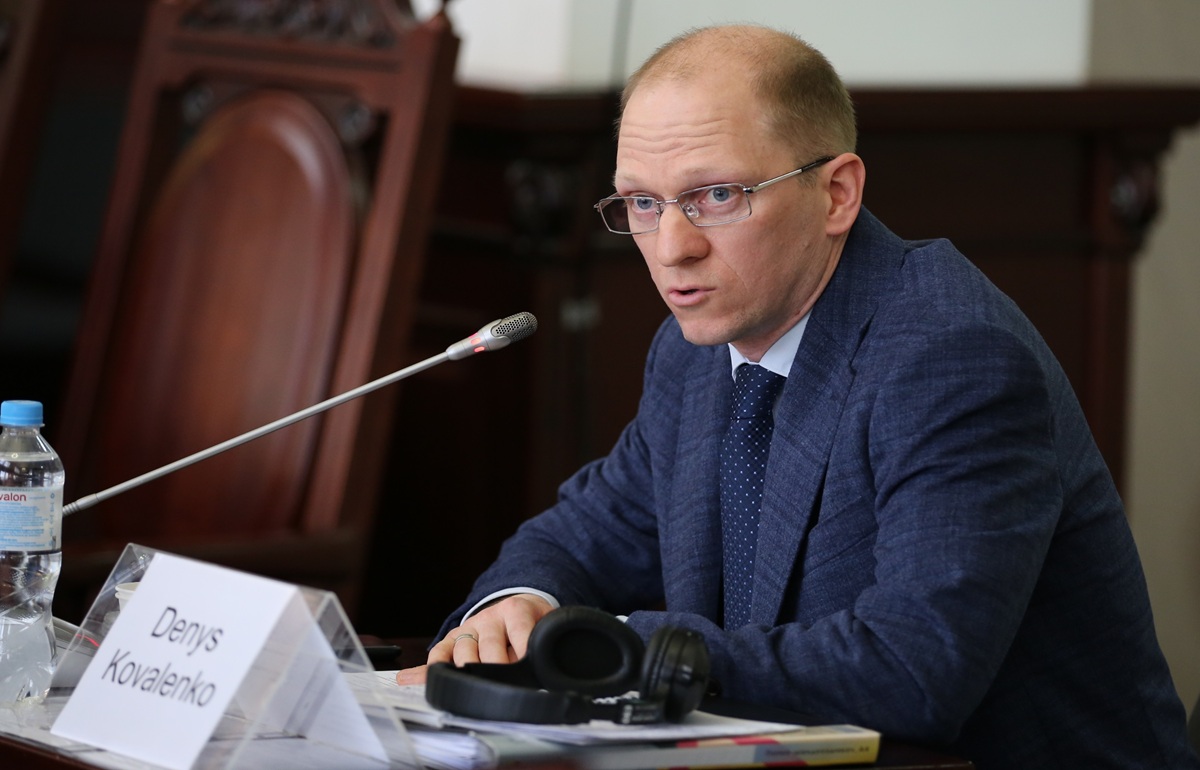
At the start of the interview, Kovalenko said the war was the key factor behind his decision to apply to the HACC, because it highlighted the scale of corruption in the country. He said his goal as a HACC judge would be to help significantly reduce corruption.
PCIE paid particular attention to resilience against external influence. The candidate said that over the years, including in cases involving members of parliament and mayors, he has not faced pressure. He explained this by his principled approach: early in his judicial career, he warned court staff that he would dismiss them if any corruption was detected, and he publicly stated that he does not hold informal meetings with members of the public or attorneys.
PCIE also asked about funding for foreign travel to Finland, Egypt, and Turkey. Kovalenko denied visiting Helsinki and Egypt, suggesting the Border Guard data was mistaken. He categorically denied using a second passport or crossing the border outside official checkpoints. Regarding travel to Italy in 2018–2021, he said the family stayed with his sister, which reduced expenses.
The commission asked how he managed to accumulate UAH 882,000 for a 2023 SUZUKI SX4 if he reported no savings as of 2020. Kovalenko said he lived modestly: in 2021 he did not buy new clothes or shoes, did not go to restaurants, and housing was provided by the local community. He said he worked six days a week and mostly walked, which allowed him to save from judicial remuneration. The interview also addressed a UAH 50,000 discrepancy between the vehicle price and declared spending; Kovalenko said this was an advance payment made earlier.
Discussing his handling of Article 130 DUI cases, PCIE noted he closed only 9 out of 404. Questions arose, however, about instances in which he fined drivers but did not revoke their licenses. Kovalenko justified this by citing direct application of constitutional principles to individualize punishment, such as when the offense was a first violation and driving was the family’s only source of income.
On HACC’s role, Kovalenko said he does not view the court as an anti-corruption “fighter,” because its function is justice and judicial oversight. At the same time, the commission questioned his claims of 10–12-hour workdays and heavy workload, noting that official data shows his court’s caseload is among the lowest compared to average figures in Ukraine.
The commission also pointed to differences in his income at different courts: UAH 1.2 million in Rubizhne versus UAH 1.0 million in Kolomyia. Kovalenko suggested this could be due to additional payments, but could not recall the exact reason. He explained the absence of savings in 2024 by the overall rise in the cost of living.
Finally, broader questions touched on the judiciary and anti-corruption policy. Kovalenko opposed abolishing juries in adoption cases, calling juries a democratic feature that helps judges. To reduce corruption, he suggested lawmakers expand reward systems for whistleblowers and raise overall living standards. He said his own contribution would be through teaching and serving as a judge-spokesperson.


