



November 25, 2026 11:58
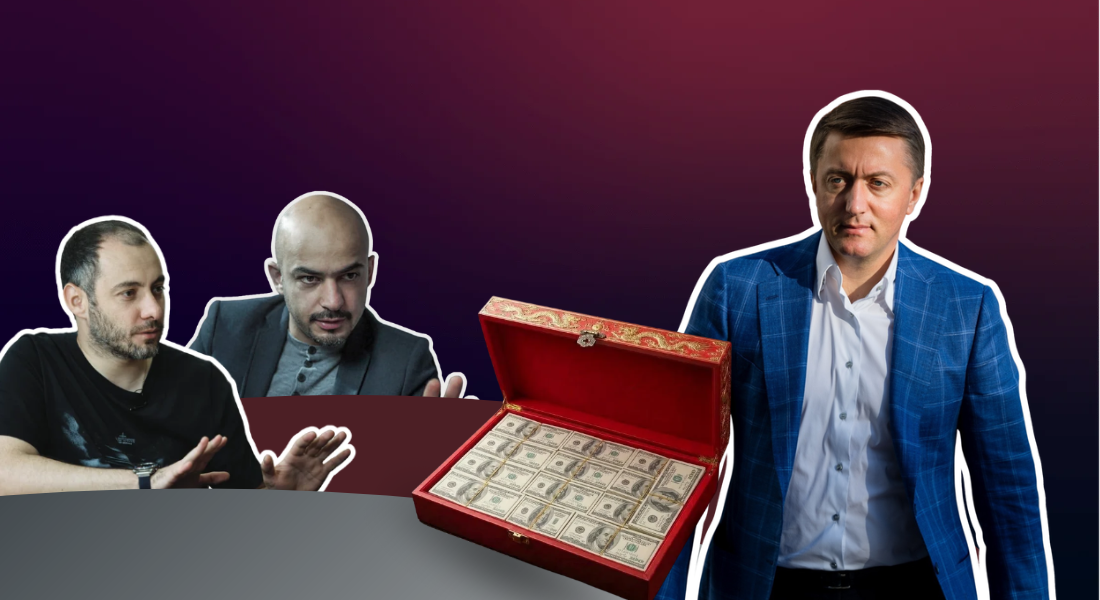
$150,000 in a Chinese Box: How the Case of MP Labaziuk Reached a Verdict
On November 23, 2026, the HACC announced its verdict in the case of MP Serhii Labaziuk. The court found him guilty of attempting to bribe Deputy Prime Minister for Restoration Oleksandr Kubrakov and Head of the State Agency for Restoration Mustafa Nayyem and sentenced him to 7 years’ imprisonment. The court also sentenced Denys Nazimov, director of URD Ukrainian Roads JSC, a company controlled by Labaziuk, to 6 years’ imprisonment.
The court also applied special forfeiture to the $149,000 found in the box.
Serhii Labaziuk is an MP elected in a single-member district. He is a member of the For the Future parliamentary group and of the Committee on Agrarian and Land Policy. He was also among the MPs who voted in July 2025 for draft law No. 12414, which effectively destroyed the independence of the NABU and the SAPO.
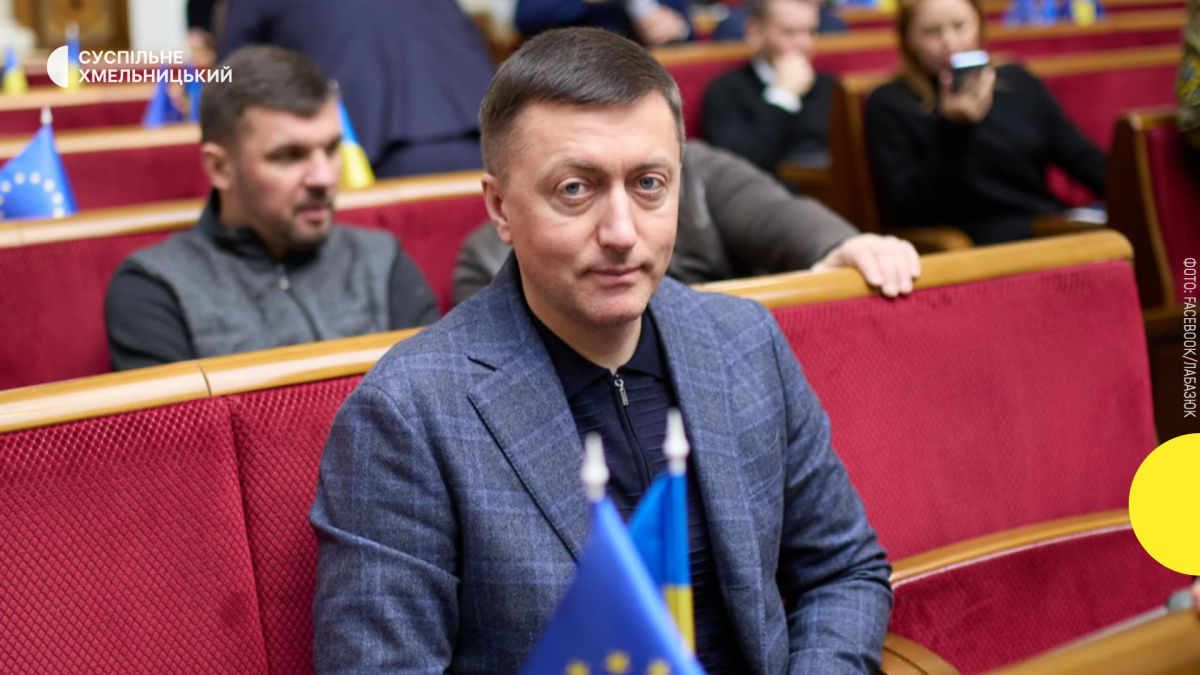
Serhii Labaziuk in the Verkhovna Rada. Photo: Suspilne Khmelnytskyi
URD Ukrainian Roads JSC (URD) is a company that builds highways, bridges and overpasses, as well as industrial and agricultural facilities.
According to the investigation, Labaziuk and Nazimov tried to bribe the leadership of the Ministry for Restoration to obtain state contracts worth UAH 1 billion for restoring infrastructure. The proceedings began in August 2023, when the information was entered into the Unified Register of Pre-Trial Investigations. On November 23, both were served with notices of suspicion.
The full text of the verdict has not been published yet. This article therefore covers the circumstances of the case presented in court, the substance of the charges and the arguments of the parties.
Serhii Labaziuk is an MP elected in a single-member district. He is a member of the For the Future parliamentary group and of the Committee on Agrarian and Land Policy. He was also among the MPs who voted in July 2025 for draft law No. 12414, which effectively destroyed the independence of the NABU and the SAPO.
What were Labaziuk and Nazimov charged with?
The investigation established that in August 2023, MP Serhii Labaziuk, who is also the de facto owner of URD JSC, approached Oleksandr Kubrakov. Kubrakov then held the post of First Deputy Prime Minister for Restoration of Ukraine. Labaziuk asked him to award his company contracts worth UAH 1 billion to restore infrastructure facilities. In return, he promised a “reward” of 3–5% of the value of each contract. The MP brought in the company’s director, Denys Nazimov, for the further arrangements.
The company then received UAH 50 million under a contract to restore a destroyed bridge in one of the regions. Labaziuk had his driver hand the promised percentage, $150,000, to Mustafa Nayyem, then Head of the State Agency for Restoration. The money was in a Chinese box, and the handover took place in the parking lot of a supermarket in Kyiv.
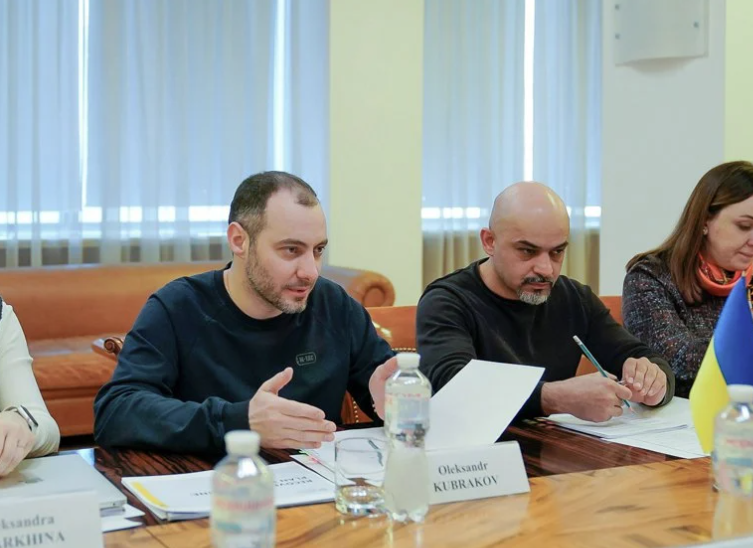
Oleksandr Kubrakov and Mustafa Nayyem. Photo: Ministry of Infrastructure of Ukraine
Labaziuk and Nazimov were charged under Article 369(4) of the Criminal Code, namely for offering bribes to top officials Oleksandr Kubrakov and Mustafa Nayyem. The indictment was submitted to the HACC in May 2024. On June 27, 2026, the HACC ruled to conclude the preparatory proceedings and schedule the case for consideration on the merits.
Labaziuk and Nazimov were charged under Article 369(4) of the Criminal Code, namely for offering bribes to top officials Oleksandr Kubrakov and Mustafa Nayyem.
Position of the defendants
During the closing arguments, Serhii Labaziuk repeatedly stressed that he had never given or taken bribes. He said he decided to hand over the money only after 10 months of entrapment, incitement and pressure from Kubrakov and Nayyem.
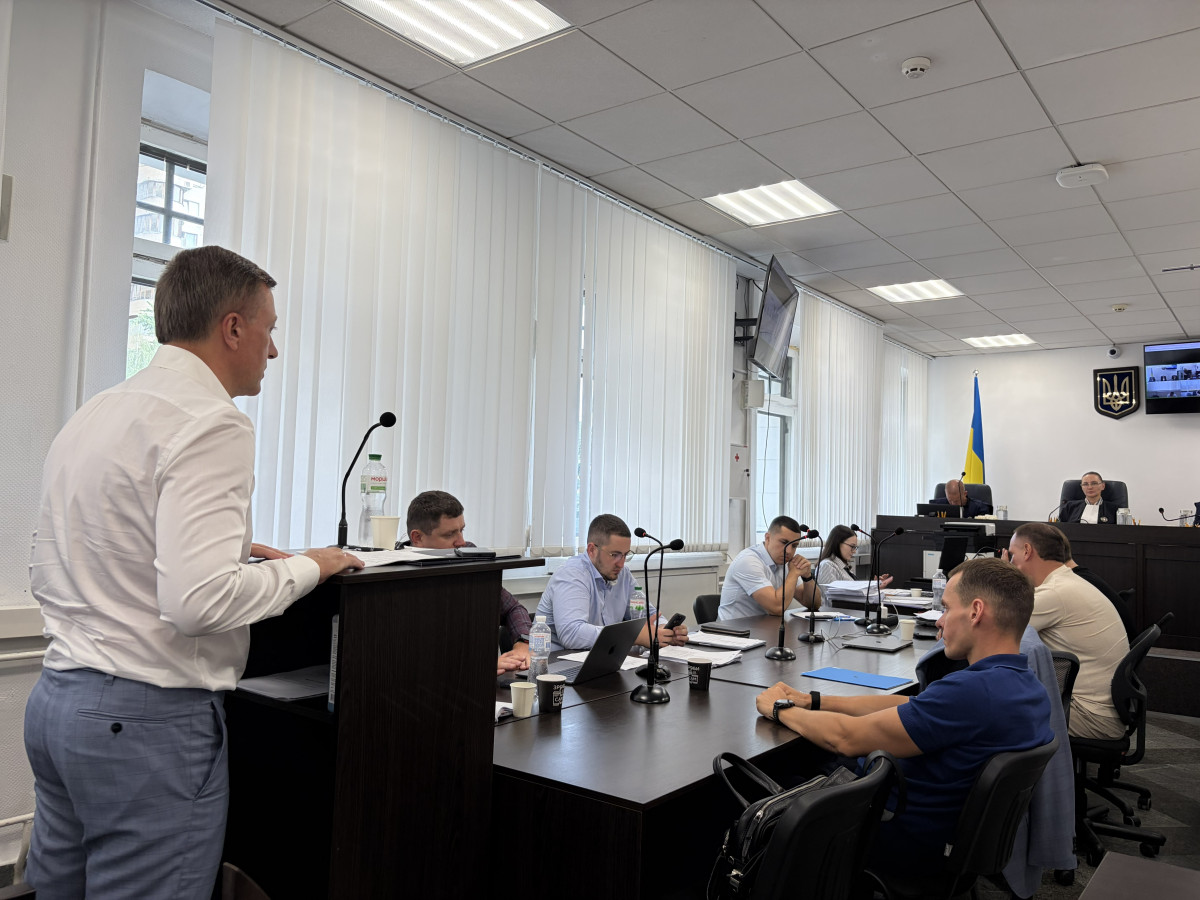
Court hearing in the case of Serhii Labaziuk. Photo credit: Transparency International Ukraine
Labaziuk is convinced that Kubrakov and Nayyem pushed his company URD out of the market. In his account, they canceled transparent tenders at the start of the full-scale war and gave the work to supposedly “friendly” companies. He said he used his status only to get appointments with the officials and to protect the company and its staff. Labaziuk claimed that Kubrakov and Nayyem gave him an ultimatum: either play by their rules or the company would be destroyed. He said he handed over the money at Nayyem’s direct demand as “payment of a debt,” based on the established kickback rate of 3–5%. Labaziuk is convinced that if Nayyem and Kubrakov had not been acting as NABU undercover agents, they would either have refused him outright or helped him lawfully, without any bribes.
In his closing arguments, Denys Nazimov stated that he had not intended to bribe Mustafa Nayyem. He said he came to the meeting only to coordinate the work and show the company’s real construction capabilities. He stressed that he had never even seen Oleksandr Kubrakov, and that Serhii Labaziuk had given him neither money nor instructions to hand any over.
According to Nazimov, he tried to talk about the company, but Nayyem kept steering the conversation toward details and repeating that “Sasha and Serhii have already agreed on everything.” Nazimov said he realized the conversation was about money only when it turned to specific figures. He said he saw no way out, which explained his later actions: either accept the imposed rules or the company would be left without work. Nazimov added that Labaziuk insisted on cutting the bribe as much as possible because the company was short of funds.
The defense’s main argument in the closing arguments was the alleged entrapment. The lawyers argued that Nayyem and Kubrakov used their positions, their influence and their friendly relations with Labaziuk to demand money from the MP and Nazimov.
The defense insisted that there was no proper evidence that the idea of giving a bribe came from Labaziuk or Nazimov. According to the lawyers, Labaziuk only expressed friendly gratitude to Kubrakov and asked him a legal question about restoring open tenders. The defense also emphasized the supposedly long-standing friendship between the two, saying the MP believed they would talk only as friends. According to the lawyers, Nazimov played a purely technical role: he kept in contact about free-of-charge works that had already been agreed. He therefore could not have offered a bribe at his first meeting with Nayyem, whom he did not even know at the time.
The defense also argued separately that the elements of a crime under Article 369 of the Criminal Code were absent. The lawyers claimed that Nayyem and Kubrakov had no special official powers to allocate tender funds, so the legal qualification was wrong. They added that even if money was handed over and negotiations took place, this happened only under pressure and at the officials’ demand. In that case, in the lawyers’ opinion, Labaziuk’s actions looked more like trading in influence.
Finally, the defense asked the court to fully acquit Labaziuk and Nazimov because their guilt had not been proven.
The defense’s main argument in the closing arguments was the alleged entrapment. The lawyers argued that Nayyem and Kubrakov used their positions, their influence and their friendly relations with Labaziuk to demand money from the MP and Nazimov.
Position of the prosecution in the closing arguments
The prosecution rejected the lawyers’ arguments about pressure on Serhii Labaziuk and about entrapment. The prosecutor insisted that the MP had initiated every contact. This includes his meetings with Oleksandr Kubrakov on August 8 and 31 at the Sutra restaurant and in Ivan Bahrianyi Park. According to her, it was Labaziuk who asked to be “given a contact for negotiations,” explaining that his business had been pushed out of the market and lost its contracts.
According to the prosecution, Labaziuk was behind the plan for the “one”: large-scale infrastructure contracts worth UAH 1 billion. On August 9, he sent URD director Denys Nazimov to Nayyem. Nazimov immediately began pressing the agency head toward unlawful “cooperation” and wrote a specific kickback percentage on a scrap of paper: 3% to 5% of the funding amount.
According to the investigation, the handover of the money in the Chinese box was organized with particular secrecy. The money was brought by the MP’s personal driver, Bohdan Shudra. To reduce the risks, he got into Nayyem’s car instead of passing the package over from his own vehicle. When Nayyem later thanked Labaziuk for the box, Labaziuk replied with a veiled remark: “China makes good tea.” For the prosecution, this confirms that the MP acted with direct intent to give a bribe.
On October 26, 2026, the Solomianskyi District Court of Kyiv found Bohdan Shudra guilty of refusing to testify in this case. When he was examined at the HACC, Shudra took the oath and was warned of criminal liability but then refused to answer the prosecutor’s questions. The court fined him UAH 3,400 for this. The prosecutor is still deciding whether to appeal the verdict.
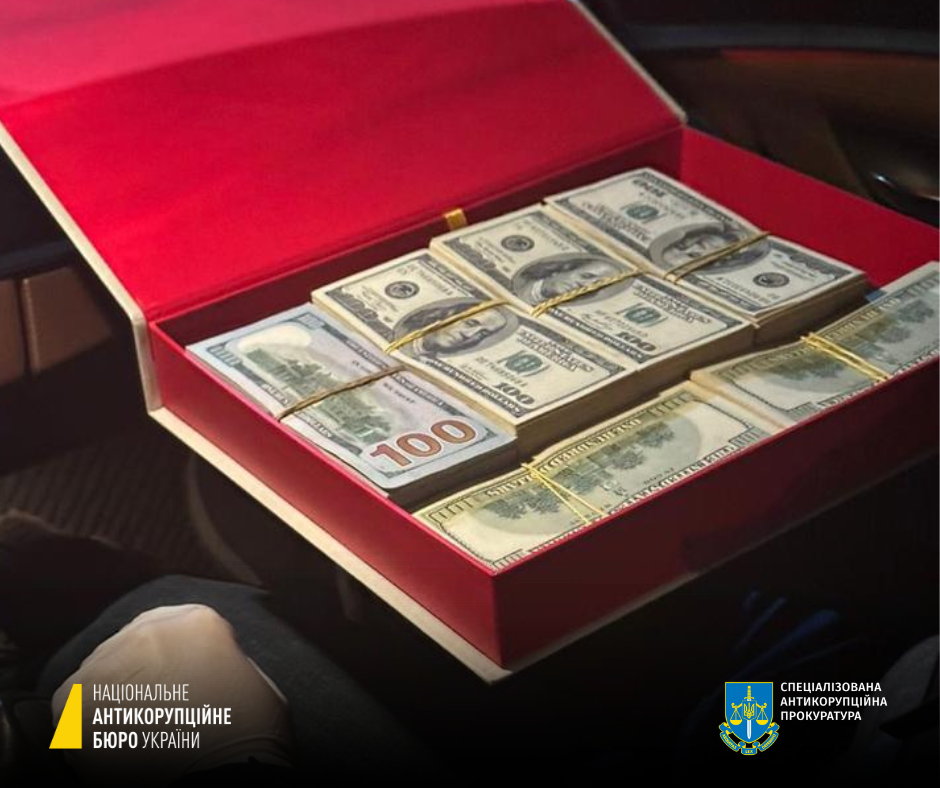
The box with the money. Photo by the NABU
The prosecutor also rejected the defense’s attempts to requalify the defendants’ actions as trading in influence. She said that the records of covert investigative actions, the testimony of Nayyem and Kubrakov, and other evidence confirm that the legal qualification is correct.
What comes next?
The HACC found Serhii Labaziuk and URD director Denys Nazimov guilty of attempting to bribe then Deputy Prime Minister for Restoration Oleksandr Kubrakov and then Head of the State Agency for Restoration Mustafa Nayyem. The court fined URD JSC UAH 10 million. Both convicted men keep their current preventive measures of bail with obligations imposed: UAH 40 million for Labaziuk and UAH 12 million for Nazimov. The court also applied special forfeiture to the bribe that was in the Chinese box: 1,499 banknotes of $100 each.
The court’s sentences were more lenient than the ones the prosecutor requested. She had sought 8 years and 6 months’ imprisonment for Labaziuk and 8 years for Nazimov. She had also asked for confiscation of property and a ban on holding positions in public authorities. For the company, the prosecutor requested a fine of 70,000 non-taxable minimum incomes and confiscation of its share in the charter capital.
The verdict will enter into force once the 30-day period for appeal expires. If the defense or the prosecution files an appeal, the verdict will enter into force only after the HACC Appeals Chamber decides. Labaziuk’s powers as an MP will end at that point too.
The verdict will enter into force once the 30-day period for appeal expires. If the defense or the prosecution files an appeal, the verdict will enter into force only after the HACC Appeals Chamber decides. Labaziuk’s powers as an MP will end at that point too.
Source: glavcom.ua


