


August 11, 2026 10:23
Key NABU and SAPO Problems Remain Unresolved: Takeaways from the Briefing
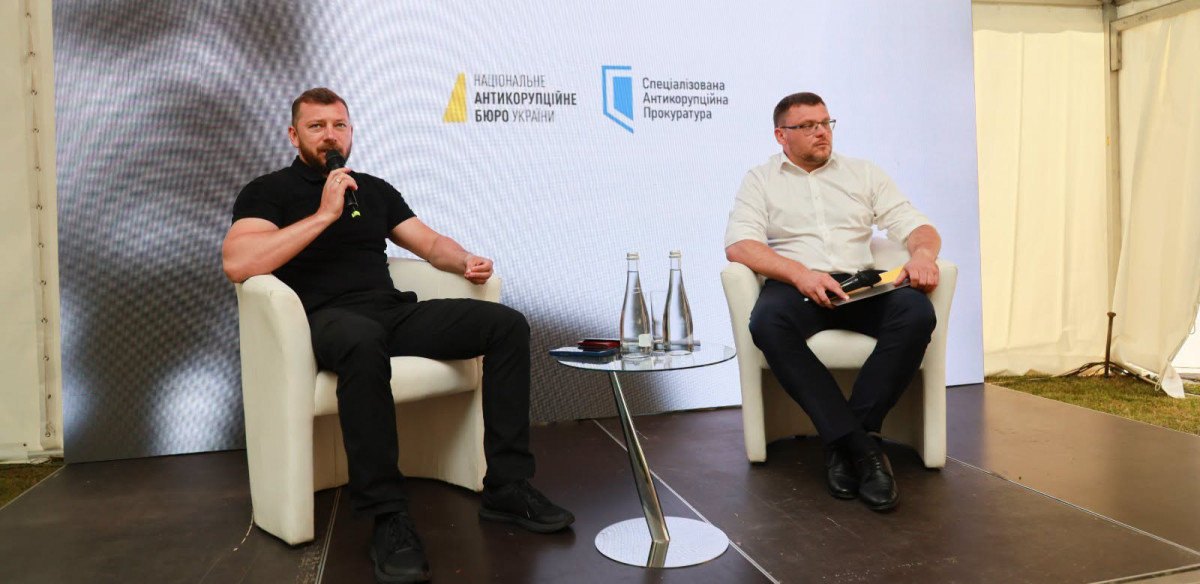
The information presented at a joint briefing on August 10 by NABU Director Kryvonos and SAPO Head Klymenko effectively confirmed that a number of key systemic problems remain unresolved.
This echoes the warnings that Transparency International Ukraine has been documenting in its Shadow Reports for several years now, even though the necessary recommendations and steps to address these problems were made public, discussed, and even written into certain legislative initiatives long ago.
SAPO’s powers over MPs
At the briefing, Klymenko described in detail the mechanism through which SAPO is effectively stripped of its independence. To open an investigation into a Member of Parliament, the prosecution must apply to the Prosecutor General — and in a number of cases, according to Klymenko, it is refused even when grounds for an investigation exist.
This is precisely the problem TI Ukraine has been pointing to for several years, and one whose resolution was never reflected in the latest legislative initiatives to improve SAPO’s work. We are convinced that the head of the Specialized Anti-Corruption Prosecutor’s Office should be empowered to independently initiate criminal proceedings and authorize investigative actions concerning Members of Parliament.
Tellingly, this recommendation never made it into the Rule of Law Roadmap adopted by the Cabinet of Ministers under Cluster 1, Fundamentals. In other words, the gap remains outside the formal negotiating track with the EU. However, the commitment to grant the SAPO head such powers is mentioned in Ukraine’s arrangements with the World Bank, and a corresponding provision became a recommendation in the latest Enlargement Report for 2025.
A dedicated forensic institution — a problem at a standstill
Among the unresolved issues, Klymenko named the absence of a separate forensic institution to serve the needs of the anti-corruption bodies. This affects both the speed of collecting evidence in high-level corruption cases and the quality of that evidence base when the prosecution presents it in court.
TI Ukraine has recommended creating such an institution while ensuring the independence of its experts and management — both from the NABU and from outside actors. This recommendation was already voiced in the Shadow Report to the European Commission’s 2023 report, and today’s statement confirms that nothing has changed in two years.
Extradition and joint investigation teams
Klymenko separately emphasized the need to obtain powers over extradition and to form international joint investigation teams to investigate transnational corruption.
Here, this is no longer merely a recommendation from civil society but an overdue international commitment: under the updated Memorandum of Economic and Financial Policies with the IMF (June 2025), Ukraine was to amend the Criminal Procedure Code and enable the Prosecutor General to delegate to SAPO the handling of extradition requests and mutual legal assistance. The deadline for this measure expired back in late July 2025.
The “Lozovyi amendments”
The SAPO head also pointed once again to the still-unrealized repeal of the so-called “Lozovyi amendments,” which make it possible to close proceedings on formal grounds once procedural deadlines expire.
TI Ukraine has analyzed attempts at a partial repeal of these provisions — in particular, government draft law No. 12367 (since withdrawn) and its alternative, No. 12367-2. The latter has still not been passed in a form that would truly close this loophole for evading accountability.
Pressure from the SSU
NABU Director Kryvonos described in detail the forms of pressure exerted by the SSU on NABU staff: monitoring of registers, surveillance through the Safe City system, and tracking of detectives’ movements.
This continues a story TI Ukraine has already documented — from the detention of detectives and searches at the homes of a detective’s relatives to the installation of surveillance devices in the residence of a unit head. This is another facet of the SSU’s influence over NABU, which TI Ukraine captures in its recommendation on conducting wiretapping autonomously, without the involvement of the SSU. And Kryvonos’s words at the latest briefing only confirm that this dependence continues to be used not for cooperation but for pressure.
This publication has been produced with financial support from Norway. The contents of this publication are the sole responsibility of Transparency International Ukraine and can in no way be taken to reflect the views of the Government of Norway.
This echoes the warnings that Transparency International Ukraine has been documenting in its Shadow Reports for several years now, even though the necessary recommendations and steps to address these problems were made public, discussed, and even written into certain legislative initiatives long ago.


