



October 15, 2026 10:01
DOZORRO Helped Save UAH 767 Million in Public Funds in the First Three Quarters of 2026
In the first nine months of 2026, TI Ukraine’s DOZORRO program helped prevent the potentially inefficient use of UAH 767 million in public funds. Of this, UAH 383.4 million came in the third quarter (July–September).
These results come from work that often takes months, and sometimes years. Analysts review procurements, identify possible violations, contact contracting authorities, law enforcement agencies, and oversight bodies, and track how they respond. Current results therefore often concern procurements examined much earlier. You can read more about how we calculate this indicator in a separate article.
In September alone, UAH 110.2 million was counted toward DOZORRO’s results. The largest share, UAH 66 million, came from terminated contracts. Contracting authorities reduced contract values by another UAH 21.3 million. The rest came from canceled procurements, newly opened criminal proceedings, and DOZORRO materials added to existing cases.
Here are the three most illustrative recent cases.
Borodianka: construction material prices revised, contract reduced by UAH 6.3 million
In March 2025, the Department of Urban Planning and Architecture of the Kyiv Regional State Administration commissioned the construction of an innovative sports and creativity center in Borodianka. The UAH 181.3 million contract went to Cherkasymiskbud LLC. Work is due to finish by the end of 2026.
Back in January 2025, DOZORRO analysts reviewed the cost estimate and calculated a likely overpayment of UAH 9.2 million, or 5% of the contract value. The largest potential loss, UAH 3.6 million, was on rebar. Cherkasymiskbud priced it at UAH 51,120 per ton, though on the market it cost over one and a half times less. At the time, for example, Metinvest offered rebar at UAH 33,500 per ton and Stalmira at UAH 31,849 per ton. Analysts also found possible markups on concrete, adhesive, self-leveling compound, and thermal insulation boards.
Before the contract was signed, we wrote to the Department asking it to review the prices. This was possible because the contract price was dynamic, so material costs could be adjusted during the works. In reply, the contracting authority promised to take DOZORRO’s recommendations into account, notably by checking the prices the contractor would submit and the supporting documents. If material costs proved unjustified, it planned to demand a reduction and, if the contract terms were breached, did not rule out penalties or even termination.
The result came more than a year and a half after DOZORRO’s request. In September 2026, the parties amended the contract and lowered the prices of most of the materials DOZORRO had flagged, by UAH 6.3 million in total.
Izium hospital reconstruction: contract with possible overpayments terminated
Another story comes from Izium in Kharkiv Region. In autumn 2025, the Capital Construction Department of the Kharkiv Regional State Administration commissioned the reconstruction of the Pishchanska Mother of God Hospital in Izium. The contract, worth over UAH 1 billion, went to the Building Group construction consortium. The contract price was dynamic, and the work was to be completed by the end of 2027.
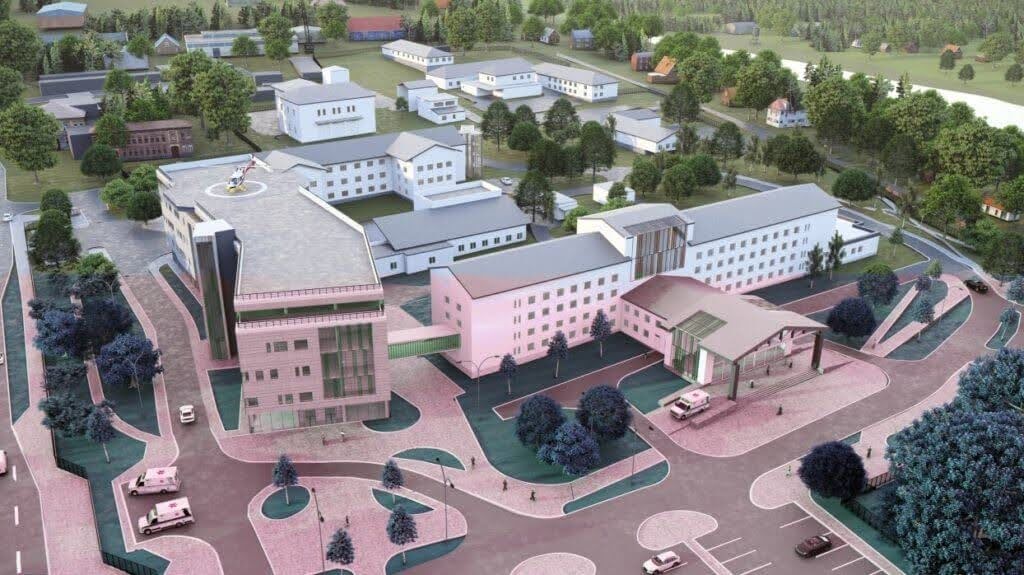
The hospital was badly damaged during the Russian occupation in 2022. Direct hits completely destroyed its surgical unit and CT scanner room. Despite its proximity to the front line and constant shelling, the city keeps rebuilding. According to a DOZORRO study, in 2024 and the first half of 2025, Izium’s municipal departments and enterprises signed contracts worth UAH 509 million, mostly for repairs and infrastructure restoration.
In October 2025, DOZORRO experts reviewed the reconstruction cost estimate and found a likely overpayment of UAH 58 million, about 5.6% of the contract value. Prices were inflated for rebar, self-leveling compound, reinforced concrete slabs, and crushed stone.
The DOZORRO team asked the Kharkiv Regional State Administration department to bring prices in line with the market, but it disagreed with the calculations. The contracting authority explained that the prices were based on market offers and that the cost estimate had passed an expert review. However, DOZORRO found that such a review does not check construction material prices, only the overall justification of costs. The Capital Construction Department also noted that any comparison should account for the difficulty of delivering materials to frontline Izium: security risks, shortages of construction materials, and extra transport costs.
In July 2026, the contract was terminated due to lack of funding. DOZORRO therefore counted UAH 58 million toward its results: the likely overpayment avoided by terminating the contract.
The story does not end there, though. According to MediaPort, the reconstruction project is to be revised and a new tender announced. When revising the cost estimate, the contracting authority should recheck the prices of the materials that DOZORRO analysts flagged as likely inflated. Otherwise, the risk of overpayment may carry over into the new contract. We will keep monitoring this facility.
Dnipro: law enforcement investigating a possible overpayment on building repairs
Another case concerns major repairs to an apartment building at 78 Naberezhna Peremohy Street in Dnipro. The Department of Housing of the Dnipro City Council signed the UAH 101.5 million contract with Starbudcontract LLC in June this year. By the end of December, the contractor is to insulate the facade and repair the roof and other structural elements.
Analyzing the cost estimate, DOZORRO analysts found that the contracting authority could overpay UAH 6.7 million on construction materials, most of all on 150 mm mineral wool boards (UAH 2.4 million). However, the contract price is dynamic, so material costs can be revised during the works.
That same month, the experts asked the contracting authority to review material prices. The department disagreed with the calculations, arguing that the prices the analysts used for comparison did not reflect actual supply conditions in Dnipro. In particular, it stressed that construction material costs in Dnipropetrovsk Region may differ significantly from those in Kyiv or other regions.
Still, the contracting authority did not rule out reducing the contract value. In its reply, it said that once the work was completed and the acceptance certificates were signed, it could conclude a supplementary agreement with the contractor to lower the price if there were justified grounds.
Since the Department of Housing had already made partial payments under the contract, DOZORRO reanalyzed material prices in September. Several months had passed since the previous analysis, and market prices for some items had risen. The updated calculations put the likely overpayment at UAH 4.7 million. The experts then turned to law enforcement. The police and prosecutor’s office reported that they had added the information to an existing criminal proceeding.
This is not the end of the story, but DOZORRO’s calculations have already become part of the pretrial investigation. In this case, UAH 4.7 million, the amount of the possible overpayment identified, was counted toward September’s figure for preventing the potentially inefficient use of funds.
What we saw in procurement in September
In September 2026, DOZORRO experts analyzed 119 procurements with a total estimated value of UAH 17.5 billion.
Potential violations were found in 66 procurements, over half of those analyzed. Most often, analysts found likely inflated prices: in 54 procurements, with potential overpayments totaling UAH 311.5 million. Other problems were identified in a further 12 procurements. In particular, these concerned the publication of information and documents, as well as the review of tender proposals.
Over the month, DOZORRO experts sent 61 requests to contracting authorities, oversight bodies, and law enforcement agencies. Whether these lead to price revisions, procurement cancellations, or other changes will become clear in the coming months.
Other notable cases from our monitoring results for the third quarter of 2026 are available in our July and August reports.
This material is funded by the European Union. Its content is the sole responsibility of Transparency International Ukraine and does not necessarily reflect the views of the European Union.


