



June 22, 2026 18:02
The Gavel Falls on the Chief Justice: How the Kniaziev Case Ended
Unprecedented Case: Head of the Country’s Highest Judicial Body Receives Custodial Sentence for Corruption
Five years in prison, confiscation of property, and over a million dollars for the Armed Forces of Ukraine — such is the outcome of the case of former Supreme Court Chairman Vsevolod Kniaziev. At first he denied his guilt, called himself a victim of entrapment, and spoke of pressure being put on him, but in the end he entered into a plea agreement with the prosecution.
In this article, we explain the circumstances of the case, what happened to Kniaziev’s seized assets, and the legal details of the agreement that are of concern to the public.
The Kniaziev case: from detention to verdict
Vsevolod Kniaziev took the helm of the Supreme Court in October 2021, after 12 years of a judicial career.
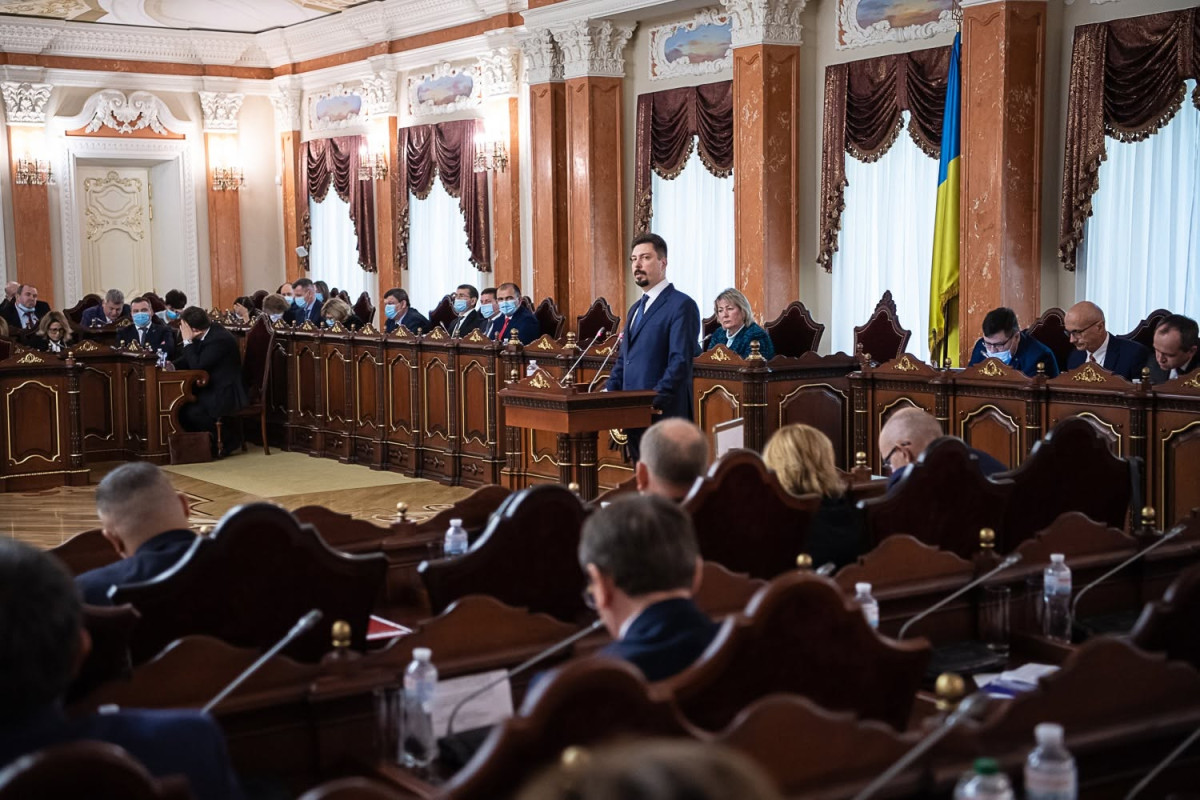
Vsevolod Kniaziev was elected head of the Supreme Court of Ukraine Source: Supreme Court Facebook page
Then, on May 15, 2023, he was caught taking a $2.7 million bribe.
The case concerned shares in the Poltava Mining and Processing Plant: in September 2022, the appellate court ruled to reclaim them from Ferrexpo AG, which would have meant oligarch Kostiantyn Zhevaho losing control of the plant. To overturn the ruling, Zhevaho decided to bribe the judges of the Grand Chamber of the Supreme Court. Lawyer Oleh Horetskyi — who later also entered into a plea agreement, his verdict classified — offered to help, citing his personal relationship with Kniaziev. Notary Kyrylo Horburov was brought in as an intermediary.
Although the total bribe in the case was $2.7 million, Kniaziev knew of only $2 million, of which $1.8 million was to go to the judges and the rest to the intermediaries. Horetskyi and Horburov intended to secretly pocket the remaining $700,000. In the end, Kniaziev agreed to the bribe and secured a postponement of the hearing so that Zhevaho would have time to gather the money.
On April 19, 2023, the Grand Chamber overturned the appellate ruling, returning the shares to Ferrexpo AG and, with them, control to Zhevaho. To conceal his own interest, Kniaziev joined another judge’s dissenting opinion. Afterward, $1.34 million was delivered to his apartment, divided into bags intended for the other judges. When the NABU documented the receipt of the second part of the bribe — $450,000 — Kniaziev was caught red-handed.
Bail was initially set at UAH 107 million, but the court gradually reduced it to UAH 18 million. In January 2024, Kniaziev left the pre-trial detention center wearing an electronic monitoring device and subject to a ban on leaving Ukraine. By July, however, he was stopped by border guards in the village of Solotvyno near the Romanian border, which sparked rumors of an escape attempt that were ultimately not confirmed.
Covert investigative actions, closed hearings, the plea agreement, and other details of the trial
The case was sent to trial in March 2024. In the course of the proceedings, the court examined, among other things, audio recordings and correspondence between the participants in the scheme. Recorded conversations between Horburov and Horetskyi featured phrases such as “A high-scoring question,” “Definitely no more than 15,” and “How do we set up the conversation with Sieva?” Prosecutors believe, these referred to the bribe and to gaining access to Kniaziev. Correspondence between Kniaziev and Horburov contained instructions to prepare 13 bundles of cash — a number that, according to investigators, matched the number of Grand Chamber judges’ votes required for the ruling.
The defense insisted there had been entrapment, arguing that Horburov was a NABU agent who had induced Horetskyi to commit the crime. It also challenged the audio surveillance conducted in the notary’s office, claiming it violated the right to inviolability of the home and notarial confidentiality.
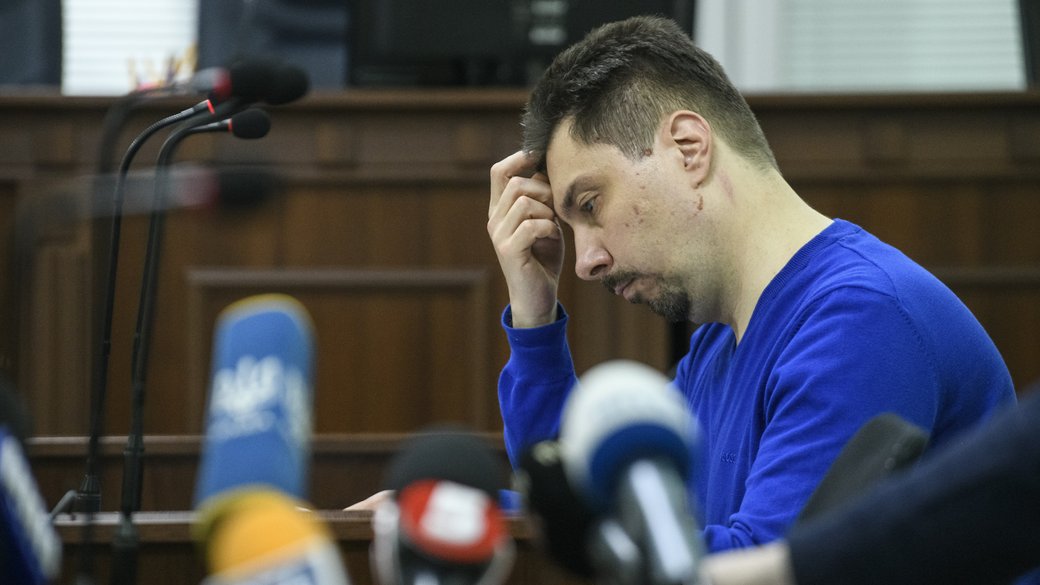
Kniaziev during the HACC trial. Source: Vladyslav Musiienko / Suspilne
When Kniaziev unexpectedly entered into the plea agreement in May–June 2026, the court asked him whether his admission of guilt had been the result of pressure from the prosecution. Kniaziev replied that his objections to the detectives’ conduct still stood but had not influenced his decision to enter into the agreement.
On June 8, 2026, the HACC approved the agreement and found the former Supreme Court chairman guilty under Article 368(4) of the Criminal Code of Ukraine. It provides for five years’ imprisonment, a three-year ban on holding positions in judicial and law enforcement bodies, and confiscation of the convicted man’s property. Immediately after the verdict was announced, he was taken into custody right there in the courtroom.
The sanction under Article 368(4) of the Criminal Code provides for 8 to 12 years in prison — Kniaziev received only five. The reason is that he not only admitted his participation in the corruption scheme but also gave important testimony that helped expose the other participants in the crime, including fellow judges. The court applied Article 69-2 of the Criminal Code, introduced specifically for corruption cases, which allows a sentence below the minimum limit where the accused has entered into an agreement and assisted the investigation. So instead of the minimum of eight years, the parties agreed on five.
What was Kniaziev’s role in the case, and why does this agreement matter so much?
For a time, Kniaziev was charged with creating an organized group, but in the indictment and the verdict his actions were classified as those of a principal — an official who had accepted an unlawful benefit for himself and others. According to investigators, the scheme was built by the intermediaries, Horetskyi and Horburov, while Kniaziev secured the outcome in court.
A key condition of the agreement was incriminating testimony against the other participants in the scheme. On its basis, notices of suspicion were served on four Grand Chamber judges: Zhanna Yelenina, Iryna Hryhorieva, Ihor Zhelieznyi, and retired judge Oleksandr Prokopenko. Kniaziev confirmed that he had coordinated the payment of the “reward” between the intermediaries and the judges. In particular, after the ruling was adopted, he personally handed Prokopenko a black folder containing $50,000 — even though Prokopenko had prepared a dissenting opinion, ostensibly disagreeing with the decision. Kniaziev explained the money simply: “people are grateful to all the judges” who had delivered the result.
As the verdict notes, a corruption crime committed by the chairman of the country’s highest judicial body undermined trust in the justice system and damaged Ukraine’s international standing. An important argument in favor of the agreement was the public interest in swift justice. Over the course of more than 50 hearings, the HACC had not even examined all of the prosecution’s evidence; the agreement made it possible to avoid a years-long trial. Kniaziev’s testimony opened an investigation into the other Grand Chamber judges — without his cooperation, proving their involvement would have been extremely difficult.
For international partners, the EU in particular, the verdict is a signal that the inevitability of punishment has worked even at the highest level of the judicial system. Five years of actual imprisonment with confiscation of property will, in the court’s view, also serve as a warning to others.
For international partners, the EU in particular, the verdict is a signal that the inevitability of punishment has worked even at the highest level of the judicial system.
Oksana Kopiichuk
What happened to the money in the Kniaziev case
The total amount of the bribe was $2.7 million, of which $1.8 million was handed to Kniaziev, with the rest going to the intermediaries. During searches, detectives seized $1.248 million from the office and apartment of the former Supreme Court chairman. According to the prosecutor, a further $112,000 was found in the possession of other judges. The official status of roughly another $439,000 is not detailed in the text of the verdict, so the whereabouts of these funds remain unknown to the public.
In addition to the special confiscation of the bribe, the state received Kniaziev’s apartment and house in Mykolaiv, about UAH 66,000 and $34,000 held in bank accounts, and EUR 1,700 in cash. The court also confiscated half of the assets Kniaziev had acquired during the marriage — $167,000 from two banks. Part of the physical evidence — a phone and notebooks — was returned to the convicted man, while the rest was transferred for use in other criminal proceedings.
Where did Kniaziev’s $1 million for the Come Back Alive Foundation come from?
After the trial concluded, the decision concerning the more than $1 million seized from Kniaziev’s office raised many questions. The court ordered the funds transferred to the needs of the Armed Forces of Ukraine through the Come Back Alive Charity Foundation.
The sum consisted of two parts and had a different procedural status: the money was not “marked” and did not figure as a bribe. A third party asserted a proprietary interest in this million and gave notarized consent to transfer it in support of the army. The court found this statement to be voluntary, and Kniaziev himself confirmed that he laid no claim to these assets.
Kniaziev acknowledged a further $104,600 as his own property and also agreed to transfer it to the Come Back Alive Foundation.
Kniaziev’s return to the bench: is it even possible, and if so, when?
Kniaziev had lost his judgeship even before the verdict, and not because of the criminal case. In 2023, he was found guilty of a corruption-related administrative offense: during a search, investigators found a lease for a four-room Kyiv apartment at a symbolic UAH 1,000. The UAH 906,000 by which the rent fell short of the market value was deemed by the court an unlawful gift and confiscated, and Kniaziev was additionally fined UAH 2,550. The NACP then applied to the High Council of Justice, which opened disciplinary proceedings and removed Kniaziev from office. The Grand Chamber of the Supreme Court subsequently upheld that decision.
Now comes the verdict in the criminal case. The three-year ban on holding positions in judicial and law enforcement bodies takes effect only after the principal sentence has been served. Taking into account time spent in custody, the actual term of imprisonment will be about 4.3 years. This means a return to the judicial system is impossible for at least seven years.
But even after that, the path back into the justice system is effectively closed. A criminal record for a particularly grave crime is expunged only eight years after the sentence has been served. And a conviction for a corruption crime, together with dismissal from judicial office, will remain weighty considerations in any judicial selection competition — the HQCJ and the Public Council of Integrity are unlikely to overlook this episode in his biography.
***
This case has become one of the most high-profile in the HACC’s practice — the first time in Ukraine that a sitting chairman of the Supreme Court was caught taking a bribe. And the verdict, with its actual imprisonment and confiscation, has become the subject of active debate. Although it may still be appealed within 30 days, the grounds for doing so are limited.
Like any convicted person, Kniaziev has the right to petition the President of Ukraine for a pardon, but here too there are very few grounds. And if he fails to comply with the agreement, the prosecutor may move to have the verdict overturned.
This case has become one of the most high-profile in the HACC's practice — the first time in Ukraine that a sitting chairman of the Supreme Court was caught taking a bribe. And the verdict, with its actual imprisonment and confiscation, has become the subject of active debate. Although it may still be appealed within 30 days, the grounds for doing so are limited. Like any convicted person, Kniaziev has the right to petition the President of Ukraine for a pardon, but here too there are very few grounds. And if he fails to comply with the agreement, the prosecutor may move to have the verdict overturned.
Oksana Kopiichuk
Source: zn.ua


