



August 12, 2026 11:37
Between European Integration, the US, and Corruption Suspicions: The Two Cases of Olha Stefanishyna
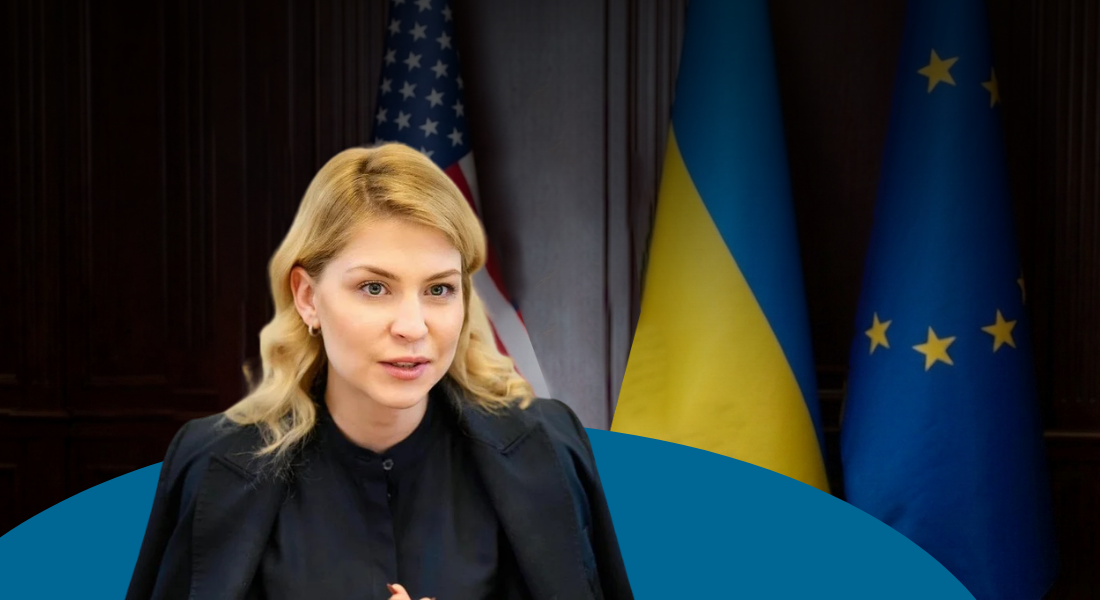
Olha Stefanishyna — former Deputy Prime Minister of Ukraine for European Integration and, later, Ambassador to the US — has been served with a notice of suspicion by NABU: illicit enrichment and false declaration. The suspicion became public only on August 5, almost immediately after her dismissal from the diplomatic post.
According to the investigation, she spent considerably more than she officially earned; she also failed to declare apartments, a car, and the rental of housing in central Kyiv, and she intended to purchase a high-value house for her parents — none of which she could afford on her official income.
But this is not the first proceeding in which Stefanishyna features: in 2019 she was served with a notice of suspicion in the case concerning abuses at the Ministry of Justice during the tenure of Olena Lukash, which is now before the HACC. What is the substance of the two cases? Why has the first dragged on for over a decade? And is there anything that connects them? Let’s take a closer look.
Olha Stefanishyna — former Deputy Prime Minister of Ukraine for European Integration and, later, Ambassador to the US — has been served with a notice of suspicion by NABU: illicit enrichment and false declaration. The suspicion became public only on August 5, almost immediately after her dismissal from the diplomatic post.
The new suspicion: illicit enrichment of UAH 13.9 million
Stefanishyna’s appointment as Deputy Prime Minister for European Integration in 2020 caused a stir: responsibility for the course toward European standards was handed to someone already suspected in the Lukash corruption case — as she herself confirmed in an interview with European Pravda, adding that she was cooperating with the investigation in every way. Then, on August 5, 2026, it emerged that she had been served with a new notice of suspicion.
What is the substance of this suspicion?
At the hearing on the preventive measure, the prosecutor explained that it concerns two apartments in the Faina Town residential complex — the purchase and renovation of which were allegedly handled, on Stefanishyna’s instructions, by her friend Tetiana Mazurenko — and the search for, and intended purchase of, a house for her parents worth $200,000–300,000. The intercepted correspondence also revealed that Stefanishyna planned to trade these apartments toward the purchase of the house and pay the remainder in cash — all because she had taken a liking to a more expensive house priced at $550,000.
Also, according to the investigation, the then Deputy Prime Minister failed to declare the rental of an apartment on Yaroslaviv Val Street ($1,300 a month in cash) — in her assistant’s correspondence with the landlord there was mention of “not reporting the apartment income to the tax authorities.” Furthermore, in her declarations for 2024–2025 she did not list a Mercedes purchased in August 2021 for $43,500: her use of it is confirmed, among other things, by surveillance cameras and traffic fines. The prosecutor also noted that the apartment in the Lvivska Ploshcha residential complex, to which Stefanishyna moved from the rented one, was purchased by her mother, and that the suspect’s activity at that address dropped sharply precisely during the period of the hromadske investigation.
According to the prosecutor, this is only “the smallest part” of the evidence — the investigation has more.
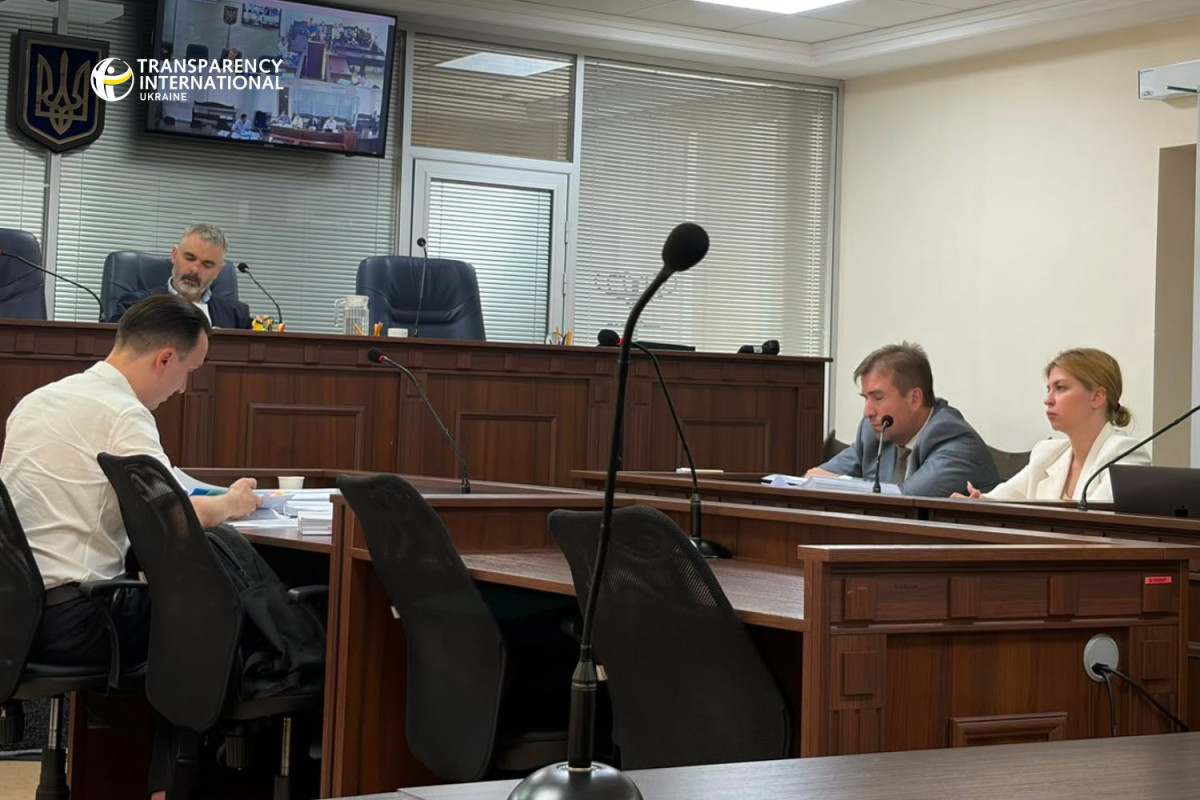
The hearing on the preventive measure for Stefanishyna. Photo by TI Ukraine
Influence on competitions
A separate topic at the hearing was Stefanishyna’s alleged influence over personnel competitions for the anti-corruption agencies. This was raised not as a standalone count of the charges, but as an argument supporting one of the risks: the possibility of obstructing the criminal proceedings by other means.
The SAPO prosecutor stated that, through controlled members of the selection panel, Stefanishyna influenced the election of the NACP head, and that her correspondence with the State Secretary of the Ministry of Justice, Oleksandr Bukhanevych, allegedly shows the coordination of “suitable” candidates. She may also have interfered in the competition for the NABU director, promoting the current head of the AMCU, Pavlo Kyrylenko — these quotes are cited by Ukrainska Pravda. Kyrylenko himself, incidentally, is a subject of another NABU case concerning illicit enrichment of more than UAH 72 million; it is already before the HACC at the stage of witness questioning.
Telling against this backdrop is a quote from Stefanishyna recalled by journalist Danylo Mokryk: on December 6, 2024, from the rostrum of the Verkhovna Rada, she spoke of the need to “move away from competitions for filling positions and integrity assessments by international experts.”
Whether this episode will be formalized as a separate suspicion is not yet clear: a charge of trading in influence requires proof of an unlawful benefit. But it was precisely on these facts that the prosecutor built the argument, in the motion on the preventive measure, about the risk of obstructing the criminal proceedings.
The defense’s position
The defense considers the suspicion unfounded: according to the lawyers, the prosecution artificially lumped together disparate expenses — medical treatment, air tickets, the purchase of apartments — in order to “assemble” the required sum, whereas each episode taken separately contains no elements of a crime.
The Faina Town apartments, the lawyers say, were bought with her own money by Stefanishyna’s friend, who earns well in senior business positions; the house for her parents was merely a consultation, not a purchase, and the money had been saved up and was to be put down by the parents themselves; the Yaroslaviv Val lease was arranged by an assistant, not by Stefanishyna; and she used the Mercedes too little for it to be subject to declaration.
The defense also pointed to procedural gaps — in particular, bank statements missing from the case file, with only records of their inspection and no attachments in the form of a disc — and called the evidentiary basis weak.
The preventive measure
Justifying the need for a strict preventive measure, the prosecutor named three risks: the possibility of fleeing abroad (given the wide connections acquired during her work in the US), influence on witnesses, and the possibility of otherwise influencing the criminal proceedings. The defense called these risks abstract, and Stefanishyna herself stated that she had deliberately returned from the US in order to cooperate with the investigation, and that she had no funds for bail.
The prosecutor requested bail of UAH 13.312 million; the court set bail at UAH 6 million as a preventive measure, while fully granting the motion regarding her obligations: to appear when summoned, to notify of any change of residence, and not to communicate with the persons specified in the ruling.
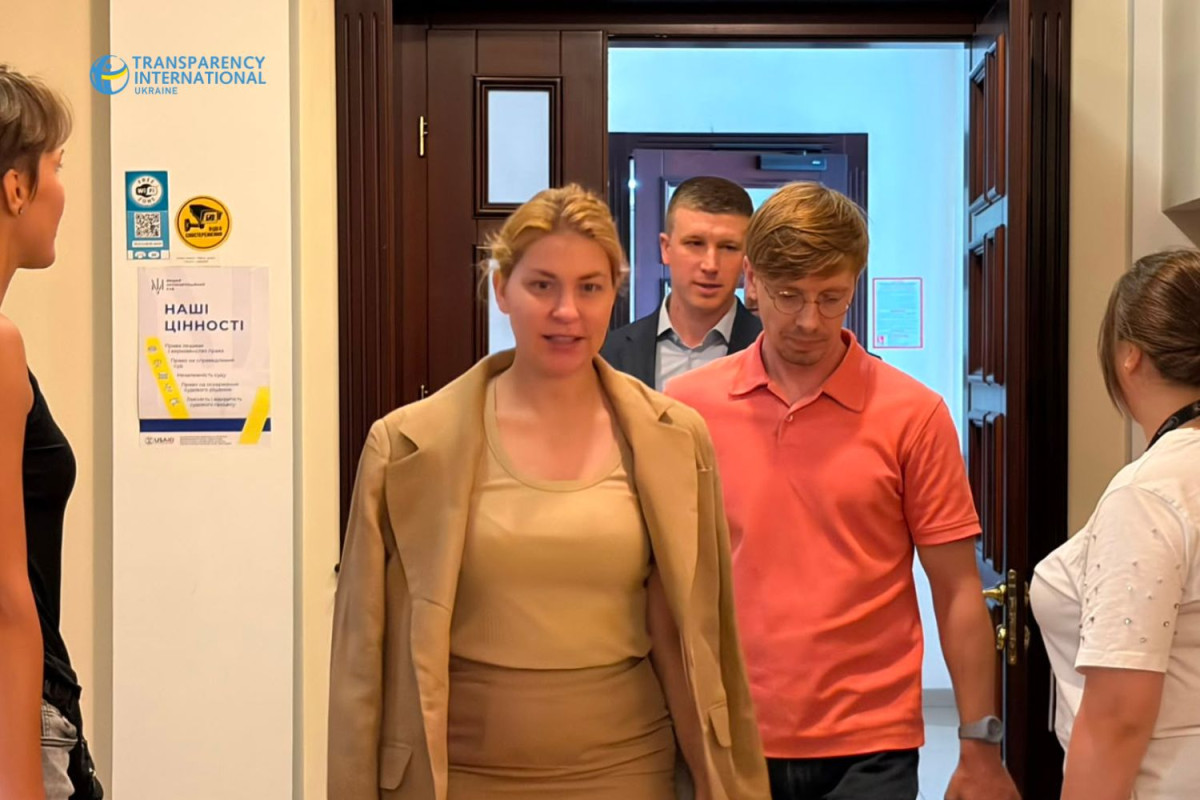
Stefanishyna leaves the HACC after the ruling on the preventive measure. Photo by TI Ukraine
What comes next?
This case has now moved into the open — at least two more months of pre-trial investigation lie ahead, and this term may also be extended by the Head of the SAPO and the investigating judge. But for Stefanishyna this is nothing new: she is walking a similar path — suspicion, court, years of waiting — in another case, which has already dragged on for more than ten years. More on that below.
This case has now moved into the open — at least two more months of pre-trial investigation lie ahead, and this term may also be extended by the Head of the SAPO and the investigating judge. But for Stefanishyna this is nothing new: she is walking a similar path — suspicion, court, years of waiting — in another case, which has already dragged on for more than ten years. More on that below.
The Lukash case: alleged abuses dating back to 2014
The Ukrainian European integration on which we work so hard today began back in Yanukovych’s time — it was the derailment of that course that sparked the first Maidan protests. But even before that, Ukraine had already done considerable preparatory work: since 2004, the Program for the Adaptation of Ukraine’s Legislation to EU norms had been in force.
What the alleged abuses involve
In the summer and autumn of 2013, the then Justice Minister Olena Lukash, together with colleagues from the ministry and representatives of private firms, organized what the investigation considers to be fictitious procurements of comparative legal research services on the legislation of Ukraine and the EU — services chosen precisely because comparing their actual price and quality is nearly impossible.
The work was performed and the studies were published. By the investigators’ calculations, the state paid from UAH 1,300 to 4,500 per page, and there were 1,335 pages in all. But the main problem was the quality of the research: in the materials that journalists from Bihus.Info uncovered in 2015, edits such as “Nonsense!”, “What a profound thought!”, “No point made!”, and “Déjà vu!” still remained. One of the documents with the original comments can still be found today.
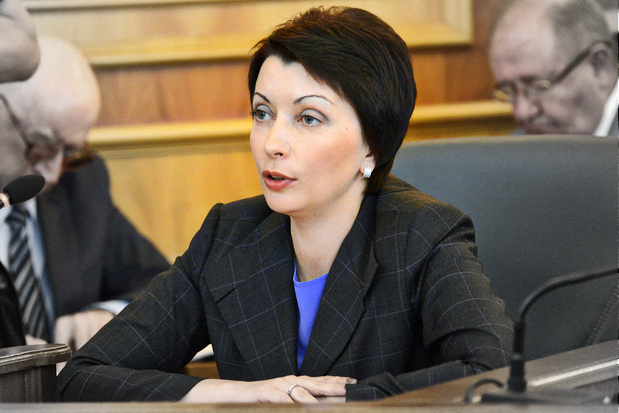
Olena Lukash, Justice Minister of Ukraine under Yanukovych. Photo: blog.tui.ua
This is precisely what became the basis for investigating the alleged misappropriation of budget funds on an especially large scale. In 2014, the Main Investigation Department of the Prosecutor General’s Office registered criminal proceedings.
Who is involved in the case
Besides Lukash, notices of suspicion were served at various stages of the investigation on:
- Yurii Ivashchenko — Lukash’s deputy, former Chief of Staff of the Ministry
- Serhii Mudryi — former Director of one of the Ministry’s departments
- Olena Biriukova — former Department Director, former Chief Accountant, and former Deputy Chair of the Tender Committee
- Svitlana Kolyshko — former Head of the Division of the Department of International Law and Cooperation of the Ministry of Justice
- Olha Stefanishyna — former Head of the ministry’s European Integration Unit
- Oleksii Kalmykov — lawyer who received UAH 930,000 for a 500-page study
- Hanna Sapelnykova — entrepreneur who received UAH 680,000 for 149 pages of material
- Taisiia Bilotska — former Acting Director of European Legal Group LLC, which received over UAH 900,000 for a 686-page study
- Bohdan Kryvolapov, Andrii Bondar, and Viktoriia Koval.
All of them are charged with misappropriation, embezzlement, or conversion of property through abuse of office (Article 191(5) of the Criminal Code) and forgery in office (Article 366(1) of the Criminal Code). That said, in 2024 the HACC released them from liability for forgery in office — the statute of limitations for that offense had already expired.
How the suspicions were delayed
The investigation began in 2014 and proceeded rather sluggishly. Olena Lukash received her first notice of suspicion in 2015, but law enforcement later decided to amend it. As journalists from Glavcom reported, Lutsenko’s Deputy Prosecutor General, Yurii Stoliarchuk, held up its approval. Lutsenko himself was likewise in no hurry to sign, even though the text had been finalized back in 2018.
Finally, in October 2019, under Prosecutor General Ruslan Riaboshapka, the prosecution announced a change to Lukash’s suspicion and served notices of suspicion on the other individuals involved, including Stefanishyna. After that, the case was handed over to the NABU for a long time, and Lukash even challenged the suspicion before the Pecherskyi District Court. The HACC Appeals Chamber judges later overturned that decision, but in 2026 the HCJ held them disciplinarily liable. That decision raises many questions. The case was referred to the HACC in 2023.
The active phase of the case, in fact, coincided with a notable leap in Stefanishyna’s career: in June 2020, the Verkhovna Rada appointed her Deputy Prime Minister for European Integration. It was in this capacity that she remained when the HACC began hearing the Lukash case.
It is important here that, under Article 7(1) of the Law of Ukraine on the Cabinet of Ministers of Ukraine, a person with a conviction that has not been expunged or lifted in the manner prescribed by law may not be appointed to the office of a Cabinet member. This, however, did not apply to Stefanishyna — there is no guilty verdict against her, and she may yet prove her innocence.
Why has the case dragged on for over 10 years?
On September 26, 2023, the first preparatory hearing in the Lukash case took place at the HACC. Transparency International Ukraine noted Lukash’s conduct at the time: at first she refused to give the court her identification details, and then she declined to have the court explain her rights as a defendant. All because she considered her summons to court to be a mistake: in Lukash’s view, she is neither a defendant nor a suspect, and her status is that of “a person present” and “a person who has neither the status of a suspect nor of a defendant.” Moreover, she came without defense counsel, which automatically barred the HACC panel from continuing the hearing — and she went on to “forget” about her lawyer more than once, forcing the court to postpone hearings.
For these and similar reasons, the case is moving extremely slowly. At nearly every hearing, one of the defense counsel or defendants fails to appear — the reasons for these absences range from illness and vacations to an urgent meeting with the President. The defendant Sapelnykova had been out of contact since March 2022, so in December 2023 the court placed her on the international wanted list and soon afterward authorized special (in absentia) proceedings against her.
Stefanishyna herself did not always attend the hearings either. On October 31, 2024, she once again failed to appear without a valid reason, for which she received a fine of UAH 3,028 — with this, the court underscored that the law is the same for everyone, regardless of position. However, as early as the hearing on November 20, the HACC granted a motion in which she justified the validity of her earlier absences, and lifted the penalty.
Because of all this, the preparatory stage dragged on for almost seven months — from September 2023 to April 2024. This is not a record (in the DACK case this stage lasted almost two years), but it does point to an inefficient use of court time.
What is happening now
On April 18, 2024, the case was finally assigned for consideration on the merits. But its pace did not change — given the number of defendants and the regular adjournments, a swift ruling should not be expected.
As of August 2026, the trial is at the stage of examining evidence — already more than two years. All because of numerous no-shows by participants in the proceedings: in January–August 2026 alone, the court adjourned around seven hearings due to Lukash’s illness, Stefanishyna’s work commitments, and scheduling conflicts among the defense counsel.
If the guilt of those involved, including Stefanishyna, is proven, they face up to 12 years’ imprisonment, with a ban on holding certain positions for up to 3 years and confiscation of property. The statute of limitations in this case expires in 2029.
If the guilt of those involved, including Stefanishyna, is proven, they face up to 12 years' imprisonment, with a ban on holding certain positions for up to 3 years and confiscation of property. The statute of limitations in this case expires in 2029.
A final note
The two proceedings in which Olha Stefanishyna features are entirely different. The first concerns the state’s procurement of services and the likely misappropriation of the funds earmarked for them. The second concerns the former ambassador’s alleged neglect of her duty, as a public official, to declare properly, as well as enrichment from sources not provided for by law.
Of course, as long as there are no verdicts, we cannot speak with certainty about whether a person has committed a crime. But we will be following the development of these cases closely.
The two proceedings in which Olha Stefanishyna features are entirely different. The first concerns the state's procurement of services and the likely misappropriation of the funds earmarked for them. The second concerns the former ambassador's alleged neglect of her duty, as a public official, to declare properly, as well as enrichment from sources not provided for by law. Of course, as long as there are no verdicts, we cannot speak with certainty about whether a person has committed a crime. But we will be following the development of these cases closely.
Source: zn.ua


